Log in
Econ

Vietnamese paper company plans to build $173 million wind power plant in Gia Lai

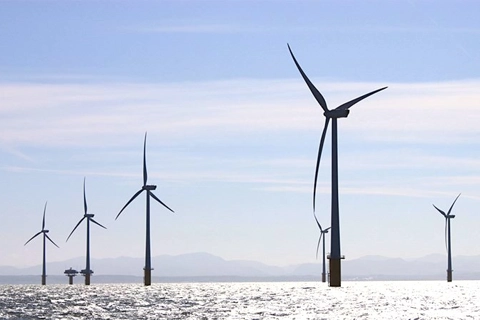
Gia Lai province is expected to become a major renewable energy hub in the Central Highlands region of Vietnam.

Hapaco Group, the Vietnamese paper manufacturer, plans to invest VND4 trillion (US$173.3 million) in a wind power project in the Central Highlands province of Gia Lai.

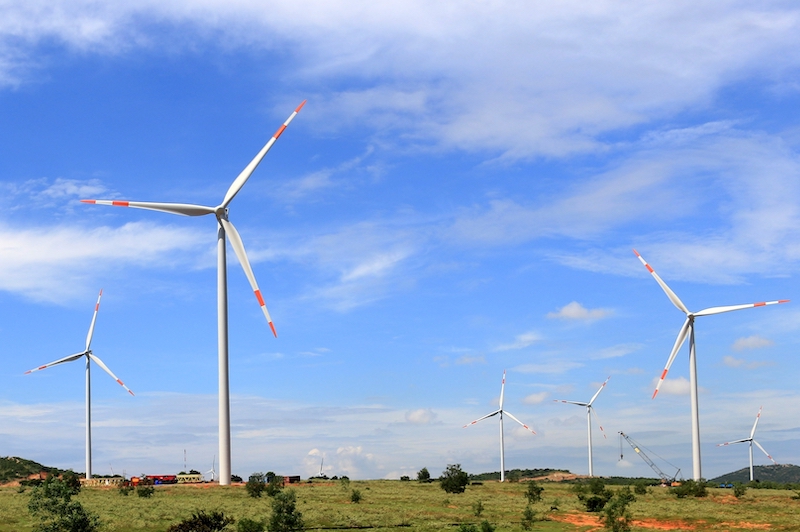
 Gia Lai province would grow into a major renewable energy hub of Vietnam. Photo: VGP

The project is among those to be submitted for approval at the group’s annual shareholders meeting, which will be held on March 14.

At the meeting, the group’s shareholders will discuss an investment in building a 23-ha geriatric center in Thuy Nguyen district of Hai Phong city and Hapaco’s new plans on social housing and labor export to Taiwan (China).

Hapaco (Stock Code: HAP) was one of the first businesses listed on Vietnam’s stock market. As of December 31 2020, its total asset exceeded more than VND808 billion (US$35 million).

Last year, the group’s profit exceeded the target by 29%, reaching VND415 billion (US$18 million) in revenue and VND28 billion (US$1.2 million) in pre-tax profit, respectively. 

In the newly-revised power development plan, the People’s Committee of Gia Lai has submitted an addition of 67 wind power projects with total capacity of 4,048.4MW to the government and relevant ministries for approval, in which 14 have been lisensed.

According to Ho Phuoc Thanh, Director of the Provincial Department of Investment and Planning, investors are exploring and pondering setting up solar and wind power projects in Gia Lai. If the projects were all materialized, the province would grow into a major renewable energy hub, he said.
Reactions:
Share:
Trending
Most Viewed
Related news
Real estate firms sell bonds worth $402 million in May

Real estate firms sell bonds worth $402 million in May

Real estate companies have raised $862 million from bond issuance in April and May, thanks to an improved business environment and better access to funding.

Vietnam unveils new strategies to boost domestic market, aid businesses

Vietnam unveils new strategies to boost domestic market, aid businesses

As global trade uncertainties grow, Vietnam sees the domestic market not only as a key consumption driver but also a “lifeline” for businesses hit by protectionist export barriers.

Vietnam eyes US tilapia export boost as global supply falls

Vietnam eyes US tilapia export boost as global supply falls

Vietnam aims to increase tilapia output to 400,000 tons by 2030, making it the second-largest freshwater export species after pangasius.

Vietnam’s enterprises must act fast to weather US tariff shock: Experts 

Vietnam’s enterprises must act fast to weather US tariff shock: Experts 

Many of the key Vietnamese exports, such as wood products, electronics, and textiles, that are not on the US exclusion list could face steep tariffs.

Vietnam's mobile money pilot program extended to end of 2025

Vietnam's mobile money pilot program extended to end of 2025

Mobile Money, launched by the Ministry of Science and Technology, differs from e-wallets by linking users’ payment accounts directly to mobile phone numbers.

Vietnam taps innovation, global ties to elevate national brand

Vietnam taps innovation, global ties to elevate national brand

Vietnam is intensifying efforts to enhance its national brand, leveraging innovation, global partnerships, and strategic policies to bolster its global competitiveness and market presence.

Vietnam extends US$3.9 billion loan package for agro-forestry-fisheries

Vietnam extends US$3.9 billion loan package for agro-forestry-fisheries

The government has expanded the scope and scale of the credit program for the sectors which brought about US$62.4 billion worth of exports in 2024.

Vietnamese public shows rising satisfaction in 2024 PAPI survey

Vietnamese public shows rising satisfaction in 2024 PAPI survey

The 2024 PAPI survey found increasing citizen satisfaction with governance, but highlighted persistent administrative challenges, climate vulnerability, and gaps in access to public services.