Investment
Vietnamese port infrastructure urged to keep pace with growth
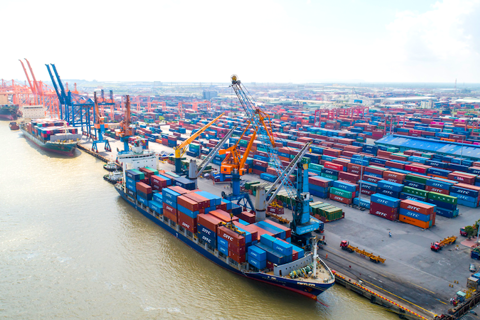
The government needs to have a new approach for planning seaport infrastructure to keep pace with the nation’s economic development, a senior economist said.
Experts have urged competent authorities to remove bottlenecks remained in the Vietnamese port infrastructure system for it to keep pace with the country’s rapid economic growth and cut logistic costs for businesses.
In the last 10 years, Vietnam’s rapid economic expansion and external trade has driven up shipping demand, highlighting the importance of ports. The country’s container traffic through the seaport system has increased by 10-12% per year, far exceeding the average growth of 3% of the global port industry in the last decade.
According to Bui Thien Thu, deputy director of the Vietnam Maritime Administration, most of the country’s major ports have been upgraded to accommodate vessels with capacity of up to 30,000 deadweight tonnage (DWT). However, the market share of throughput among ports is uneven.
While the network of ports in Ho Chi Minh City handles about 55-60% of the total throughput nationwide, the northern and central ports account for only 25% and 10%, respectively. It means that northern and central ports are operating below capacity while the southern ports are over-burdened with shipments, which has led to congestion and significant delays, Thu noted.
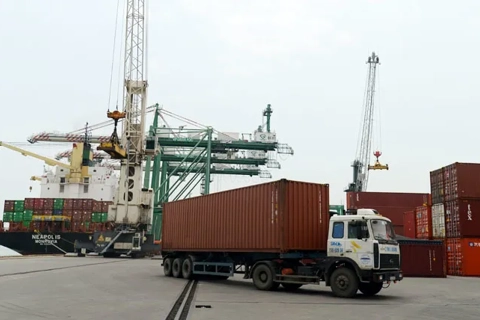
Besides, Tran Dinh Thien, former director of the Vietnam Economic Institute, said that the overloading at seaports is also the result of poor transport infrastructure. Thien explained that the railway and road network around ports remains underdeveloped and lacks connection with various ports, and therefore has failed to keep up with the country’s economic growth.
Thien took belt roads around Ho Chi Minh City’s ports as an example. The city’s ports are poorly interconnected, backward and have no linkage with the key economic regions which narrow the capacity of international transshipment to the key economic region.
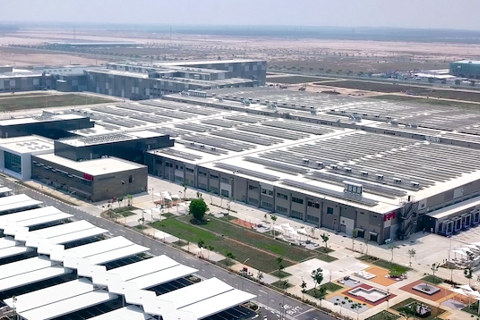
The investment in Dinh Vu Port in the North is crucial to spur the development of industrial clusters, Thien added, explaining that to go to Hai Phong, most cars currently travel on 5B highway while long and heavy trucks choose to go on the old, small National Highway 5 with slow speeds, as most industrial parks are located along this way.
New planning needed
According to Thien, the government needs to have a new approach for planning seaport infrastructure to keep pace with the nation’s economic development.
In fact, the Vietnamese Government has introduced a master plan related to the development of the seaport system by 2020 and 2030. It has targeted to achieve a cargo clearance target of at least 1 billion tons by 2020 and 1.2 to 1.6 billion tons by 2030.
According to the master plan, many deep-sea ports are being built or upgraded in all three regions such as Lach Huyen Port in Hai Phong, Lien Chieu in Da Nang city, Tran De in Soc Trang province and Hon Khoai in Ca Mau province with investment capital of trillions of VND.
Given the current state budget constraint, Thien said the government needs to consider public-private partnership financing mechanism and encourage initiatives to develop the private sector.
Besides, Ho Kim Lan, general secretary of the Vietnam Seaport Association, suggested besides efforts in increasing port capacity, Vietnam also needs to invest in modern equipment to increase productivity, aggressively apply one-stop shop mechanism and enhance connectivity with international maritime routes as the country’s seaport system lacks updated logistics technology.
Cat Lai Port is the only one that currently applies "electronic port" (ePort) to handle procedures and online payments for all container forwarding options, Lan said.
According to the World Economic Forum’s global competitiveness report 2019, Vietnam ranks 83rd among 138 economies on the quality of port infrastructure, with an average score of 3.80 on a scale of 1 (lowest) to 7 (highest).

The investment in Dinh Vu Port is important to spur the growth of industrial clusters.
|
According to Bui Thien Thu, deputy director of the Vietnam Maritime Administration, most of the country’s major ports have been upgraded to accommodate vessels with capacity of up to 30,000 deadweight tonnage (DWT). However, the market share of throughput among ports is uneven.
While the network of ports in Ho Chi Minh City handles about 55-60% of the total throughput nationwide, the northern and central ports account for only 25% and 10%, respectively. It means that northern and central ports are operating below capacity while the southern ports are over-burdened with shipments, which has led to congestion and significant delays, Thu noted.
Besides, Tran Dinh Thien, former director of the Vietnam Economic Institute, said that the overloading at seaports is also the result of poor transport infrastructure. Thien explained that the railway and road network around ports remains underdeveloped and lacks connection with various ports, and therefore has failed to keep up with the country’s economic growth.
Thien took belt roads around Ho Chi Minh City’s ports as an example. The city’s ports are poorly interconnected, backward and have no linkage with the key economic regions which narrow the capacity of international transshipment to the key economic region.
The investment in Dinh Vu Port in the North is crucial to spur the development of industrial clusters, Thien added, explaining that to go to Hai Phong, most cars currently travel on 5B highway while long and heavy trucks choose to go on the old, small National Highway 5 with slow speeds, as most industrial parks are located along this way.
New planning needed
According to Thien, the government needs to have a new approach for planning seaport infrastructure to keep pace with the nation’s economic development.
In fact, the Vietnamese Government has introduced a master plan related to the development of the seaport system by 2020 and 2030. It has targeted to achieve a cargo clearance target of at least 1 billion tons by 2020 and 1.2 to 1.6 billion tons by 2030.
According to the master plan, many deep-sea ports are being built or upgraded in all three regions such as Lach Huyen Port in Hai Phong, Lien Chieu in Da Nang city, Tran De in Soc Trang province and Hon Khoai in Ca Mau province with investment capital of trillions of VND.
Given the current state budget constraint, Thien said the government needs to consider public-private partnership financing mechanism and encourage initiatives to develop the private sector.
Besides, Ho Kim Lan, general secretary of the Vietnam Seaport Association, suggested besides efforts in increasing port capacity, Vietnam also needs to invest in modern equipment to increase productivity, aggressively apply one-stop shop mechanism and enhance connectivity with international maritime routes as the country’s seaport system lacks updated logistics technology.
Cat Lai Port is the only one that currently applies "electronic port" (ePort) to handle procedures and online payments for all container forwarding options, Lan said.
According to the World Economic Forum’s global competitiveness report 2019, Vietnam ranks 83rd among 138 economies on the quality of port infrastructure, with an average score of 3.80 on a scale of 1 (lowest) to 7 (highest).