Econ
Vietnam's achievements reflected through improved economic indicators
Recently, the Global Competitiveness Report 2017 – 2018 issued by the World economic forum (WEF) has witnessed the improvement of Vietnam economy through related indicators in this field.
Covering 137 economies, the Global Competitiveness Index 2017–2018 measures national competitiveness—defined as the set of institutions, policies and factors that determine the level of productivity. After a long period of low growth following the global financial crisis, the world economy appears to have picked up speed. The pace and disruptiveness of technological change are creating unprecedented opportunities and challenges that are set to be amplified by the convergence of digital, physical, and biological technologies that are characterizing the emerging Fourth Industrial Revolution.

In Asia, there is a mixed picture with big gains by Indonesia and Vietnam, while it is the opposite for Japan and India. As such, in the global competitiveness report 2017 – 2018, which is released on September 27, Vietnam has jumped to 55th place, up five ranks from last year and 20 ranks from five years ago. It is the best result of Vietnam in recent years, and put it among the six economies with the best average growth rates in the past decade, together with large emerging economies such as Thailand, India and Nigeria. While Indonesia ranks 36th overall, up from 41st last year, it is thanks to improvement in 10 out of 12 pillar categories, including health, primary education and infrastructure.
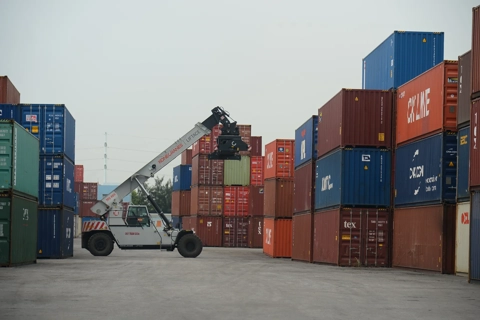
WEF evaluated target countries based with the maximum score of 7. As such, the Global competitive index (GCI) of Vietnam this year is 4.4 points, which is improved from the 4.31 points of last year. The country made notable improvements in technological readiness and labor market efficiency. Trade is another big factor propelling Vietnam upward: it now ranks seventh in terms of ratio of imports to gross domestic products (GDP), and 11th by the ratio of exports.
Vietnam’s competitiveness is significantly driven by its market size, which ranks 31st of all economies, according to the annual report which measures national competitiveness based on a set of institutions, policies and factors that determine the level of productivity.
The US withdrawal from the Trans Pacific Partnership may have eliminated some future trade opportunities for Vietnam, but the report suggests “the country’s growth is nonetheless projected to remain robust from strong exports”. Since 2014, the Vietnamese government has issued 4 Decrees to improve business environment, increasing national competitiveness in accordance with the WEF and World Banks’ approaches. Viet Nam could also boost its competitiveness by closing gaps in innovation and sophistication factors
Other Asian having positive results are Malaysia with 23rd place; China, the second largest economy in the world is in 27th place, and Thailand in 32nd place. Each moved up a place or two, while Philippines also rose one place compared to last year. Japan is headed in the opposite direction; it now ranks 9th after falling for the second year in a row. The world’s third largest economy continues to perform well in categories like infrastructure, health and primary education, but it is struggling on the macroeconomic environment front due to massive public debt.
Leading the global competitiveness list of WEF is not major economies in the world, but Switzerland, a small country in Europe, which has the highest score in global competitive index, staying in 2nd place is the US, the largest economy in the world.
In Asia, there is a mixed picture with big gains by Indonesia and Vietnam, while it is the opposite for Japan and India. As such, in the global competitiveness report 2017 – 2018, which is released on September 27, Vietnam has jumped to 55th place, up five ranks from last year and 20 ranks from five years ago. It is the best result of Vietnam in recent years, and put it among the six economies with the best average growth rates in the past decade, together with large emerging economies such as Thailand, India and Nigeria. While Indonesia ranks 36th overall, up from 41st last year, it is thanks to improvement in 10 out of 12 pillar categories, including health, primary education and infrastructure.

Vietnam ranks 55th in the global competitiveness list.
|
Vietnam’s competitiveness is significantly driven by its market size, which ranks 31st of all economies, according to the annual report which measures national competitiveness based on a set of institutions, policies and factors that determine the level of productivity.
The US withdrawal from the Trans Pacific Partnership may have eliminated some future trade opportunities for Vietnam, but the report suggests “the country’s growth is nonetheless projected to remain robust from strong exports”. Since 2014, the Vietnamese government has issued 4 Decrees to improve business environment, increasing national competitiveness in accordance with the WEF and World Banks’ approaches. Viet Nam could also boost its competitiveness by closing gaps in innovation and sophistication factors
Other Asian having positive results are Malaysia with 23rd place; China, the second largest economy in the world is in 27th place, and Thailand in 32nd place. Each moved up a place or two, while Philippines also rose one place compared to last year. Japan is headed in the opposite direction; it now ranks 9th after falling for the second year in a row. The world’s third largest economy continues to perform well in categories like infrastructure, health and primary education, but it is struggling on the macroeconomic environment front due to massive public debt.
Leading the global competitiveness list of WEF is not major economies in the world, but Switzerland, a small country in Europe, which has the highest score in global competitive index, staying in 2nd place is the US, the largest economy in the world.