Econ
Vietnam's fiscal deficit swells to US$1.81 billion in Jan-Oct
State budget revenues as of September 15 reached VND1,009 trillion (US$43.37 billion), equivalent to 76.5% of the year`s estimate.
Vietnam saw a budget deficit of VND42.2 trillion (US$1.81 billion) from the beginning of the year to October 15, expanding from a deficit of VND38.3 trillion (US$1.63 billion) recorded 15 days earlier, according to the General Statistics Office (GSO).
Overall, state budget revenues as of October 15 reached VND1,009 trillion (US$43.37 billion), equivalent to 76.5% of the year's estimate.
Of the total, collections from domestic taxes and fees in the period stood at VND798.5 trillion (US$34.32 billion) or 72.6% of the year's estimate. Of the sum, the state sector contributed VND110.2 trillion (US$4.73 billion) or 66.2% of the year's plan, the FDI sector VND131.9 trillion (US$5.67 billion) (excluding crude oil) or 59.2%. Moreover, VND153 trillion (US$6.57 billion) was collected from non-state industrial, commercial and service taxes, equaling 70.2%, and VND34.1 trillion (US$1.46 billion) from tax on environmental protection or 70%.
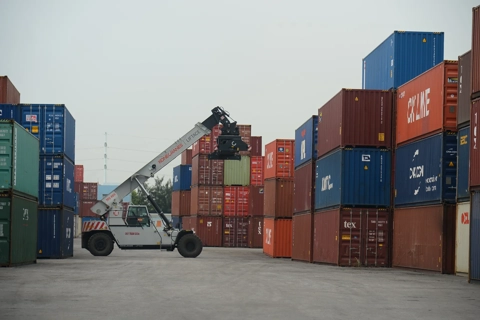
Revenue from trade jumped to VND158 trillion (US$6.79 billion) or 88.3% of the year's estimate, and that from crude oil exports totaled VND48.5 trillion (US$2.08 billion) or 135.2%.
Additionally, personal income tax contributed VND72.1 trillion (US$3.09 billion) to the state budget or 74.4% of the year's estimate, and land use rights VND92.6 trillion (US$3.97 billion) or 107.8%.
Meanwhile, Vietnam's state budget expenditures as of October 15 totaled VND1,051 trillion (US$45.17 billion), equivalent to 69% of the year's plan. Of the total, regular spending reached VND728.9 trillion (US$31.32 billion) or 77.5% of the plan. Expenditure for development investment reached VND220.1 trillion (US$9.45 billion) or 55.1%, and interest payment of VND84.5 trillion (US$3.63 billion) or 75.1%.
This year is considered as an important transitional year, following the elimination of tariff barriers for commodities imported from ASEAN countries, of which over 90% of the goods under the ASEAN trade agreement (ATIGA) will bear zero tariff. A large amount of tax reductions are applied to items with high tax revenues such as cars (from 30% to 0%), components and spare parts (from 5% and 20% to 0%), steel (5% to 0%), among others.

Illustrative photo.
|
Of the total, collections from domestic taxes and fees in the period stood at VND798.5 trillion (US$34.32 billion) or 72.6% of the year's estimate. Of the sum, the state sector contributed VND110.2 trillion (US$4.73 billion) or 66.2% of the year's plan, the FDI sector VND131.9 trillion (US$5.67 billion) (excluding crude oil) or 59.2%. Moreover, VND153 trillion (US$6.57 billion) was collected from non-state industrial, commercial and service taxes, equaling 70.2%, and VND34.1 trillion (US$1.46 billion) from tax on environmental protection or 70%.
Revenue from trade jumped to VND158 trillion (US$6.79 billion) or 88.3% of the year's estimate, and that from crude oil exports totaled VND48.5 trillion (US$2.08 billion) or 135.2%.
Additionally, personal income tax contributed VND72.1 trillion (US$3.09 billion) to the state budget or 74.4% of the year's estimate, and land use rights VND92.6 trillion (US$3.97 billion) or 107.8%.
Meanwhile, Vietnam's state budget expenditures as of October 15 totaled VND1,051 trillion (US$45.17 billion), equivalent to 69% of the year's plan. Of the total, regular spending reached VND728.9 trillion (US$31.32 billion) or 77.5% of the plan. Expenditure for development investment reached VND220.1 trillion (US$9.45 billion) or 55.1%, and interest payment of VND84.5 trillion (US$3.63 billion) or 75.1%.
This year is considered as an important transitional year, following the elimination of tariff barriers for commodities imported from ASEAN countries, of which over 90% of the goods under the ASEAN trade agreement (ATIGA) will bear zero tariff. A large amount of tax reductions are applied to items with high tax revenues such as cars (from 30% to 0%), components and spare parts (from 5% and 20% to 0%), steel (5% to 0%), among others.