Econ
Vietnam’s foreign reserves at all time-high of US$63 billion
State Bank of Vietnam (SBV) continues to build up its foreign exchange reserves to cushion external shocks, raising the fund to a new record high of US$63 billion.
Mai Tien Dung, Minister and Chairman of the Government Office unveiled the information at a press conference following a monthly cabinet meeting recently.
SBV has bought in $32 billion worth of hard currencies in the past more than two years, Dung said.
According to experts, SBV has so far this year also changed its way to purchase the foreign currency. Previously, the bank bought foreign currency in spot trade, with volumes reaching $1 billion to $3 billion per day, meaning that an equivalent volume of VND was pumped into the market in a short time.
But since February 7, the bank launched three-month futures contracts to regulate the flows in a more flexible way. Around 40 percent of the forex has been purchased through futures, helping to balance cash flows to moderate pressures on interest rates, the USD/VND rate and inflation.
The rise of the country’s foreign reserves was reported in the context of the foreign exchange rate in the domestic market being relatively stable. According to the central bank, liquidity of the domestic foreign exchange market was good and met the demands of local organizations and individuals.
Experts attributed the stability to reasons such as SBV’s flexible central rate management mechanism, which ensured that the domestic foreign exchange market was less affected by global factors.
The Government’s policy to encourage locals to convert forex holdings into VND has also provided support.
In addition, the domestic supply-demand relationship with the dollar was relatively stable. Foreign currency supply from exports, foreign direct investment (FDI), official development assistance, tourism and remittances grew positively in 2017 and in the first quarter of this year.
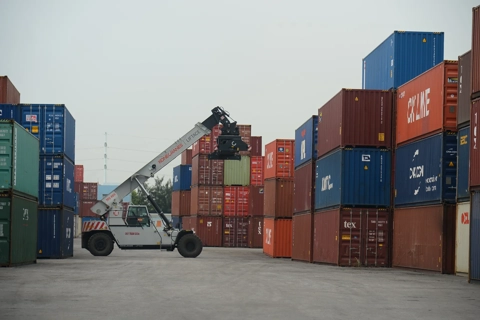
Vietnam recorded trade surplus of $2.7 billion in 2017, or 1.4 per cent of total export turnover, according to the Ministry of Industry and Trade. The total export value this year was $214 billion and import value was $211.1 billion, up 21.1 per cent and 20.8 per cent against last year, respectively.
The country’s trade turnover continued to witness a positive growth in the first quarter of this year, with a trade surplus of nearly $2.7 billion, according to a report from the General Department of Customs.
The country’s total FDI capital last year also reached a record high of $35.88 billion, up 44.4 per cent against the same period last year, while FDI disbursement capital also rose by 10.8 per cent to $17.5 billion.
FDI disbursement in the first quarter of this year also reached roughly $3.88 billion, representing a surge of 7.2 percent against the previous year.
Vietnam was also listed among the world’s top 10 recipients of remittances in 2017, receiving approximately $13.8 billion, up 16 percent against the previous year, according to a report of the World Bank.
SBV Governor Le Minh Hung attributed the success to SBV’s insistence in monetary and foreign currency policies, adding that the rising foreign reserves has contributed to strengthening Vietnam’s prestige and creating confidence in investors investing in Vietnam.
Hung affirmed that SBV would continuously try to increase the country’s foreign reserves this year, besides supporting efforts to stabilize the forex market.
Experts have so far also been optimistic about the foreign exchange market in 2018, noting that the market would be stable, with VND devaluing slightly by some 0.5-1 percentage points to VND22,710-VND22,950.

SBV has bought in $32 billion worth of hard currencies in the past two years
|
According to experts, SBV has so far this year also changed its way to purchase the foreign currency. Previously, the bank bought foreign currency in spot trade, with volumes reaching $1 billion to $3 billion per day, meaning that an equivalent volume of VND was pumped into the market in a short time.
But since February 7, the bank launched three-month futures contracts to regulate the flows in a more flexible way. Around 40 percent of the forex has been purchased through futures, helping to balance cash flows to moderate pressures on interest rates, the USD/VND rate and inflation.
The rise of the country’s foreign reserves was reported in the context of the foreign exchange rate in the domestic market being relatively stable. According to the central bank, liquidity of the domestic foreign exchange market was good and met the demands of local organizations and individuals.
Experts attributed the stability to reasons such as SBV’s flexible central rate management mechanism, which ensured that the domestic foreign exchange market was less affected by global factors.
The Government’s policy to encourage locals to convert forex holdings into VND has also provided support.
In addition, the domestic supply-demand relationship with the dollar was relatively stable. Foreign currency supply from exports, foreign direct investment (FDI), official development assistance, tourism and remittances grew positively in 2017 and in the first quarter of this year.
Vietnam recorded trade surplus of $2.7 billion in 2017, or 1.4 per cent of total export turnover, according to the Ministry of Industry and Trade. The total export value this year was $214 billion and import value was $211.1 billion, up 21.1 per cent and 20.8 per cent against last year, respectively.
The country’s trade turnover continued to witness a positive growth in the first quarter of this year, with a trade surplus of nearly $2.7 billion, according to a report from the General Department of Customs.
The country’s total FDI capital last year also reached a record high of $35.88 billion, up 44.4 per cent against the same period last year, while FDI disbursement capital also rose by 10.8 per cent to $17.5 billion.
FDI disbursement in the first quarter of this year also reached roughly $3.88 billion, representing a surge of 7.2 percent against the previous year.
Vietnam was also listed among the world’s top 10 recipients of remittances in 2017, receiving approximately $13.8 billion, up 16 percent against the previous year, according to a report of the World Bank.
SBV Governor Le Minh Hung attributed the success to SBV’s insistence in monetary and foreign currency policies, adding that the rising foreign reserves has contributed to strengthening Vietnam’s prestige and creating confidence in investors investing in Vietnam.
Hung affirmed that SBV would continuously try to increase the country’s foreign reserves this year, besides supporting efforts to stabilize the forex market.
Experts have so far also been optimistic about the foreign exchange market in 2018, noting that the market would be stable, with VND devaluing slightly by some 0.5-1 percentage points to VND22,710-VND22,950.