Econ
Vietnam’s incentives should only be applied to high added value projects: CIEM
In the new context, Vietnam should consider a proactive strategy towards attracting high-quality foreign direct investment (FDI) projects.
Preferential policies are necessary to attract investments, but should only be applied to high added value projects in order to avoid its adverse impact, according to Nguyen Dinh Cung, director of the Central Institute for Economic Management (CIEM).
In the new context, Vietnam should consider a proactive strategy towards attracting high quality foreign direct investment (FDI) projects, as the country’s current comparative advantage of cheap labor cost and land resources for FDI attraction are diminishing, Cung said at a conference on November 30.
To clarify the matter, Dinh Trong Thang, director of CIEM’s Investment Policy Department, said the incentive should take into account strengths and weaknesses of each province, while ensuring the compatibility among the objective, method of attracting investment, and the investment portfolio.
More importantly, preferential policies have to be result-based, in turn ensuring foreign companies to commit long-term business in Vietnam.
Thang added that the coverage of the incentives in Vietnam is lengthy and scattered. Vietnam’s tax holidays are longer and broader in scope than in other countries in the region, but have not been based on the characteristics of each province. Additionally, tax holidays, which account for the highest proportion of revenue forgone, need to be applied moderately.
Thang suggested that the government should review existing tax incentives to avoid overlapping and waste.
Le Thuy Trung, deputy director of the Ministry of Planning and Investment’s Department of Industrial Economy, said that current investment policies have failed to produce expected results. For example, the local automobile industry has been mainly built on assembly of parts with dearth of technology transfer.
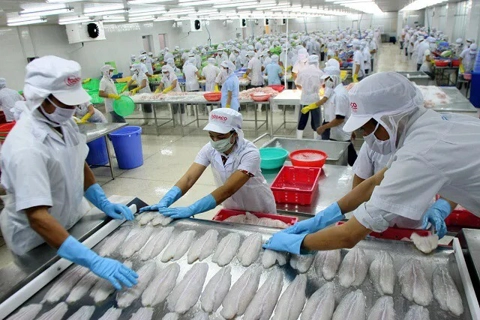
Similar trend is seen in the electronics, garment-textile and footwear sectors. In electronics, the localization rate only accounts for 10 – 20% of the products while in the garment-textile and footwear sectors, which are Vietnam’s key export staples, most of input materials are imported, leading to low added value.
Trung suggested that the country should exert more efforts to encourage the use of advanced and clean technologies and technology transfer, and these need to be incorporated into laws.
In a previous interview with Hanoitimes, Nguyen Thu Huong, senior program manager – governance of Oxfam in Vietnam, said that experiences from developed countries show that tax incentives do not influence capital inflows into the economy.
“Credible investors will decide to invest regardless of receiving preferential policies or not. Preferential policies, thus, are seen as "additional bonus" for investors and an amount of revenue forgone,” she said.
In recent years, several countries have gradually phased out tax incentives as the focus of the tax policy and shifted to the achievement of tax equity and neutrality. In 2008, China has abolished most of the tax incentives for foreign invested companies, such as tax holidays of 3-10 years and reduced corporate tax of 24, 15, and 10%, Huong concluded.

Overview of the conference. Source: Nguyen Tung.
|
To clarify the matter, Dinh Trong Thang, director of CIEM’s Investment Policy Department, said the incentive should take into account strengths and weaknesses of each province, while ensuring the compatibility among the objective, method of attracting investment, and the investment portfolio.
More importantly, preferential policies have to be result-based, in turn ensuring foreign companies to commit long-term business in Vietnam.
Thang added that the coverage of the incentives in Vietnam is lengthy and scattered. Vietnam’s tax holidays are longer and broader in scope than in other countries in the region, but have not been based on the characteristics of each province. Additionally, tax holidays, which account for the highest proportion of revenue forgone, need to be applied moderately.
Thang suggested that the government should review existing tax incentives to avoid overlapping and waste.
Le Thuy Trung, deputy director of the Ministry of Planning and Investment’s Department of Industrial Economy, said that current investment policies have failed to produce expected results. For example, the local automobile industry has been mainly built on assembly of parts with dearth of technology transfer.
Similar trend is seen in the electronics, garment-textile and footwear sectors. In electronics, the localization rate only accounts for 10 – 20% of the products while in the garment-textile and footwear sectors, which are Vietnam’s key export staples, most of input materials are imported, leading to low added value.
Trung suggested that the country should exert more efforts to encourage the use of advanced and clean technologies and technology transfer, and these need to be incorporated into laws.
In a previous interview with Hanoitimes, Nguyen Thu Huong, senior program manager – governance of Oxfam in Vietnam, said that experiences from developed countries show that tax incentives do not influence capital inflows into the economy.
“Credible investors will decide to invest regardless of receiving preferential policies or not. Preferential policies, thus, are seen as "additional bonus" for investors and an amount of revenue forgone,” she said.
In recent years, several countries have gradually phased out tax incentives as the focus of the tax policy and shifted to the achievement of tax equity and neutrality. In 2008, China has abolished most of the tax incentives for foreign invested companies, such as tax holidays of 3-10 years and reduced corporate tax of 24, 15, and 10%, Huong concluded.