Vietnam’s logistics sector faces labor shortage of 2 million people
The issue of labor shortage is becoming more severe as Vietnam is a member of ASEAN Economic Community (AEC) and is joining in a number of next generation free trade agreements.
With annual growth rate of over 10% and contributing 5% to the country's GDP, Vietnam’s logistics sector is facing a labor shortage of around two million people, according to the Vietnam Logistics Association (VLA).
| Illustrative photo. |
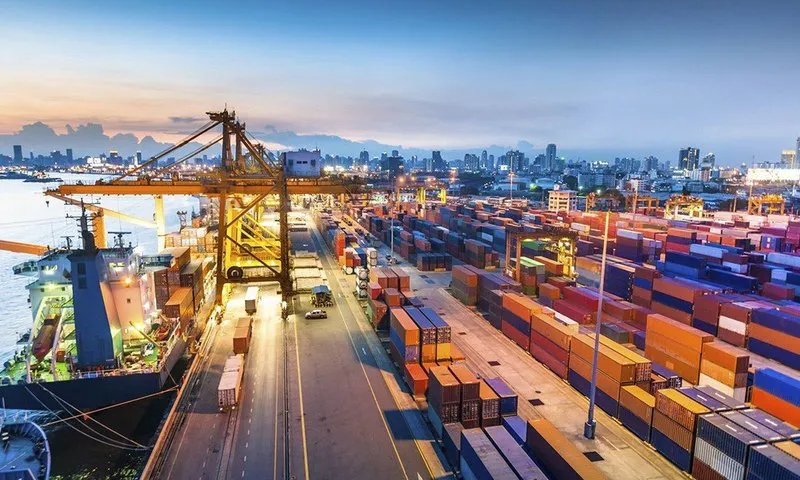
Statistics showed Vietnam currently has 30,000 logistics companies, including 4,000 operating in cargo transportation domestically and internationally.
Notably, the majority of logistics firms operating in Vietnam are of small and medium size. 89% of them are local, 10% are joint-ventures and 1% wholly foreign owned enterprises.
The issue of labor shortage is becoming more severe as Vietnam is a member of the ASEAN Economic Community (AEC) and is joining a number of high-standard free trade agreements, VnEconomy reported.
A survey from the Ho Chi Minh City Institute for Development Studies (HIDS) revealed the Vietnamese workforce in the logistics sector is not only in short supply but also lacks the quality, particularly those assuming senior positions. Specifically, 53.5% enterprises lack staff with qualification and logistics knowledge; 30% have to retrain employees and only 6.7% are satisfied with the capacities of their employees.
Another survey conducted by the Institute of Economics and Development (IED) under the National Economics University indicated up to 80.26% of employees in logistics firms are trained through day-to-day work; 23.6% took part in local training courses; 6.9% are trained by international experts and only 3.9% joined training courses abroad.
The VLA predicted in the next three years, logistics firms in Vietnam would need 18,000 new employees and companies in other sectors would need over millions of employees with logistics knowledge.
Tran Thanh Hai, deputy head of the Import – Export Department under the Ministry of Industry and Trade (MoIT), said the quality of workforce training in the logistics sector should be improved to meet international standards and remove the weaknesses of Vietnamese human resources in logistics, including the lack of discipline and teamwork capability.
Hai suggested policy makers propose new teaching plans in the fields of logistics and supply chain in Vietnamese universities.
According to Hai, in order to develop high quality human resources in logistics, it is essential to have a joint-effort from the government, provinces/cities, logistics firms and vocational schools, while the government should continue to provide supporting policies for logistics.
Le Quoc Tien, vice principal of Vietnam Maritime University, said to improve the quality of teaching staff in logistics, the contribution of foreign and local logistics experts is necessary, as well as close the collaboration with logistics firms in setting up training programs in logistics.
Vietnam’s logistics and warehousing market is expected to register a positive compound annual growth rate (CAGR) of 13.3% in the 2018-2022 period, reaching a revenue of US$86.7 billion by 2022, according to Ken Research – a market research and consulting company based in India and the US.