Econ
VND likely to depreciate 1% toward end-2018 as CNY weakens
As the Chinese yuan (CNY) is expected to continue sliding, the Vietnamese dong (VND) could in turn see it value lost by a further 0.5-1 percent toward the year end, requiring the central bank to be more flexible with its FX policy.
The weakness of the Chinese currency seen in the past months and forecast for its additional devaluation are prompting HSBC to be on the alert for further depreciation of the VND toward the end of 2018, with the local currency to lose some 0.5-1 percent in value, according to HSBC Vietnam CEO Pham Hong Hai.
“This would help ease the pressure on the competitiveness of the VND against the CNY and other currencies in the region,” said Hai on an interview in Hanoi last week.
The CNY has felt to its 19-month low at the beginning of October with major factors including the People’s Bank of China lowering its reserve requirement ratios (RRR) for some banks for a fourth time this year. What’s more, the escalating trade tension between the US and China now results in almost half of all China-made goods exported to the US are facing tariffs and the US is further preparing to tax all imports from the country.
Pressures on the VND nevertheless are not coming from the CNY movement alone but also the strengthening USD on the back of the Federal Reserve (Fed) rate hike last month and one more coming before the year rounds up.
With the Fed also lifting the probability of three more hikes next year, the VND and other currencies could price in such impact, yet it may not be enough for the VND to pick up some strength to turn around in 2019.
Hai of HSBC noted that it would not be easy for the dong to appreciate next year despite several supporting elements. The flow of FDI, for instance, has been constantly ample, thus providing an abundant supply of capital for the economy. The sale of the state capital, together with the trade surplus, has also been the buffer to help the dong reduce any external shock. “For countries like Indonesia or those with trade deficits, they often face pressure on their FX. Vietnam fortunately is not one of them.”
“If Fed continues to raise its rate [next year], the greenback will generally gain its strength against other currencies, including Vietnam. Should Vietnam wish to maintain its export advantage, the country could not increase the value of its currency or keep it stable,” stressed Hai.
Meanwhile, Standard Chartered Asia FX strategist Eddie Cheung said they were positive about Vietnam’s fundamentals, with a trade surplus to conclude the year. This is part of the reason why the VND has been quite resilient compared to other Asian currencies, said Cheung.
“However, there can still be some depreciation happening to the VND, especially if USD/CNY moves higher. Our view for end this year is USD/VND at 23,400, then early first half of next year to 23,500 and 23,600.”
The prospect for the VND to gain some strength will come from the fact that the VND is in a good spot right now, according to Cheung, where the dong has appreciated against the CNY and KRW, which represent Vietnam’s two biggest import partners (China, Korea). Yet the VND has depreciated against USD and EUR, which represent Vietnam’s two biggest export partners (US and EU). So on the trade basis, this is perfect for Vietnam because Vietnam is buying goods at a cheaper price while exporting more.
“That’s a very strong advantage for the VND, especially in the second half of 2019 as the USD softens, the VND may have an opportunity to appreciate. Our forecast for 12-15 months from now is 23,300,” noted Standard Chartered’s Cheung. On a year-on-year basis, we think 2019 will be a year of the appreciating VND.”

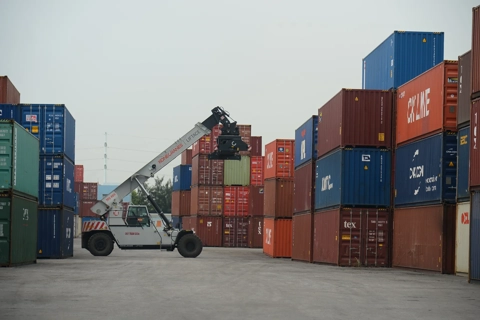
Illustrative photo
|
The CNY has felt to its 19-month low at the beginning of October with major factors including the People’s Bank of China lowering its reserve requirement ratios (RRR) for some banks for a fourth time this year. What’s more, the escalating trade tension between the US and China now results in almost half of all China-made goods exported to the US are facing tariffs and the US is further preparing to tax all imports from the country.
Pressures on the VND nevertheless are not coming from the CNY movement alone but also the strengthening USD on the back of the Federal Reserve (Fed) rate hike last month and one more coming before the year rounds up.
With the Fed also lifting the probability of three more hikes next year, the VND and other currencies could price in such impact, yet it may not be enough for the VND to pick up some strength to turn around in 2019.
Hai of HSBC noted that it would not be easy for the dong to appreciate next year despite several supporting elements. The flow of FDI, for instance, has been constantly ample, thus providing an abundant supply of capital for the economy. The sale of the state capital, together with the trade surplus, has also been the buffer to help the dong reduce any external shock. “For countries like Indonesia or those with trade deficits, they often face pressure on their FX. Vietnam fortunately is not one of them.”
“If Fed continues to raise its rate [next year], the greenback will generally gain its strength against other currencies, including Vietnam. Should Vietnam wish to maintain its export advantage, the country could not increase the value of its currency or keep it stable,” stressed Hai.
Meanwhile, Standard Chartered Asia FX strategist Eddie Cheung said they were positive about Vietnam’s fundamentals, with a trade surplus to conclude the year. This is part of the reason why the VND has been quite resilient compared to other Asian currencies, said Cheung.
“However, there can still be some depreciation happening to the VND, especially if USD/CNY moves higher. Our view for end this year is USD/VND at 23,400, then early first half of next year to 23,500 and 23,600.”
The prospect for the VND to gain some strength will come from the fact that the VND is in a good spot right now, according to Cheung, where the dong has appreciated against the CNY and KRW, which represent Vietnam’s two biggest import partners (China, Korea). Yet the VND has depreciated against USD and EUR, which represent Vietnam’s two biggest export partners (US and EU). So on the trade basis, this is perfect for Vietnam because Vietnam is buying goods at a cheaper price while exporting more.
“That’s a very strong advantage for the VND, especially in the second half of 2019 as the USD softens, the VND may have an opportunity to appreciate. Our forecast for 12-15 months from now is 23,300,” noted Standard Chartered’s Cheung. On a year-on-year basis, we think 2019 will be a year of the appreciating VND.”