Addressing infrastructure constraints stays central for Vietnam to achieve long-term growth: WB
A challenging external environment and weaker domestic demand are leading to a slowdown in economic growth in Vietnam.
A proactive fiscal policy supporting short-term demand, removing barriers to the implementation of public investment, and addressing infrastructure constraints can help the Vietnamese economy achieve its growth objectives.
This is the finding of the World Bank's latest economic update, "Making Public Investment Work for Growth," released today [August 10].
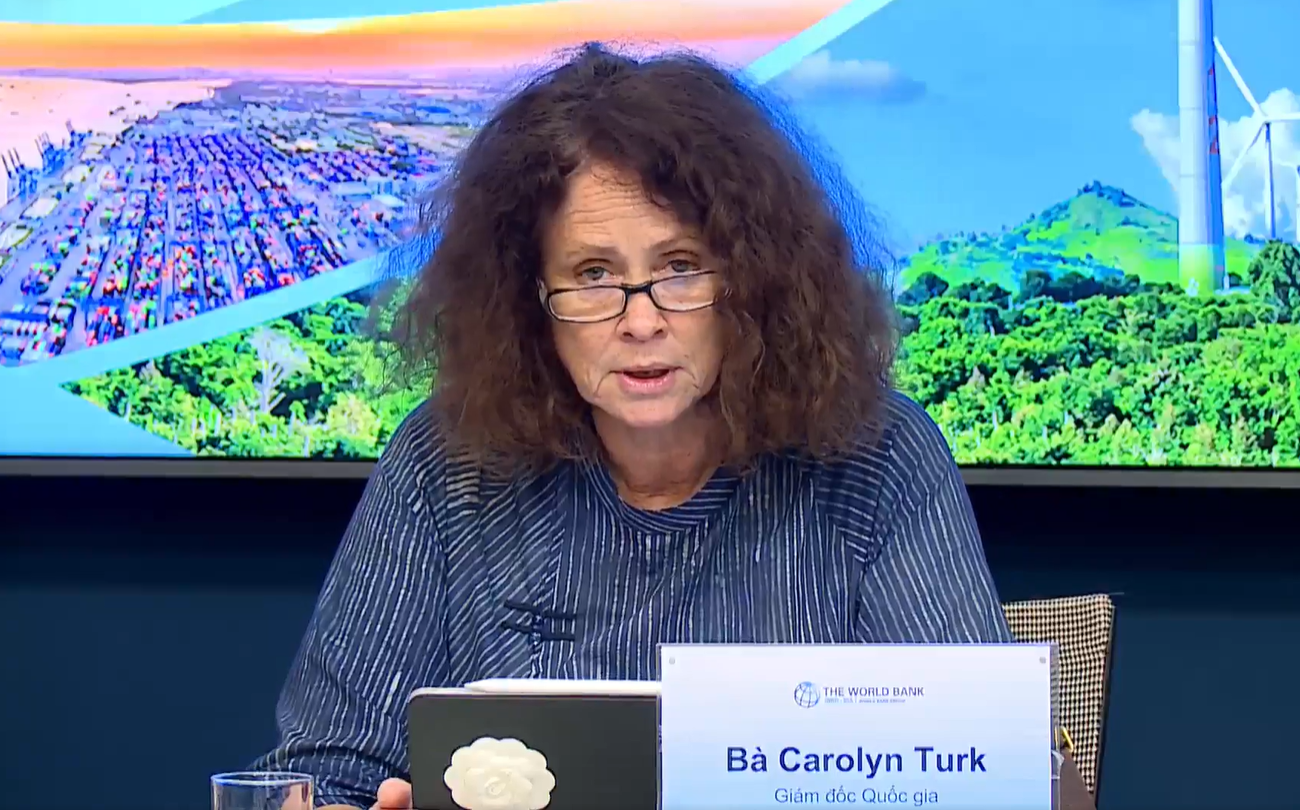
| World Bank Country Director for Vietnam Carolyn Turk. |
The report noted a challenging external environment and weaker domestic demand are leading to a slowdown in economic growth in Vietnam. The country’s economic growth, therefore, slowed from 8% in 2022 to 3.7% in the first half of 2023. Moderate growth of 4.7% is forecast for 2023, gradually accelerating to 5.5% in 2024 and 6.0% in 2025.
Domestic demand is expected to be the main driver of growth in 2023, albeit moderating. Private consumption will remain resilient, growing by 6% yoy in 2019, albeit below its pre-pandemic growth of 7% yoy, and contributing 3.4 percentage points to GDP growth.
Overall, the investment will contribute 1.8 percentage points to growth. Private investment is expected to remain subdued due to uncertainties in the external environment, growing by 4.3% yoy compared to 8.2% yoy in 2019, contributing 1.2 percentage points to GDP growth.
Public investment is expected to increase by 9.5% yoy, contributing 0.6 percentage points to GDP growth but only partially offsetting lower private investment.
With the easing of liquidity conditions and the State Bank of Vietnam’s renewed guidance on loan forbearance, the financing constraints in the real estate/construction sectors are expected to ease, supporting a moderate recovery of private investment from 2024 onward.
“Vietnam’s economy is being tested by internal and external factors. To boost economic growth, the government can support aggregate demand through effective public investment, thereby creating jobs and stimulating economic activity,” said Carolyn Turk, World Bank Country Director for Vietnam. “Beyond short-term support measures, the government should not lose sight of structural institutional reforms – including in the energy and banking sectors – as they are imperative for long-term growth.”
Proactive fiscal policy necessary
The World Bank’s report suggested that given ample fiscal space, fiscal policy should take the lead, ensuring a much better implementation of the investment budget for 2023. Full implementation of the planned investment budget would bring public investments to 7.1% of GDP in 2023, up from 5.5% scheduled in 2022, providing a fiscal impulse of 0.4% of GDP to support aggregate demand. The government has planned a 38% increase yoy in public investment for 2023 – equivalent to 1.6% of GDP (as part of the 2022-2023 Socio-Economic Recovery Program).
It is accelerating implementation, with the disbursement of the public investment budget jumping by 43.3% yoy during the first semester of 2023. However, historical public investment implementation rates have been low in the recent past, for example, reaching only 67.3% in 2022, warned the report.
Steps to accelerate and improve the efficiency of implementation would also help address emerging infrastructure constraints to growth, including critical investment needed in the electricity transmission network and in building resilience to climate change.
“These steps include setting investment targets and enforcing accountability at different intergovernmental levels for achieving them; focusing on key national investment programs such as national expressway, power transmission, and national target programs; allowing flexibility in rules related to budget allocation for the projects identified as part of 2022-2023 Socio-Economic Recovery Program; and allowing some flexibility on certain advance procurement activities before budget allocation,” said World Bank’s Senior Economist Dorsati Madani.
In addition to public investment, supporting workers and families affected by the slowdown through a more effective social protection system could help support aggregate demand. To successfully do so, the authorities need to reform the targeting approaches and delivery mechanisms of the social protection system so it might serve as an agile tool to support the vulnerable during economic shocks.
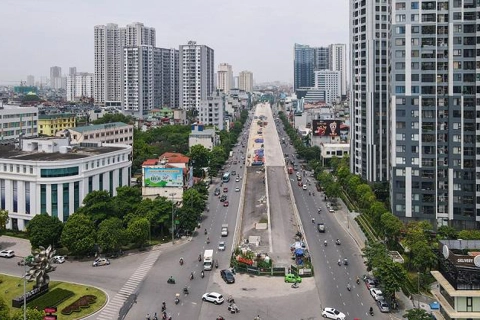
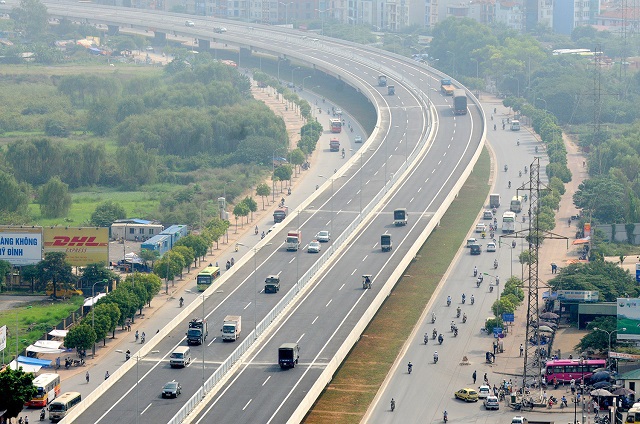
| Ring Road No.3 in Hanoi. Photo: Hai Linh/The Hanoi Times |
Promoting structural reforms
The report noted launching a new round of structural reforms would help enhance the productivity and sustainability of economic growth, contributing to Vietnam’s ambitions to become a high-income country by 2045.
“Continued reforms to lighten the regulatory burden on businesses are necessary for productivity gains and increased competitiveness. More critically, relaunching the State-Owned Enterprises (SOEs) reform can act as a catalyst to attract private sector participation, improve productivity, and ultimately boost overall economic performance. Promoting an inclusive financial sector can empower individuals and businesses to participate fully in economic activities, in turn enhancing their contribution to sustainable growth,” said Madani.
"Additionally, fully utilizing existing Free Trade Agreements (FTAs) can unlock market opportunities, boost exports, and foster economic integration with partner countries," she noted.
In the medium term, fiscal policy can also help enhance the sustainability of Vietnam’s economic growth. For instance, fiscal policy can help build resilience to climate change by incentivizing green production and consumption. Implementing carbon taxation and other fiscal instruments can incentivize industries to reduce their carbon footprint and adopt more sustainable practices.
“Providing time-bound fiscal incentives for green consumption, such as tax breaks or subsidies for eco-friendly products, can encourage individuals to make environmentally conscious choices,” said Madani.