Amended Capital Law: Hanoi needs more power
Hanoi should be empowered to stipulate regulations about its development.
Dinh Tien Dung, Secretary of the Hanoi Party Committee, proposed that the revised Capital Law give Hanoi the power to set standards in line with practice in certain areas to ensure long-term security and safety.
| Secretary of the Hanoi Party Committee Dinh Tien Dung at the session. Photo: Quochoi |
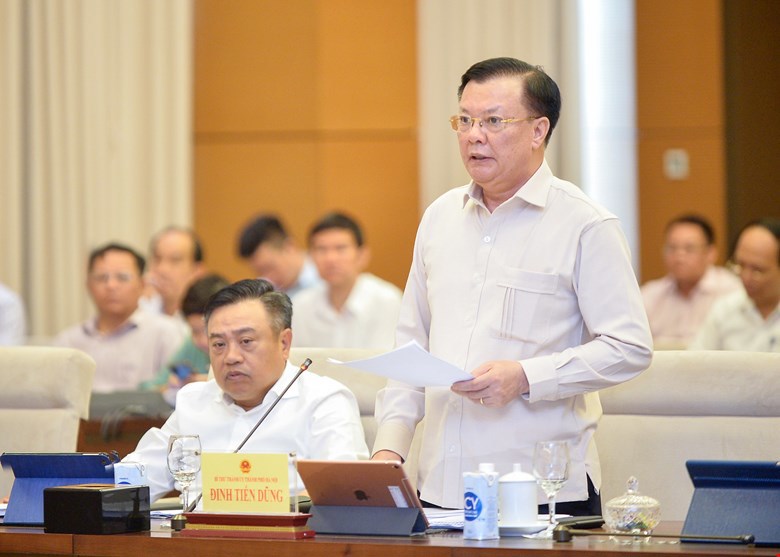
Dung made the statement on September 20 at the session of the National Assembly Standing Committee in response to last week's tenement fire in Hanoi's Thanh Xuan District that claimed dozens of lives.
Hanoi needs to be empowered
At the session, Chairman of the National Assembly Vuong Dinh Hue said that the law is particularly important for the development of Hanoi. Therefore, it is necessary to continue to review and research to fully institutionalize policies for Hanoi's development as set out in the resolutions of the Politburo.
Emphasizing that this is a law on decentralization of power for Hanoi, Chairman Hue noted that it must be comprehensive and focused. At the same time, it’s necessary for the city to delegate power to lower levels such as districts and departments.
The revised Capital Law mentions many mechanisms that have been applied to some localities such as Ho Chi Minh City and Khanh Hoa, so lawmakers need to discuss with these localities to see what content needs to be adapted for Hanoi.
Concerning the environment, traffic, fire prevention and fighting, Chairman Hue suggested that the Law should have standards that make the city different from other localities in the country.
As for the content, Hue proposed to study whether Hanoi’s resolution on cultural industry can be legislated to create conditions for the development of the Capital's cultural industry.
It is necessary to study Hanoi’s authority compared to other places in handling violations of fire prevention and fighting; and capital raising policies to meet the city’s urgent needs.
Vice Chairman of the National Assembly Nguyen Duc Hai said that if Hanoi's current specific mechanisms are not strong enough, so more breakthroughs are needed.
General Secretary of the National Assembly Bui Van Cuong agreed not to expand existing hospitals or build new industrial parks and higher education and vocational training institutions in the metropolitan area.
At the same time, he agreed to the relocation of industrial production facilities, healthcare, higher education, colleges, vocational education institutions and headquarters of agencies out of the central urban area.
Content of Capital Law
Minister of Justice Le Thanh Long presented a summary of the revised Capital Law. It is built based on 5 pillars: Institutionalizing the Party’s guidelines on building and developing the Capital; stipulating outstanding mechanisms and policies for the Capital to ensure compliance with the 2013 Constitution; following the nine policy groups approved by the Government; maximizing specific mechanisms in the Law for immediate application; developing the well-tested provisions of the 2012 Capital Law; legislating specific policies that are being piloted for provinces and tier 1 cities.
The draft law is arranged into seven chapters and 59 articles or 3 chapters, 32 articles more than the 2012 Capital Law.
Chairman of the National Assembly’s Law Committee Hoang Thanh Tung emphasized the need to promulgate the Capital Law to create a breakthrough mechanism, mobilize all resources, and exploit the capital's strengths for rapid and sustainable development.
“The amended Capital Law has been meticulously and seriously drafted with high quality, and is qualified to be submitted to the National Assembly Standing Committee for consideration and comments before submitting to the National Assembly,” Tung said.
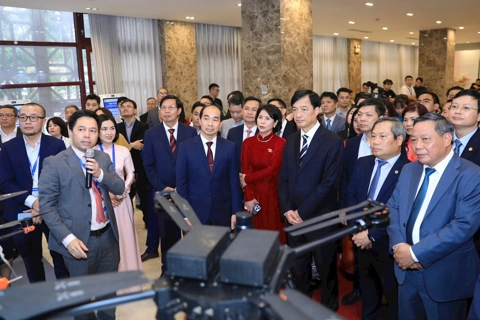
| Overview of the session. Photo: Quochoi |
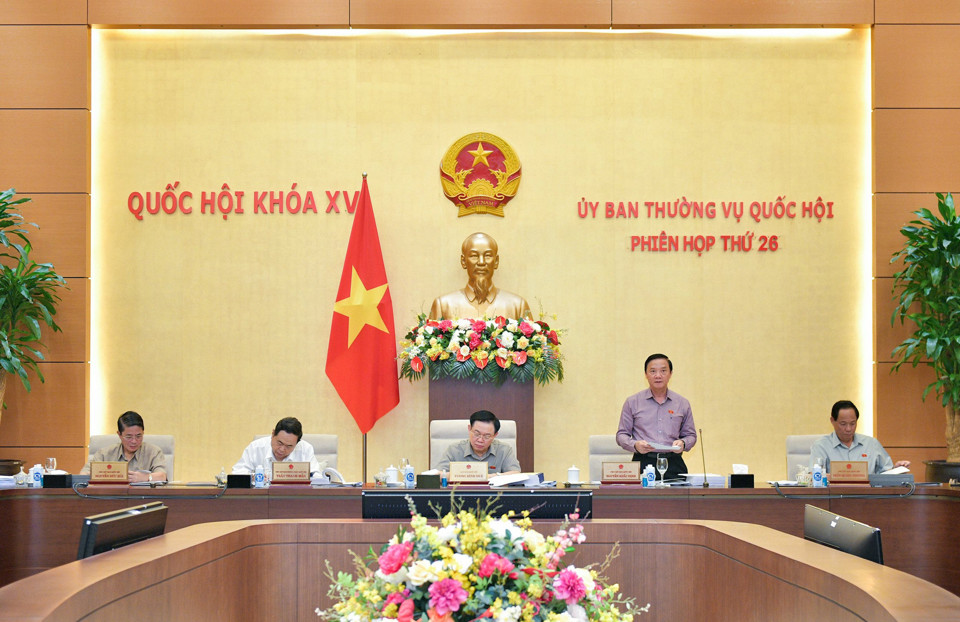
Vice Chairman of the National Assembly Nguyen Khac Dinh said that the National Assembly Standing Committee agreed with the need to amend the Capital Law and highly appreciated the preparations made by the Government, Hanoi, and ministries, especially the Ministry of Justice.
The National Assembly Standing Committee agreed with the contents of the revised law and requested agencies to continue finalizing it in the coming time.
To complete the Law, Vice Chairman of the National Assembly Nguyen Khac Dinh stated that it is necessary to closely follow the political basis, political-legal basis, and practical requirements, especially the 2013 Constitution, and development requirements of the city.
In addition, it is necessary to complete the contents on developing design centers, craft villages, cultural industry, science-technology, innovation investment fund, and the planning of the Red River region as well.
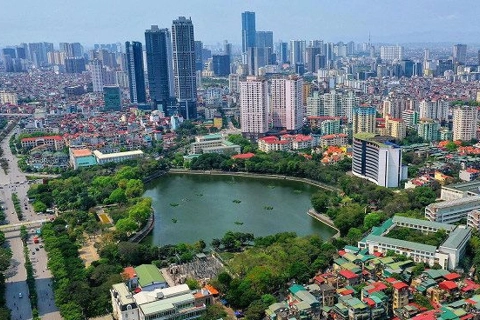
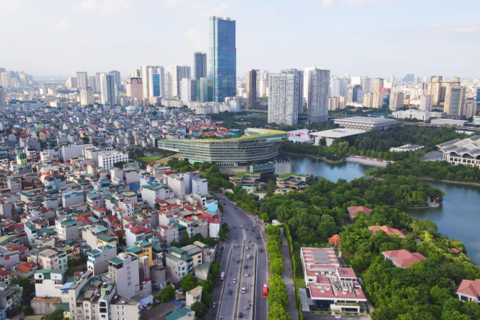
| More power would enable Hanoi to make its own planning for development. |