Amended Capital Law lays legal ground for Hanoi’s status as special municipality
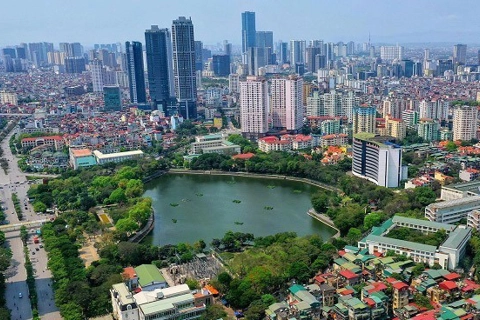
The upcoming amended Capital Law would have profound socio-political significance to Hanoi and the country in general.
The amended Capital Law introduces additional measures and policies to effectively implement the capital's mission as both political-administrative hub and a special municipality of Vietnam.
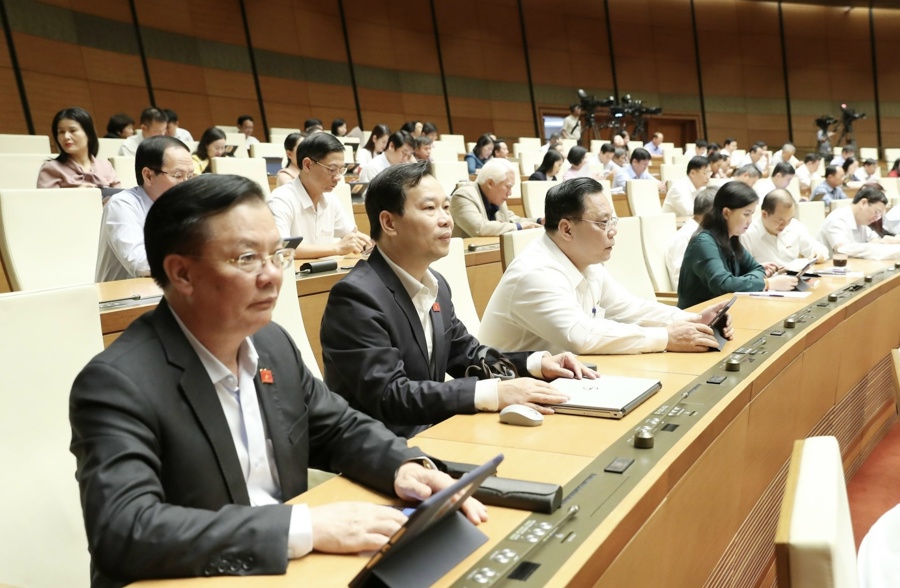
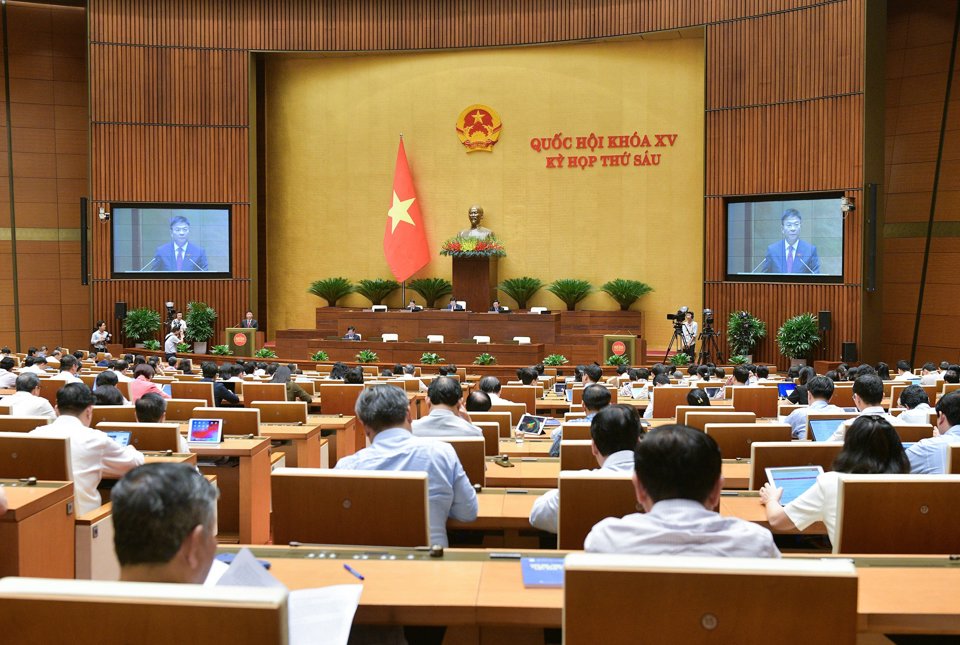
| National Assembly deputies of Hanoi at the session. Photos: quochoi.vn |
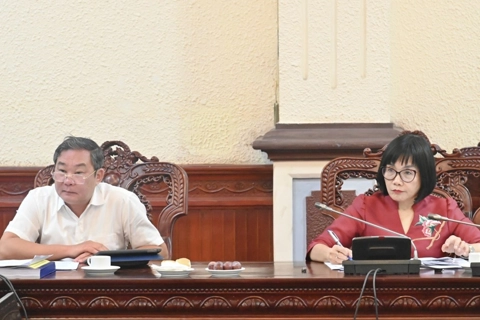
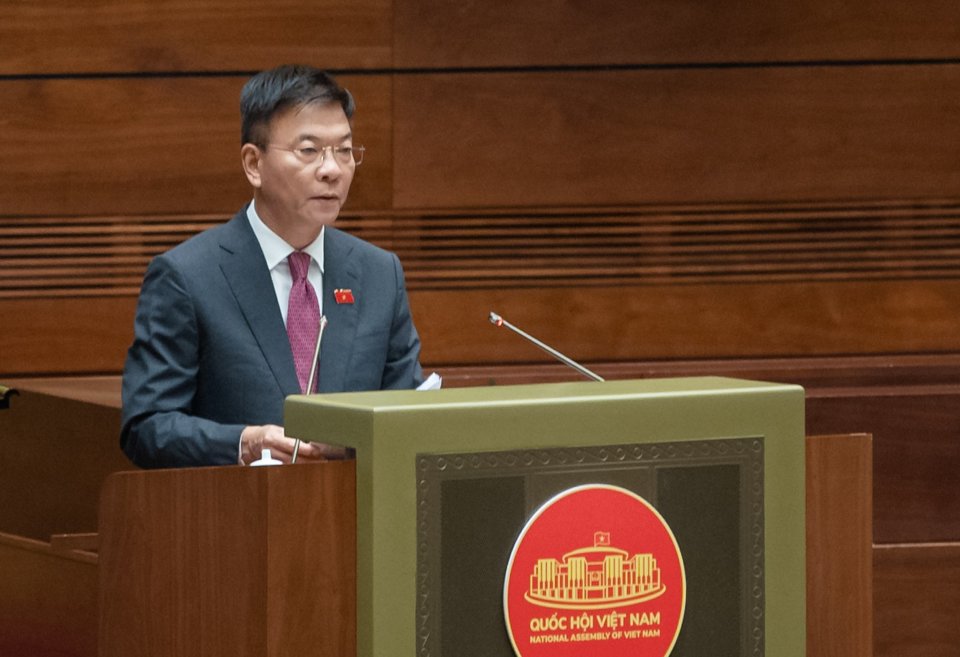
Minister of Justice Le Thanh Long emphasized essential elements while introducing the draft amended Capital Law during today's National Assembly session [November 10].
In particular, Long noted the Government has proposed the establishment of two cities under Hanoi’s administration. One would serve as a logistics and service hub in the Northern region, encompassing the districts of Dong Anh, Me Linh, and Soc Son. The other would focus on education, training, and science in the Western region, covering Hoa Lac and Xuan Mai areas.
"These proposed cities would exhibit distinctive characteristics compared to other district and town governments, leading to an increase in the number of vice chairpersons of the People's Council, People's Committee, and full-time People's Council deputies," added Long.
The minister emphasized that the amended Capital Law plays a vital role in institutionalizing the Party's policies and guidelines regarding visions for Hanoi’s development until 2030, with a vision to 2045.
“The goal is to build a cultured – civilized – modern capital, addressing shortcomings identified since the implementation of the Capital Law in 2012,” Long noted.
In detailing the law, Long explained that the draft is constructed based on five guiding viewpoints: complete institutionalization of the Party's policies, adherence to the 2013 Constitution, alignment with government-approved policy groups, detailed regulations for immediate application, and the inheritance and development of effective regulations from the 2012 Capital Law. Additionally, the law includes the legislation of specific mechanisms and policies being piloted in provinces and centrally run cities for the capital.
| Minister of Justice Le Thanh Long. |
The draft Law comprises seven chapters and 59 articles, marking an increase of three chapters and 32 articles compared to the 2012 Capital Law. Among these, three articles remain unchanged, 18 are amended and supplemented, and 38 introduce new regulations.
The draft Law proposes several specific mechanisms for Hanoi concerning the capital's construction, development, management, and protection.
In terms of investment, the Government suggests allowing the separation of compensation, support, resettlement, and site clearance projects from public investment projects. This mirrors the mechanism applied in Khanh Hoa Province and expands the scope of Public-Private Partnership (PPP) application in culture and sports.
Long noted that, concerning planning, space management, architecture, and urban landscape, the draft law advocates decentralization from the Prime Minister to the Hanoi People's Committee. "This would enable local adjustments to general planning for the construction of functional areas, as well as planning for general urban development and specialized technical infrastructure, similar to practices in Ho Chi Minh City".
Regarding culture, education, and social security development in the capital, the draft Law proposes the establishment of a Cultural Industry Center according to planning. It also assigns the City People's Council the responsibility to regulate content and support levels higher than current regulations for artisans and practitioners of intangible cultural heritage. Additionally, initiatives include teaching, practicing, and promoting the value of intangible cultural heritage.
Regarding social policy, the regulations specify that the Hanoi People's Council has the authority to decide on budget allocations for supporting poverty reduction, job creation, and borrowing for the purchase of social housing. The law also supports workers and employees in industrial zones to borrow to acquire social housing.
In terms of social security and welfare policies, there are provisions to support social insurance payments and provide free annual health checks for elderly residents in the capital.
| Overview of the session. |
Focusing on decentralization
During the session, the Chairman of the National Assembly's Law Committee Hoang Thanh Tung presented the appraisal report, stating that both the Law Committee and the participating agencies unanimously acknowledged the necessity, purpose, construction perspectives, and scope of amendments to the Capital Law.
Tung underscored the profound socio-political significance of the Capital Law, deeming it particularly important. He stressed that any amendments to the law must align closely with the political, legal, and practical foundations of the construction, protection, and development of the capital.
The goal is to promptly institutionalize the policies, requirements, and tasks outlined in the Resolutions of the Central Committee and the Politburo, especially Resolution No. 15-NQ/TW dated May 5, 2022, focusing on the development of Hanoi Capital until 2030, with a vision to 2045.
“The amendments aim to address practical challenges in the construction, protection, and development of the capital,” he said.
As per the appraisal Report, it was recommended that the draft amended Capital Law incorporate specific and distinctive mechanisms and policies.
These mechanisms should exhibit strong decentralization while also assigning tasks to the Hanoi city government for building, protecting, and developing the capital, he continued.
Tung emphasized the importance of clarity and precision in the mechanisms and policies outlined in the draft Law, especially concerning the scope and content of decentralization.
Comprehensive yet focused decentralization was highlighted, ensuring feasibility and incorporating mechanisms to control power through specific regulations on processes and procedures for implementing tasks.
“It is necessary to supplement specific mechanisms and policies to fulfill the capital's dual role as the political-administrative center of the country and a special municipality,” he concluded.