Amended capital law to boost agricultural export opportunities
Despite its small size, Hanoi's agricultural sector had export earnings of over US$1.35 billion last year.
According to the Hanoi Department of Agriculture and Rural Development, the city expects the revision of the General Planning for the Capital City to 2045 with a Vision to 2065 and the draft amended Capital City Law to create new export opportunities for its agricultural products.
Diverse range of products
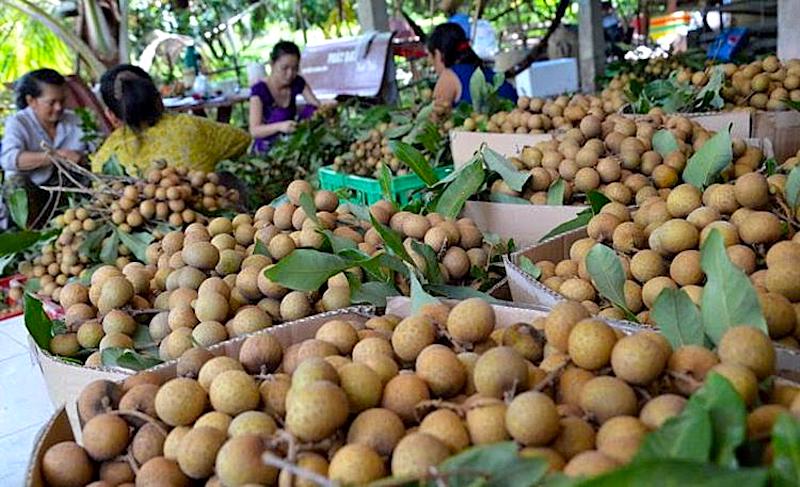
| Fresh late-ripening longan from Dai Thanh Commune in Quoc Oai District has been exported to the US, Australia and Malaysia. Photo: Anh Ngoc/ The Hanoi Times |
Among Hanoi's agricultural export strengths are spices. Although they do not require large-scale production, these crops have high standards for cultivation and processing.
The Development on Agriculture and Consultation of Environment Company Limited (Long Bien District) specializes in processing organic spices such as ginger, turmeric, cinnamon, star anise, garlic, chili, and lemongrass. Tran Van Hieu, the company's director, said the main sources of raw materials are the northern provinces of Cao Bang and Ha Giang, as the availability of raw materials in Hanoi is limited due to its small scale.
On average, the company produces about 300 tons of dried cinnamon, 200 tons of dried star anise, 500 tons of fresh ginger, 100 tons of dried turmeric, and 200 tons of fresh chili per year. The company's products are mainly exported to the US, some European countries, the Middle East, South Korea, and Japan.
Leafy greens grown in Hanoi are exported to several countries and are preferred by consumers, commanding high prices like water spinach. Water spinach that meets VietGAP standards is sold in Hanoi supermarkets for VND10,000-15,000 ($0.4-$0.6) per bunch, but when exported to South Korea, it can reach prices of around VND52,000 ($2.04).
Nguyen Xuan Dai, director of the Hanoi Department of Agriculture and Rural Development, said that despite the small and fragmented scale of production, Hanoi has a significant area under cultivation with crops suitable for export. Hanoi's main agricultural exports include cinnamon, star anise, spices (garlic, ginger, chili), green tea, black tea, rice, mushrooms, and wood ear fungus.
Currently, Hanoi is home to nearly 70 agricultural export firms that trade with East Asian markets, which are the primary export destinations for the city's farm produce. Hanoi also ships agricultural products to Europe, the United States, South Asia, Southeast Asia, and the Middle East.
New policies to create a breakthrough
| Rice harvest in Hanoi. in Hanoi. Photo: Trong Tung/ The Hanoi Times |
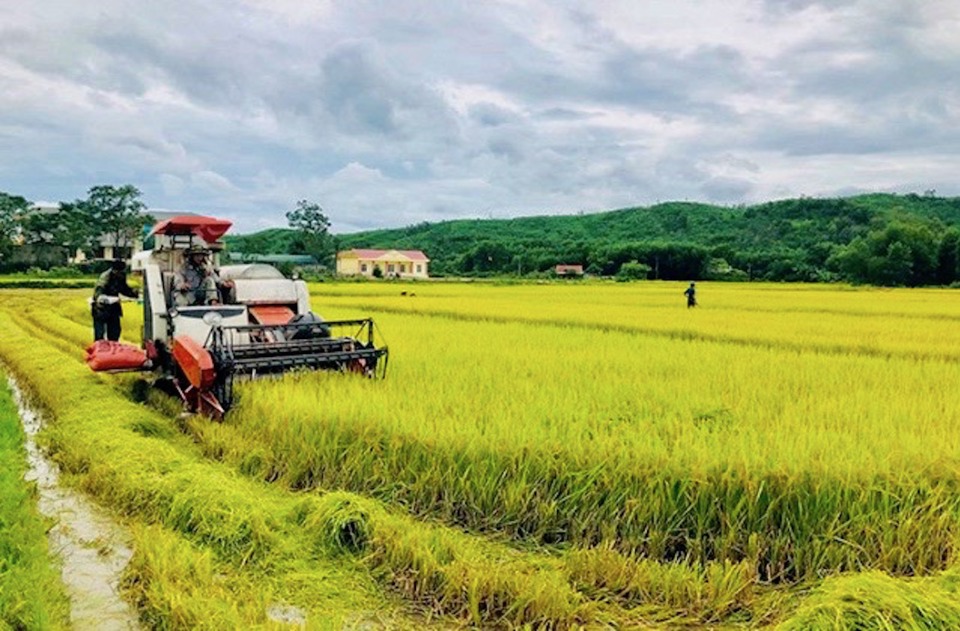
According to the city's Department of Agriculture and Rural Development, Hanoi has 16 area-code-issued fruit-growing zones and four packing plants with capacities ranging from 30 to 50 tons per day for export. In addition, the city has many potential export products, such as Japonica rice grown on over 7,000 hectares, safe vegetables on over 5,000 hectares, pink bananas on 3,200 hectares, organic vegetables on 50 hectares, and many high-quality processed products.
Nguyen Xuan Dai, Director of Hanoi's Department of Agriculture and Rural Development, believed that planning and technology are key factors that Hanoi's agricultural sector expects to be addressed through the draft amendment to the Capital Law and the adjustment of the city's General Planning, which are due for approval at the upcoming National Assembly session," he stressed.
Accordingly, agricultural planning will create a development area focusing on urban agriculture and agriculture linked to ecotourism. This would be a production area with an appropriate scale, adapted to Hanoi's land resources, but also involving the application of technology in cultivation, processing, and export.
It is seen as key to overcoming current constraints on Hanoi's agricultural exports and adding value to the industry and farmers, Dai said.
Local insiders suggested that Hanoi should select products with strengths in order to develop a production roadmap in conjunction with processing for export.
Secretary General of the Vietnam Tea Association Hoang Vinh Long said that the city currently has 59 enterprises engaged in the production, processing and export of green and black tea, with a total output of over 20,000 tons per year, accounting for about 16-18% of the country's total tea export volume.
However, many tea regions in the city have failed to meet export quality standards, so there is a need to focus on improving seedlings and implementing standardized production processes for tea plants, he added.
To boost the city's agricultural production and exports, Deputy Chairman of the Hanoi People's Committee Nguyen Manh Quyen stressed that Hanoi's agriculture must strive to be a shining example and leader in technology, processing and export of agricultural varieties.
He emphasized that Hanoi should capitalize on agricultural planning and targeted open policies to position itself as a hub for the transit and processing of agricultural products. The city's agriculture must establish links with provinces and cities according to international standards to serve domestic consumption and boost exports.
Director of the Hanoi Sub-Department of Agriculture, Forestry and Fisheries Quality Control Nguyen Thi Thu Hang: Enhancing the quality of agricultural exports To meet the increasing demand for standards and product quality associated with region-specific growing areas identified by farming area codes and traceability of origin, the industry has been actively building safe agricultural regions. The Hanoi Department of Agriculture and Rural Development continues to provide guidance and advice on adjustments and issue new regulations to support the development of agricultural processing. They are working to ensure food safety and promote agricultural exports. In addition, the department is enhancing training for agricultural, forestry and aquatic production and business enterprises. This training covers topics such as quality assurance regulations, food safety, and food import and export control. The city has also implemented comprehensive solutions focused on digital transformation and the application of information technology in production, supporting and encouraging companies to invest in high-tech farming, slaughtering, processing and agricultural wholesale markets.
Director-General of Bao Minh Business Agricultural Products Processing Joint Stock Company, Bui Thi Hanh Hieu: Encouraging the development of cultivation areas Currently, the company is collaborating with farmers from 20 provinces and cities to develop rice, with a total cultivated area of about 20,000 hectares. In Hanoi, the company is partnering with farmers in the communes of Dong Phu (Chuong My District), Tam Hung (Thanh Oai District), Tuy Lai, Phu Luu Te (My Duc District), with rice cultivation scale ranging from 50 to 100 hectares per commune. To ensure product quality, the company has established extensive cooperation with farmers in Hanoi. Bao Minh's rice products are labeled with tags, growing area codes, and growing processes, making it easy for consumers to trace their origins. However, in order to increase agricultural exports, relevant sectors need to establish mechanisms and policies that encourage companies to develop growing areas, establish cooperation to produce internationally standardized products, target exports, and contribute to improving farmers' livelihoods. Deputy Director of the Soc Son Cooperative of Conservation and Development of Medicinal Herbs, Nguyen Thanh Tuyen: Medicinal herb crops have great potential Medicinal herbs are one of the most valuable plant resources available to the agricultural sector. This group of plants has the potential to become a highly valuable export product if a standardized raw material production area can be established and high-tech processing methods applied. At present, the cooperative has developed 21 hectares of medicinal herbs, concentrated in Bac Son and Xuan Giang communes in Soc Son district. The cooperative's main products are golden flower tea, gotu kola tea bags, and Panax pseudo ginseng, among others. Only Golden Flower Tea has been exported to Japan in a small volume. In terms of raw materials, the cooperative is in principle able to obtain a large and stable quantity for processing. However, it faces difficulties in building a processing plant. The cooperative hopes that the government will provide technical support and capital funding to build a standard processing plant so that it can produce various medicinal herbal teas in large quantities for export. |