Businesses central to Vietnam's efforts towards sustainable development
Sustainable development should not be seen as the responsibility of large-scale businesses, but also small and medium enterprises, Deputy Prime Minister Vu Duc Dam has said.
Vietnam would not be able to realize its goal of sustainable development without public participation and a strong determination to promote public-private partnership with businesses as a core component.
| Deputy Prime Minister Vu Duc Dam at the event. Dinh Nam |
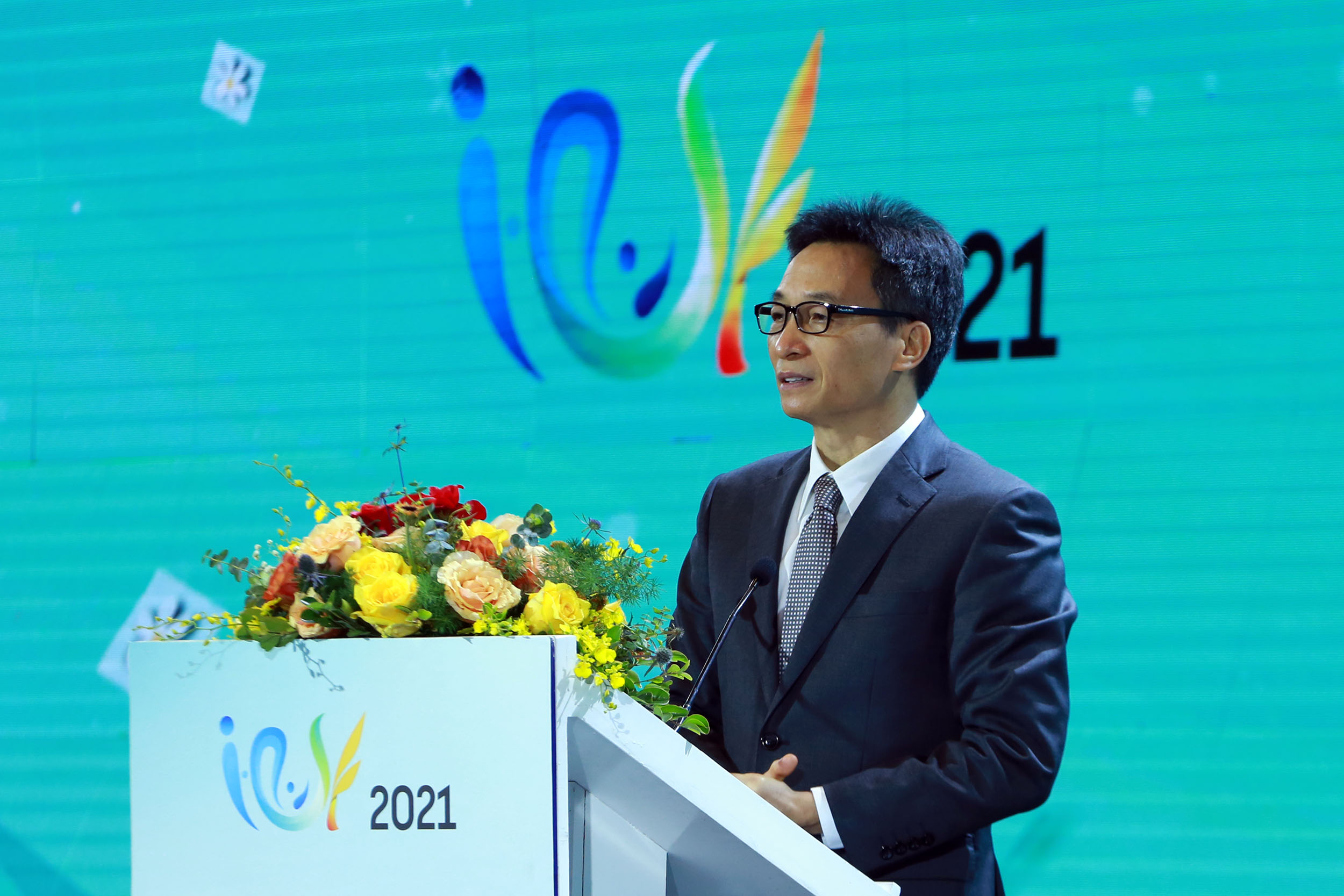
Deputy Prime Minister Vu Duc Dam stressed the view during the Vietnam Corporate Sustainability Forum (VCSF) 2021 held today [December 9].
According to Dam, sustainable development has become an irreversible trend for countries around the world, including Vietnam during the transition to green growth.
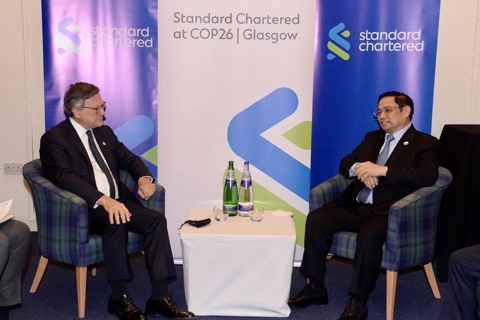
Dam referred to Prime Minister Pham Minh Chinh’s commitment to ensuring net-zero carbon emissions by 2025 at the COP26, which remains significant amid the severe Covid-19 impacts.
In this regard, Dam stressed the contribution of the business community would ensure Vietnam’s success in realizing this goal.
“Sustainable development should not be seen as the responsibility of large scale businesses, but also of small and medium enterprises,” he said, adding regardless of business sizes, enterprises should follow a vision and have specific actions to operate sustainably right from the beginning.
Dam added the realization of all 17 Sustainable Development Goals (SDGs) remains a huge challenge for all countries, including the most advanced ones.
“Though a developing country but Vietnam has not hesitated in putting out strong commitments for sustainable development,” Dam said.
He said Vietnam has completed two goals in “Quality Education” and “Responsible Consumption and Production”, but adding that the remaining ones including infrastructure, land, or maritime resources are still a long way from being achieved.
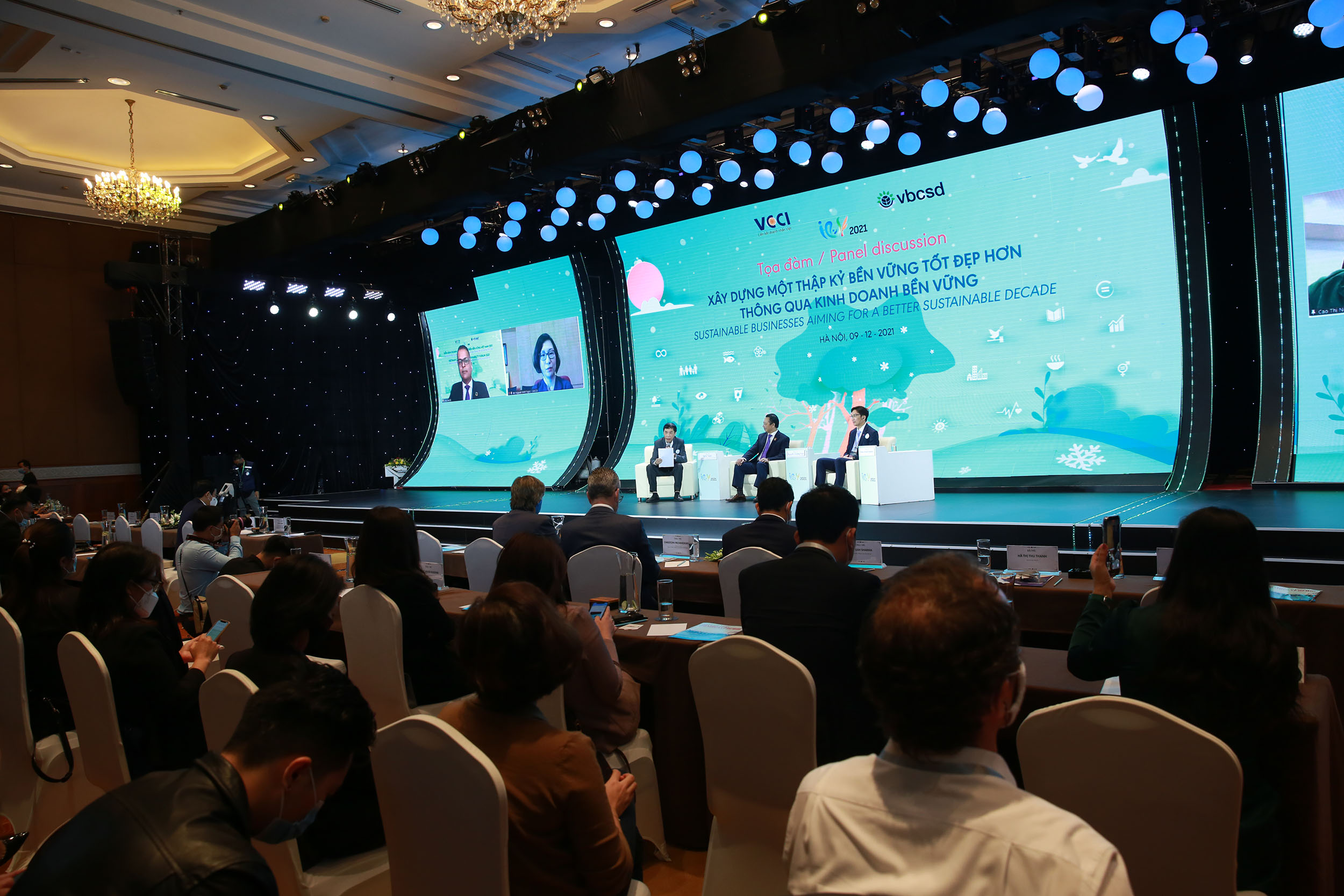
| Overview of the forum. |
Sustainability offers new business opportunities
A survey conducted by the Vietnam Chamber of Commerce and Industry (VCCI) on businesses during the pandemic showed that pursuing sustainable operations has helped the economy recover faster than others.
“The pandemic proves to be a catalyst for businesses to change their mindset on dealing with a crisis, and thus, to have a more thorough preparation and mobilize resources to work on risk management,” noted the VCCI’s report.
Once a crisis emerges, businesses could promptly kick-start their backup plans and deal with the situation accordingly for a speedy recovery and sustainable development.
VCCI Chairman Pham Tan Cong noted enterprises operating on sustainable corporate governance models have greater resilience compared to others.
“Even at a time of crisis, many have found a way out to create breakthroughs and thrive,” he continued.
Cong noted the adoption of sustainable business models and corporate governance models are the “vaccine” for businesses to cope with uncertainties.
“Resilience is now becoming a core competitive advantage of the economy and businesses,” Cong added.
He suggested the biggest challenge during the process of sustainable development would be to have the right mindset, financial resources, technologies, and high productivity.
To improve economic resilience, Cong advised businesses to incorporate sustainable development into their development strategy, noting this is the only way for them to survive at this difficult time.
“Sustainable development would offer businesses an opportunity to create environmental and social values worth trillions of US dollars,” Cong said, referring to the circular economy that is providing numerous golden market opportunities, millions of jobs, and thousands of new business models.