Circular economy - A chance of sustainable future
Urbanization and the rapid generation of waste have accompanied Vietnam’s growth in recent years.
The pandemic offers an opportunity to rebuild communities using more sustainable models to create a better, greener future for all. And one approach is by transitioning to a circular economy.
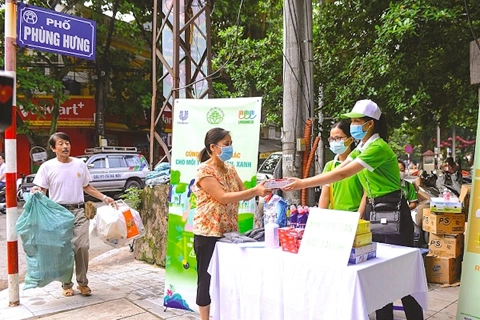
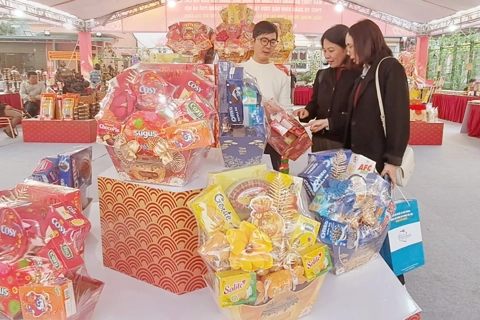
| Circular economy would lead to a greener and better future. Photo: Tuan Anh |
.jpeg)
ADB Country Director to Vietnam Andrew Jeffries shared the view at a webinar “Multi-stakeholders Approach – a Key to successful circular economy” jointly held today by the Norwegian Embassy in Hanoi, the ADB, and the Vietnam Environment Administration (VEA) under the Ministry of Natural Resources & Environment (MONRE).
According to Jeffries, urbanization and the rapid generation of waste have accompanied Vietnam’s growth in recent years.
“Even as many cities have become the center of economic activities, many of them require improvements in key urban infrastructure and services, including solid waste management,” he added, noting the Vung Tau Solid Waste Management Project Preparation Study is one of the pathways by which ADB is supporting the Government of Viet Nam toward a green recovery post-COVID and a low-carbon growth strategy.
Within the framework of this project, the Cities Development Initiative for Asia (CDIA) under the ADB will prepare a holistic solid waste management investment program for Vung Tau City that includes waste disposal, collection, sorting, recycling and treatment, as well as final disposal. It will first prepare a feasibility study exploring priority plastic waste project components in partnership with the Alliance to End Plastic Waste (Alliance).
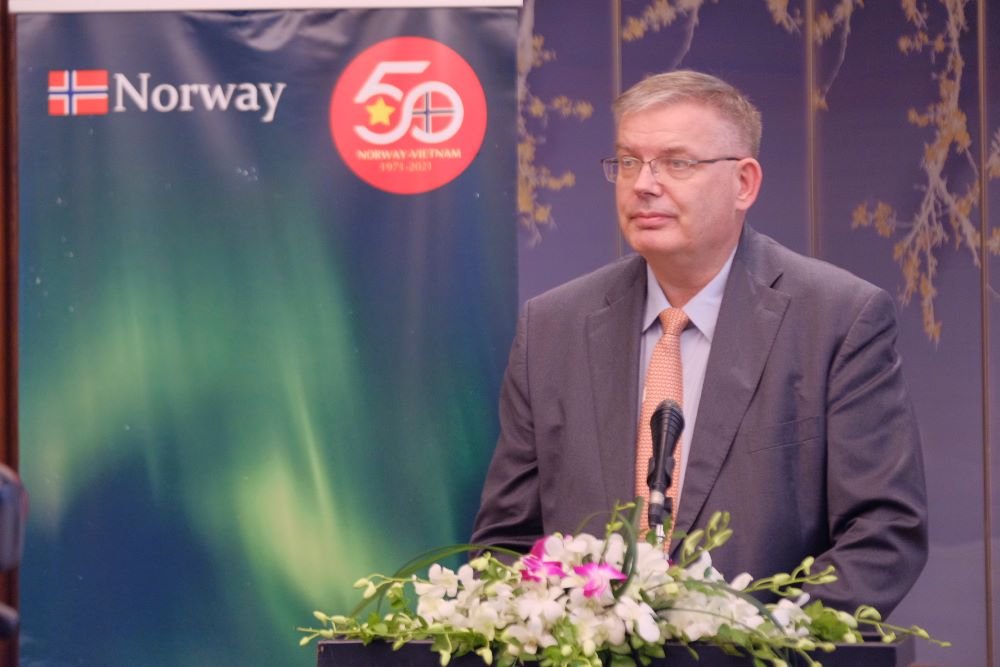
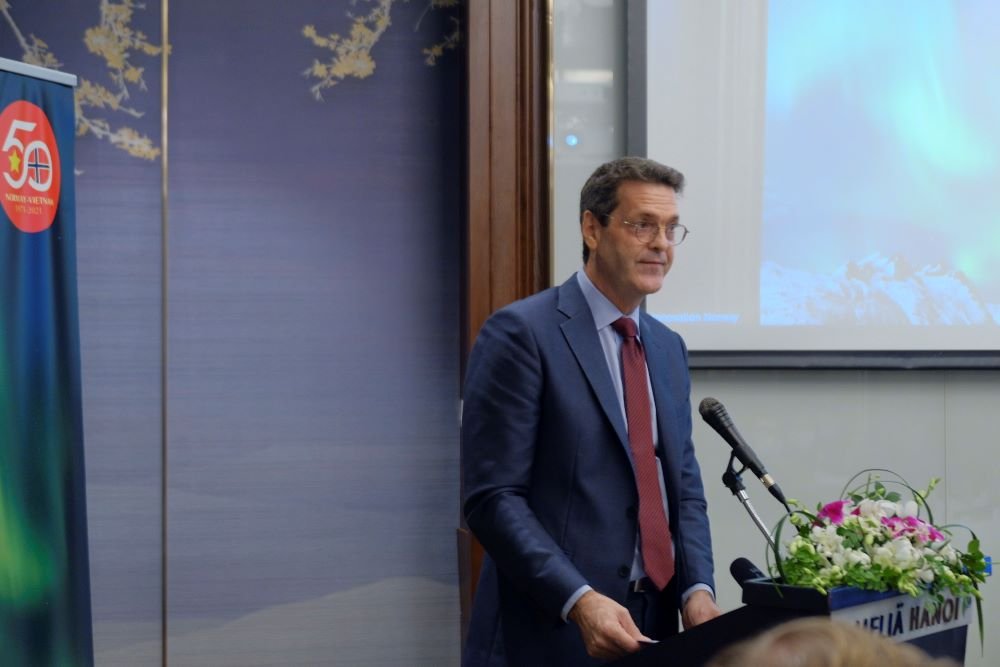
| Norwegian Deputy Head of Mission Jan Wilhelm Grythe. |
The project aims to build a strong stakeholder network among international & local organizations, research institutes, businesses, and national government (MONRE, DONRE, Vung Tau People’s Committee) to manage the solid waste across the value chain and catalyze investment to help minimize plastic waste leakage into the nature.
“Norway’s multi-stakeholder model where the government agencies work and coordinate closely with researchers/academia, private sector, and NGOs in policymaking and implementation has been proven successful in all sectors including circular economy for plastics. We would like to share this model with Vietnam as it has enabled Norway to achieve our circularity goals. The Norwegian participants at the workshop reflect this model of synergies particularly with the presence of international development organizations and financing institutions such as ADB - a close partner of Norwegian Ministry of Foreign Affairs in Asia and UNDP”, said Norwegian Deputy Head of Mission Jan Wilhelm Grythe.
Necessity to promote sustainable practices for production, business
| ADB Country Director to Vietnam Andrew Jeffries. |
An estimated 9.3 billion tons of virgin plastics were produced globally up to 2019. Out of this, 6.3 billion tons have already ended up being plastic wastes; of this, only 9% was recycled, 12% incinerated and 79% dumped – implying that more than five billion tons of plastic wastes are today accumulated in dumpsites/landfills around the world.
Experts suggested this will slowly break down and be released to groundwater and rivers, resulting in a continuous source of microplastics to oceans.
Vietnam has set ambitious targets to reduce, reuse and recycle (3R) plastic wastes. An example is Decision 1316/QD-TTg issued on 22 July 2021 by Prime Minister Pham Minh Chinh on strengthening management of plastic wastes in Vietnam, which targets 85% of generated plastic wastes being collected, reused, recycled, and disposed of; 50% of marine plastic wastes being reduced; 100% of tourist attractions, tourist accommodation establishments and hotels not using non-biodegradable plastic bags and single-use plastic products.
Most recently, MONRE, in partnership with UNDP Vietnam, launched the Vietnam Circular Economy Hub to raise awareness and build the capacity of all stakeholders, including public authorities, businesses, civil society, academia, in adopting the CE principles, creating synergies and integrating financial and technical resources to support the transition towards a low-carbon and circular Vietnam. It is time to walk the talk, and everyone should play their roles.
According to Deputy Chairman of the Vung Tau City People’s Committee, Vo Hong Thuan “Reducing plastic wastes is extremely important and practical. We see this as the task of not only the City’s administration, our departments but also local people, entities, and business community. Everyone has a role to play,” he said.
“Although we have issued a plan for wastes sorting and reducing undisposable plastic products, it is yet to be effective due to the social distancing measures and limited public awareness. As the plastic waste treatment infrastructure remains incomplete, it is difficult to initially collect, sort, transport, and dispose of the plastic wastes properly. Therefore, we hope to have more opportunities to work with local and foreign partners to develop and implement feasible and sustainable models for Vung Tau,” Thuan said.
Meanwhile, VEA Deputy Director General Nguyen Hung Thinh noted Vietnam is among the global pioneers in adopting system changes to accommodate the building of a circular economy for plastics.
“For it to succeed and to reduce plastic pollution, the Government, research agencies and people of Vietnam as well as the world at large need to proactively implement policies on promoting sustainable practices for production, business, and consumption; waste management towards treating waste as a resource; expanding producers’ responsibility for waste recycling and treatment; promoting reuse and recycling of the plastic waste in tandem with limiting uses of single-use non-biodegradable plastic packages”, said Thinh.
At the event, all the stakeholders including Norway, international donors, academia, and the private sector showed their commitment to supporting the Government of Vietnam in building a successful circular economy for plastics and thus helping Vietnam to fulfill its environmental commitments and to ensure a sustainable and greener economic growth.
In COP26, Vietnam signed a Global Coal to Clean Power Transition Statement and Prime Minister Pham Minh Chinh made a bold commitment that Viet Nam targets a net-zero goal by 2050. This shows Vietnam’s strong political will to make a significant contribution to keeping 1.5 degrees within reach, and stop catastrophic global warming as aimed in the Paris Agreement. Indeed, this is the right time to mainstream a circular economy for plastics to use resources wisely, reduce emissions efficiently, and restore the environment. Prime Minister Chinh also emphasized the need for international support and cooperation to help Vietnam reach this goal.