Eating at home is new reality among Vietnamese consumers post Covid-19
Sixty-two percent of Vietnamese respondents said that they would eat at home more often in the post-Covid-19 period.
Vietnam is one of the top three Asian markets that follows the trend of eating at home more often after the end of the pandemic, according to the latest findings released on April 12 by Nielsen, a global measurement and data analytics company.
| Photo: Yeu bep group |
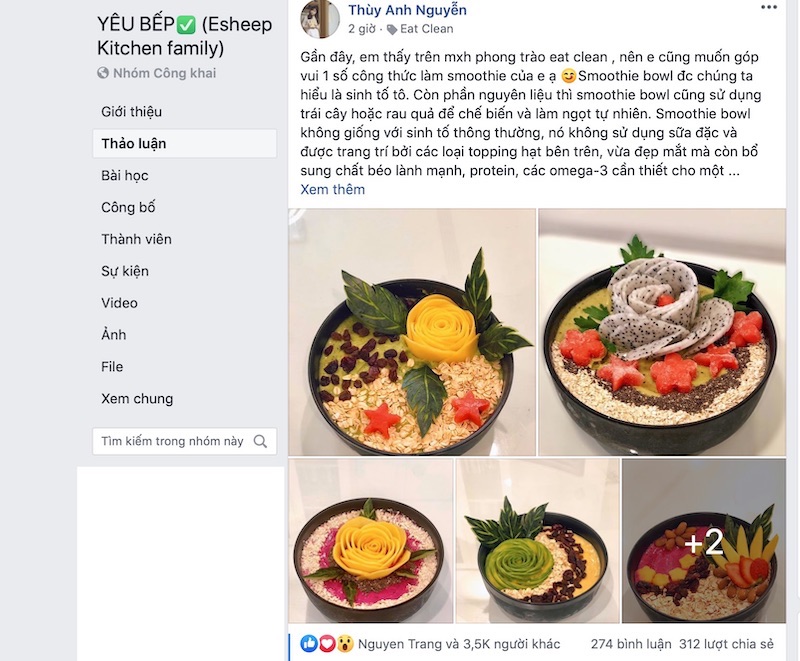
The trend is evident in Vietnam as dining- and cooking-at-home fanpages have been mushrooming since early April. Facebook groups such as ‘Yeu bep’ (Love kitchen) or ‘Ghet bep, khong nghien nha’ (Hate kitchen, dislike home) have added thousands of new members every day with membership totaling hundreds of thousands only after few days of launching. Pictures of dishes made at home have been posted in thousands per day in Yeu bep group, showing the reminiscence of the lavish group feast before the pandemic came.
Consumers have re-prioritized eating at home
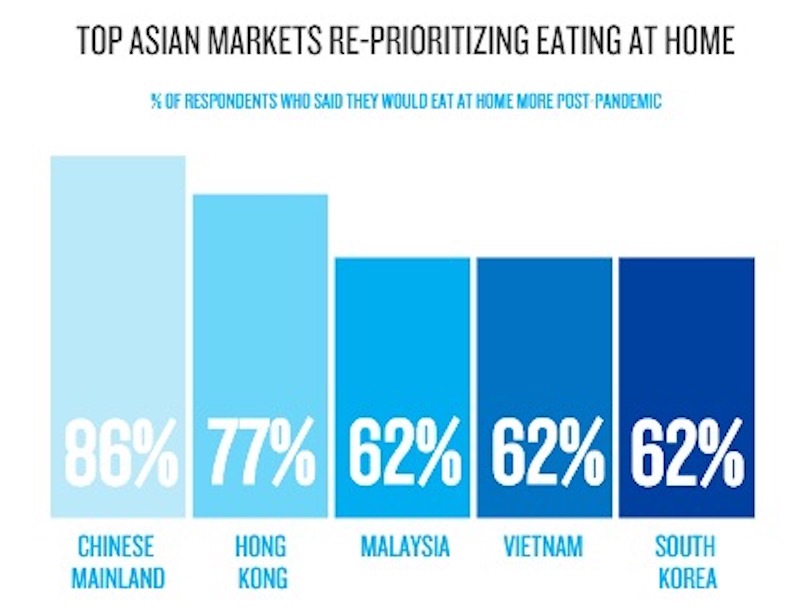
Nielsen’s “Covid-19 – Where consumers are heading?”, which tracks consumers’ sentiment toward the coronavirus outbreak, their changing lifestyle, and spending on fast-moving consumer goods (FMCG) categories, reveals a phenomenal shift from on-the-go consumption to safe in-home consumption due to the impact of the Covid-19. The trend is led by mainland Chinese consumers with 86%, Hong Kong (77%) and Vietnam (62%).
| Source: Nielsen Vietnam |
“In a number of Asian markets, sales are regularly exceeding 20-25% of the average weekly sales across FMCG every week since the end of January. Consumers have been back to the same store multiple times and we have seen this behavior now in markets for more than two months, so this behavior is beyond panic buying. There is no doubt consumers have moved away from an ‘on-the-go lifestyle’ to more of a ‘safe in-home consumption’ trend,” Vaughan Ryan, managing director of Nielsen Southeast Asia, said.
How about Vietnamese consumers’ demand for takeaway and home deliveries of food?
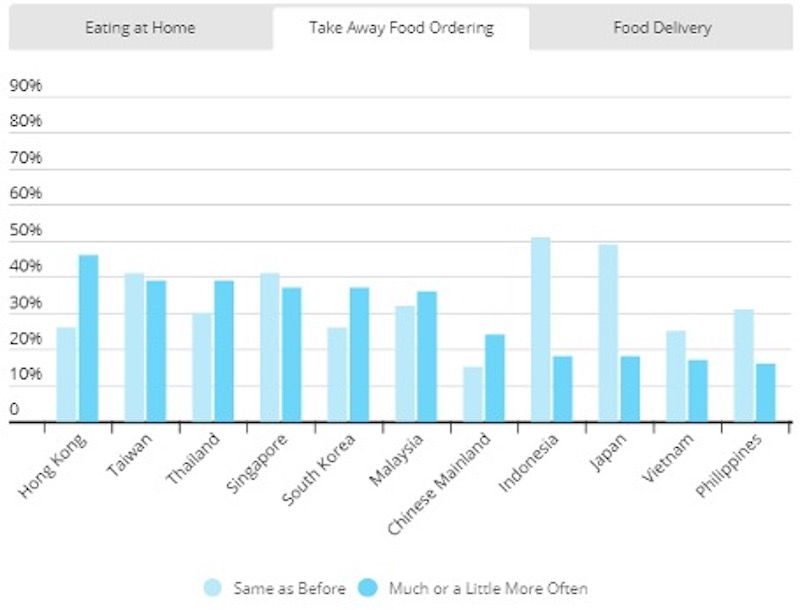
This study also reveals that there is a high demand for convenience and safety as consumers in Hongkong, South Korea and Thailand are forced to re-think about food options without compromising their health.
On the contrary, over half of Vietnamese consumers indicate they will order take-away food less often than before. “The shifts away from out-of-home dining to at-home food delivery, takeaways and cooking during the Covid-19 period are locally nuanced by traditional consumption habits but also by the different quarantine and shutdown measures by market,” said Ryan.
Control of stocking stores to meet new levels of demand
The implications this will have on restaurants and other out-of-home businesses are clear, but the trend will also affect the way retailers fill their stores’ shelves to meet these emerging new levels of demand.
“It’s essential that those products have availability for consumers where they are shopping. With challenges around getting the products to market, being out of stock is also a concern as a lack of availability will mean consumers either choose an alternative or simply buy nothing, a missed opportunity for both retailer and manufacturer, and causing frustration for the shopper,” Louise Hawley, managing director of Nielsen Vietnam, said.
| Chart: Impact of Covid-19 on Asian Consumers eating habits regarding to take away food ordering (Nielsen Vietnam) |
This represents a huge opportunity for retailers and manufacturers to capitalize on. The shift from away-from-home eating is likely to stick even after the pandemic. By then, healthy eating may become more important to consumers than before, with expectations around in-home dining being reset, according to Hawley.
This represents an opportunity for manufacturers, retailers, restaurants and food delivery companies to rethink their health offerings, ensuring their assortment satisfies the increasing demand for health and convenience attributes - but with high quality and hygiene standards for which consumers are willing to pay more for.
“For retailers, deepening online channels, re-thinking delivery, improving offline-to-online services further and accelerating multi-channel integration will be how consumers shop in the future,” Hawley concluded.