FDI firms face challenges on Vietnam’s stock market
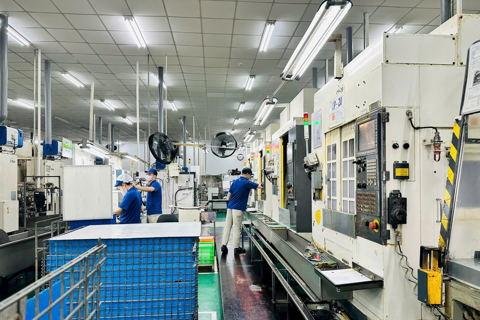
Part of blame is the business performance of the FDI firms which lack stability and significant growth in annual profits, which discourages investors.
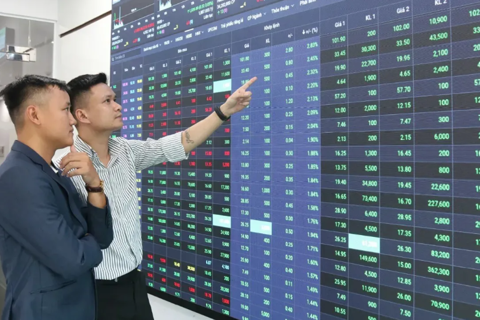
While many foreign-invested enterprises are finding it hard to be listed on the Vietnamese stock market, some others’ shares traded on the bourse are facing the neglect from investors.
| A lack of specific regulations is deterring FDI firms from listing on the stock market. |
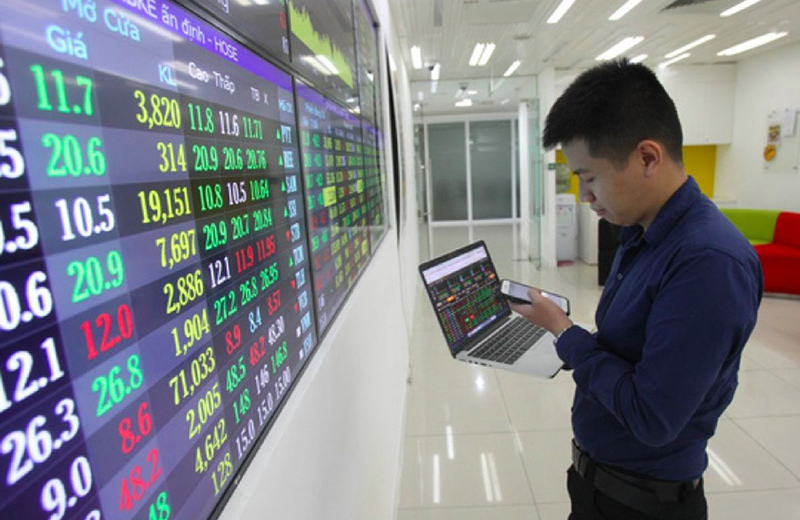
After 13 years of listing on Vietnam’s stock market, shares of Taya (Vietnam) Electric Wire and Cable JSC (TYA) have lost more than half of their value.
The company listed its shares on the Ho Chi Minh Stock Exchange (HoSE) in 2006 for VND34,000 (US$1.47) per share. Now its shares are priced at VND14,200 (61 US cents) per share, with average trading volume of more than 20,000 units per session.
Also in 2006, shares of Taicera Enterprise Company (TCR), a Taiwan-based enterprise, were listed on the HoSE for VND35,000 (US$1.52) per share. Now TCR is trading at a price of VND3,470 (15 US cents) per share, a decline of more than 90% in value after 13 years of listing.
The story is the same with other FDI stocks listed at the same time, such as Royal International Corporation (RIC), Tung Kuang Industrial JSC (TKU), Mirae Joint Stock Company (KMR) and Everpia JSC (EVE).
FDI firms listed at later points faced the same situation.
Listed in 2017, shares of Siam Brothers Vietnam JSC (SBV) have so far dropped more than 80%, from VND48,000 (US$2) per share to VND9,800 (42 US cents) per share.
Chang Yih Ceramic JSC (CYC) was offered at VND20,000 (86 US cents) per share on the first trading day in 2017, but now is traded at VND700 per share.
Commenting on the failure, industry insiders said that most listed FDI firms are of small and medium size. Their business activities have not witnessed significant advancement while a number of large institutional shareholders have gradually divested capital, affecting the confidence of small shareholders.
Some of them have even had to cancel listings due to being suspected of practicing transfer pricing and tax evasion.
According to Nguyen Hong Khanh, director of the market analysis department at Vietnam International Securities Co (VIS), the business performance of the FDI firms lack stability and significant growth in annual profits, which discourages investors.
Regulatory barriers
Besides the firms, a large number of other FDI firms still want to list shares on the local stock market as they need capital to re-invest and expand in Vietnam. However, they have to decide otherwise due to the lack of specific regulations on listing.
According to lawyer Tran Minh Hai, director of law company Basico, regulations on conditions and procedures for FDI firms to float shares on the Vietnamese stock market have been unclear.
Several firms did prepare dossiers for listing but still have to wait for specific instructions from competent agencies. South Korea’s Seoul Metal Vietnam was an example. Following its listing on the over-the-counter (OTC) platform in 2017, Samsung’s contractor has shown its interest in listing on the HoSE, but a lack of regulations has made the company postpone its plan until now.
Besides the lack of detailed guidance, experts said Vietnam’s laws on foreign ownership limit and conditional business lines have also deterred overseas investors from joining the market.
Therefore, according to experts, a legal overhaul is urgently needed to ease FDI firms to list on the local exchange market, promoting the budding image of Vietnam as an open and welcoming destination for foreign investors.
Nguyen Hung Quang, managing partner at NHQuang & Associates, said that the facilitation for FDI firms to be listed on Vietnam’s stock market will make it easier for not only foreign -investors but also the spread of technology and knowledge between the foreign-invested and domestic-invested sectors.
In addition, it will also contribute to ensuring an equal treatment among investors under the new -generation international investment agreements which Vietnam participates in, Quang said.