Fisheries – Productive cooperation between Vietnam and Norway
The two countries, which are the world’s leading seafood exporters, do not compete with each other but support one another to be successful and responsible seafood nations.
Fisheries sector demonstrates the productive cooperation in the Vietnam-Norway bilateral relations over the past five decades.
| State Secretary of the Norwegian Ministry of Foreign Affairs, Erling Rimestad, delivers speech at the seminar. Photos: Embassy of Norway in Hanoi |
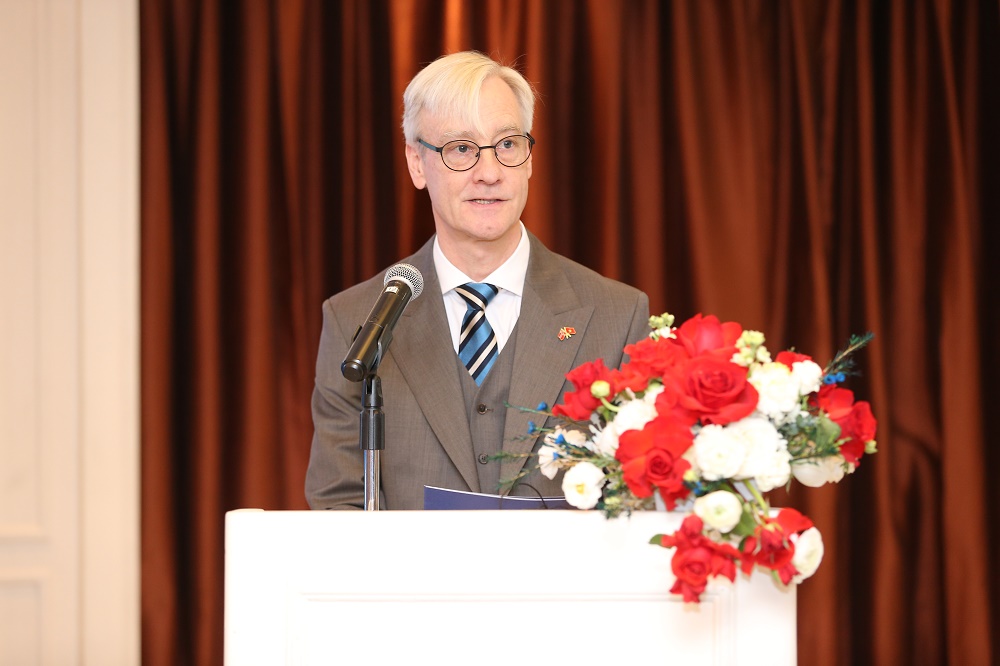
State Secretary of the Norwegian Ministry of Foreign Affairs, Erling Rimestad, shared the view at a seminar held in Hanoi today [March 1] during his official visit to Vietnam.
“We find ourselves at the top of the list of seafood exporters – Norway as the second biggest in the world, and Vietnam as the third biggest. We are in the fortunate position that this does not make us competitors – in fact we complement each other as seafood nations.
In reality, Norway exports species such as salmon, cod, king crab and shrimps from the sea. Meanwhile, Vietnam is a big supplier of farmed pangasius and shrimp.
“The processing of Norwegian mackerel in Vietnam, also shows how we can both benefit in the seafood value chain,” the Norwegian top diplomat emphasize.
| Ambassador of Norway to Vietnam Hilde Solbakken makes remarks at the seminar. |
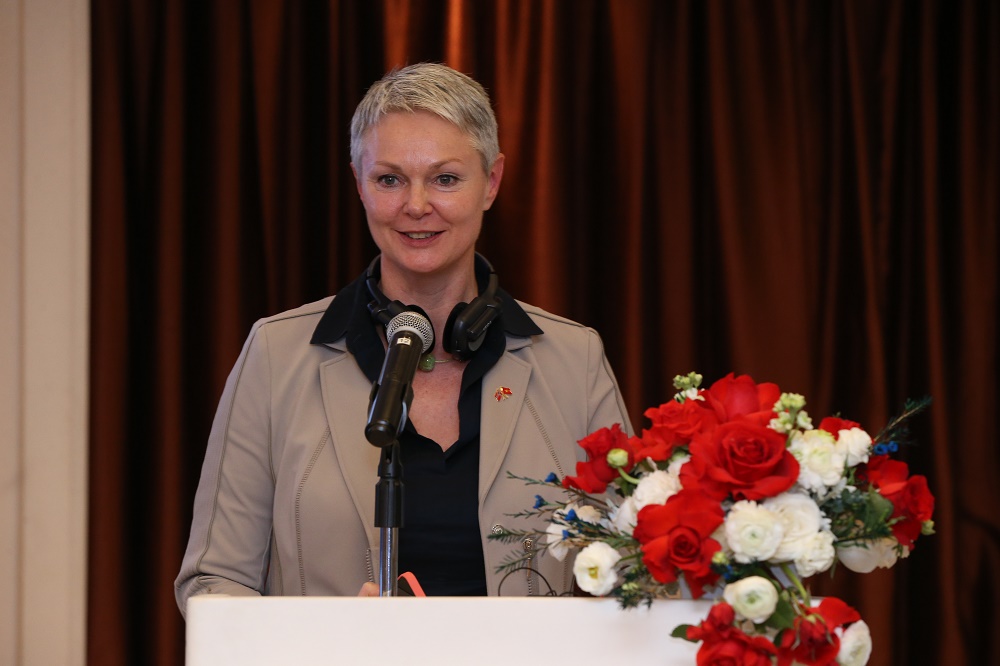
Echoing Rimestad, Ambassador of Norway to Vietnam Hilde Solbakken indicated “Norway takes pride in the cooperation with Vietnam in the fisheries, aquaculture, and marine sectors, and sees this a central part of the more than 50 years of friendship and cooperation since we established diplomatic relations in 1971.”
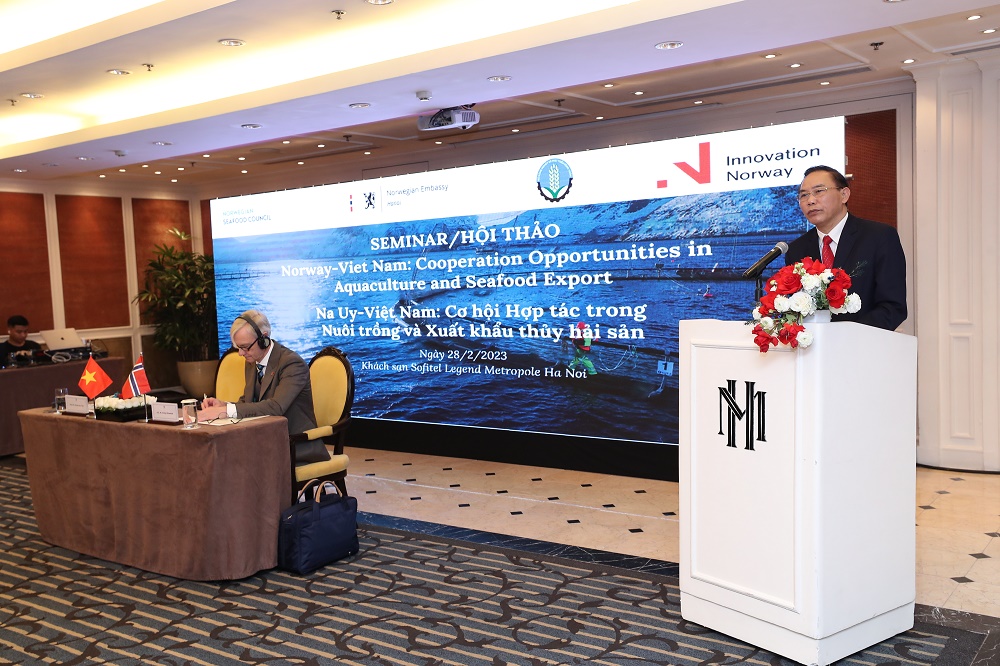
Vietnam’s Deputy Minister of Agriculture and Rural Development Phung Duc Tien highly appreciated the support from Norway to the ministry and the fisheries industry for more than 30 years, which covers different segments from development of a regulatory framework to technical assistance, capacity building and training.
| Vietnam's Deputy Minister of Agriculture and Rural Development, Phung Duc Tien, speaks at the event. |
Valuable expertise
On the occasion of the Norwegian Foreign Minister’s official visit to Vietnam, the Embassy of Norway in Hanoi and Vietnam’s Ministry of Agriculture and Rural Development (MARD) co-organized a seminar “Norway – Vietnam: Cooperation opportunities in aquaculture and seafood export”.
The seminar is expected to be a forum for authorities, companies and stakeholders of both countries to explore practical solutions and intensify collaboration amid the global trends towards greener and more sustainable development.
At the seminar, the Norwegian Seafood Council (NSC) announced a new plan for the introduction of more Norwegian seafood products to the Vietnamese market.
Deputy Minister Tien said the seminar is a great opportunity for the two countries to deepen bilateral cooperation in marine aquaculture on an industrial scale, promote bilateral trade in seafood products, and realize the areas of cooperation as stated in the Letter of Intent signed between Norway and Vietnam in May 2021.
He also provided some updates on the situation of seafood production and export in Vietnam over the past years and highlighted the policies, priorities and strategies of Vietnam for its fisheries sector towards effective and sustainable growth of marine aquaculture in the coming decades.
Meanwhile, Director General of the Fisheries Department, MARD Tran Dinh Luan shared the priorities of Vietnam’s fisheries sector in the coming time, particularly in the shift from traditional aquaculture model to one on industrial scale, focusing more on the quality of the products and environmental protection.
He affirmed: “Vietnam is now shifting to marine aquaculture on an industrial scale, which is more sustainable from both social and economic perspectives taking into consideration the protection of natural resources and the environment and meeting the strict requirements of the consumption markets”.
He expressed hopes to learn more from Norway’s experiences in developing the national branding for Norwegian salmon in order to develop a national brand for Vietnam’s products of marine aquaculture on industrial scale.
SEA Director of the Norwegian Seafood Council (NSC) Asbjørn Warvik Rørtveit brought to the seminar the success story of Norwegian salmon. It’s the combination of traditions and knowledge and a modern scientific approach, keeping the environmental context in mind and forming the basis of Norwegian aquaculture.
As a result, Norway was the first country to successfully farm and commercialize Atlantic salmon back in the 70s. The Norwegian coastline, which reaches far into the Arctic, offers ideal conditions for the fish that thrives in cold waters. Here, the salmon can live in its natural environment.
“For thousands of years, Norwegian fishermen have survived thanks to our in-depth knowledge about the Norwegian seas, and the fish itself – what they need and where they thrive. Today, we continue to push boundaries to evolve and improve when it comes to technology and sustainability,” Rørtveit said.
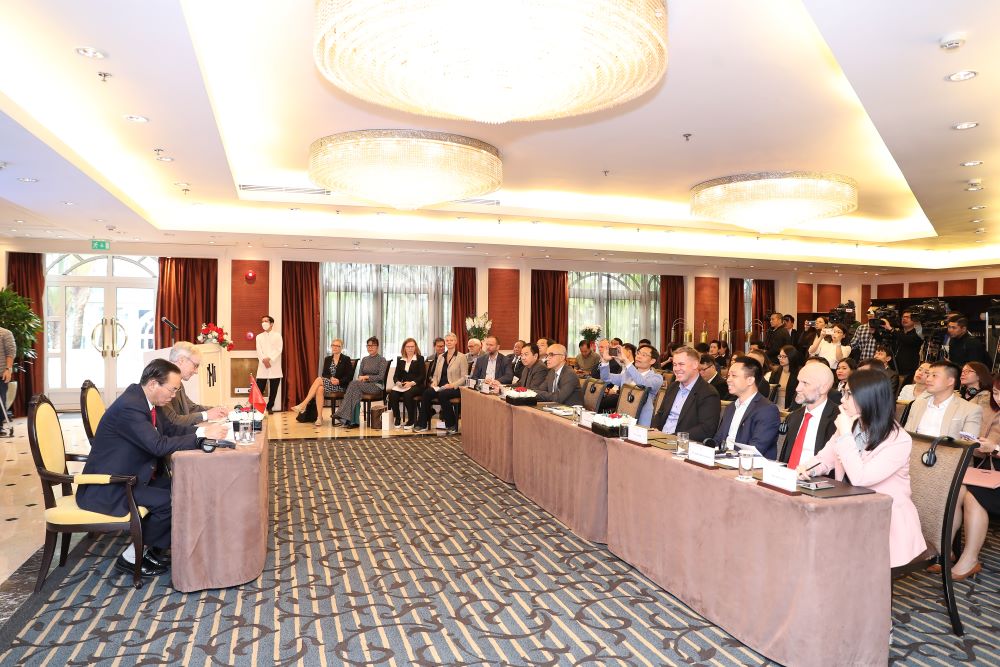
| Overview of the seminar. |
Potential support
In addition, NSC also announces an official plan to be more active in Vietnam. “In 2023, NSC will strengthen promotional activities in Vietnam so that many consumers know about the presence of Norwegian seafood, as well as build programs to meet, connect and promote trade between import and export enterprises of the two countries. Any Vietnamese importer can register to use the trademark “Seafood from Norway” to attach to their products. The simple registration process will bring great benefits to businesses when the demand for product origin transparency is increasing in the Vietnamese market”, said Mr. Asbjørn Warvik Rørtveit.
With similarly long coastlines, both Norway and Vietnam are top seafood exporters in the world: Norway - the second and Vietnam the third. Norway is a country with the leading fishing and aquaculture industry in the world with the core values of sustainable development, and environmental protection in parallel with continuously improving the economic value economy and reputation of national seafood globally. Vietnam is a country with great potential to develop aquaculture with sustainable and responsible management.
Meanwhile, Vietnam already sets out a number of goals including reducing fishing intensity on marine natural resources and enhancing marine aquaculture in appropriate areas as specified in the Fisheries Development Strategy to 2030, with a vision to 2045 issued in 2021 under a Prime Ministerial decision. The country is also in a good position to participate deeply in the global value chain and determined to exploit the potential and use of ocean resources responsibly and sustainably.
Norway has many useful lessons throughout the entire value chain of the industry to share with Vietnam to make the aquaculture practices more sustainable and have lower carbon footprints.
The event spotlights the presence of senior officials on both sides. Particularly, a number of Norwegian companies and Vietnamese importers also make their presence at the event to share their aquaculture experiences and expertise, as well as discuss the potential for business-to-business cooperation in aquaculture, processing and import-export of seafood products.