Vietnam gov't urged to scale up support programs for businesses post Covid-19
While a number of supporting packages are in place, only a small proportion of enterprises have actually benefited from the policy.
The Vietnamese government should consider expanding the scale of its support programs for the businesses and people affected by the Covid-19 pandemic, as the combination of relief packages is estimated at around 3% of the GDP, much lower than the average rate of 9 – 10% offered by regional peers, according to economist Can Van Luc.
| Economist Can Van Luc said the Covid-19 economic impacts would be longer than expected. |

In addition to a credit aid package worth VND300 trillion (US$12.87 billion) in place, Luc noted in a conference on July 16 that the VND180-trillion (US$7.63 billion) fiscal stimulus package in forms of delay of payment of value-added tax, corporate tax and income tax in a short period of time means that beneficiaries would eventually have to pay these amount and the state only foregoes interest payments.
“This could become a major issue, especially as the Covid-19 situation continues to be complicated globally, so the economic impacts would be longer than expected,” Luc said.
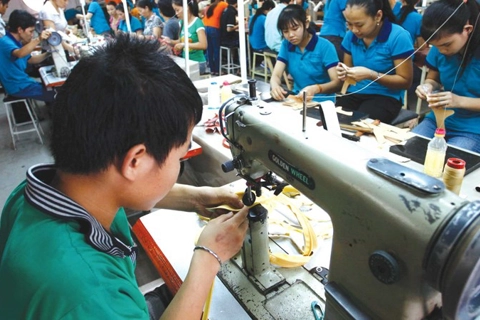
Vice General Director of Phu Thai Group Pham Quoc Manh said the Covid-19 impacts on businesses remain severe with 90% of enterprises affected by the crisis. He urged the government to speed up the implementation of support programs.
In the first six months of 2020, the number of newly established enterprises declined by 7.3% year-on-year to 62,049, while the number of enterprises temporarily suspending operation rose sharply by 38% year-on-year to 29,169.
“The main issue for businesses is that their revenue could not cover operational expenses, including payment for workers, as well as other financial obligations such as payment of taxes, insurance, debt, among others,” Thai said.
While a number of supporting packages are in place, only a small proportion of enterprises have actually benefited from the policy, Thai added, citing the complicated procedures as one of the main reasons.
“To get support from credit aid packages, enterprises have to provide evidence that they have lost 50% of the revenue, or prove that they could pay back the debt, which is time consuming and difficult,” Thai said.
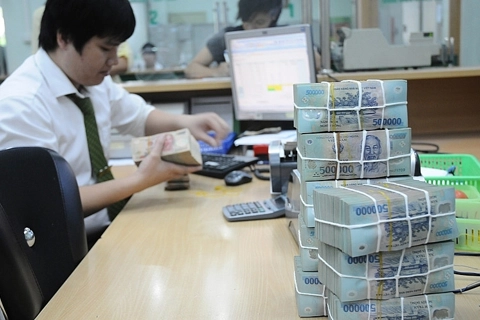
To date, the State Bank of Vietnam (SBV), the country’s central bank, has slashed its policy rates twice by a combined of 100 – 150 basis points to support the country's economic recovery and encourage businesses to get loans from banks.
However, credit growth in the January – June period was sluggish at 3.63% year-on-year, or less than half of the rate recorded in the same period last year.
Economist Luc said the interest rate is not the main bottleneck to low credit growth, citing a survey from the Vietnam Chamber of Commerce and Industry (VCCI) that 20% of enterprises are not looking for loans at the moment.
“Compared to credit aid package, fiscal support with its immediate effect is more important for the business community,” Luc added.
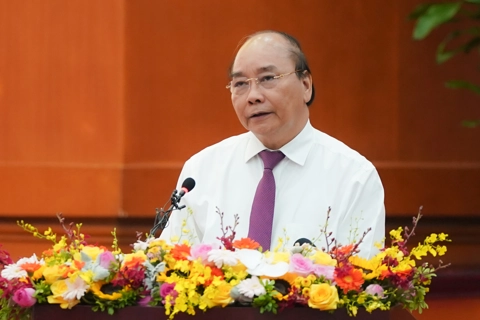
At a recent government meeting, Prime Minister Nguyen Xuan Phuc urged the Ministry of Finance to propose more fiscal stimulus packages to support the business community.
Phuc added the government could widen fiscal deficit and public debt by an additional 3 – 4 percentage points of GDP to provide more substantial support for the economy.