Gov’t urged to levy VAT on low-value goods sold via Shopee, TikTok
Daily transactions through e-commerce platforms like Shopee, Lazada, and TikTok are estimated at $45-$63 million, amounting to $1.3-$1.9 billion per month.
Value-added tax should be imposed on low-value transactions through Shopee and TikTok. It is estimated that 4-5 million orders, each valued under VND1 million (US$40), are shipped daily from foreign countries to Vietnam through these platforms.
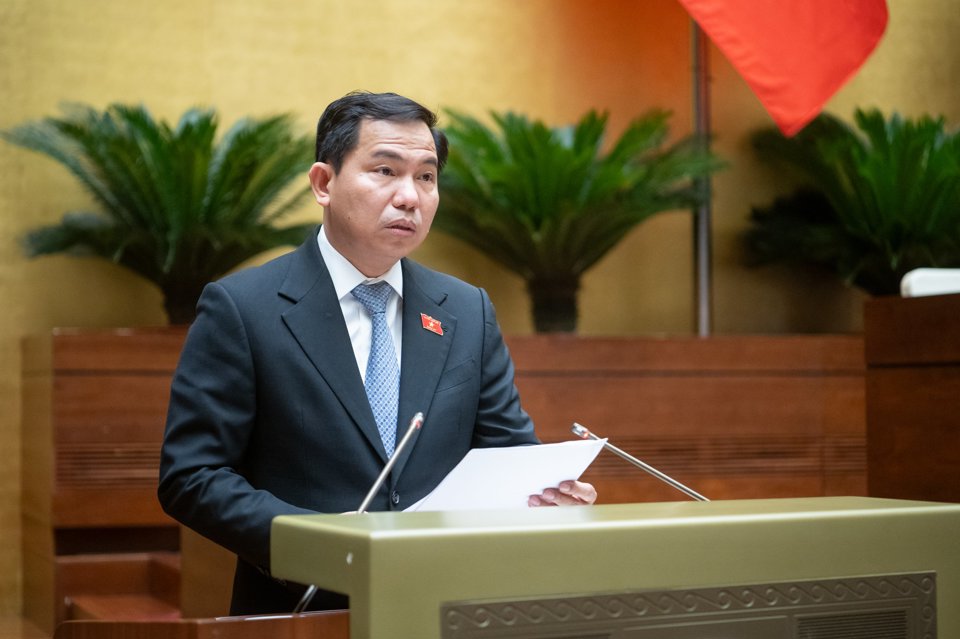
| Chairman of the Finance-Budget Committee under the National Assembly Le Quang Manh. Source: quochoi.vn |
Finance Minister Ho Duc Phoc had previously submitted a draft amendment to the VAT Law. A significant change in this draft is the introduction of VAT exemptions for certain imported goods within the duty-free limits, as well as for low-value goods.
Currently, the law does not exempt low-value goods from VAT. This is regulated by Government Decision 78/2010, which exempts imported goods worth less than VND1 million from import duties and VAT when sent by express delivery. Gifts are also exempt from import duties under Decree 134, which governs the Export and Import Tax Law.
In his assessment, Chairman of the Finance and Budget Committee Le Quang Manh suggested the government reconsider the VAT exemption for low-value imported goods, especially those purchased via cross-border e-commerce.
Manh pointed out that many countries have removed such exemptions to protect revenues and ensure a fair business environment between domestic producers and importers.
"The government should implement appropriate policies to expand and encompass various revenue sources amid the current budget constraints," said Manh.
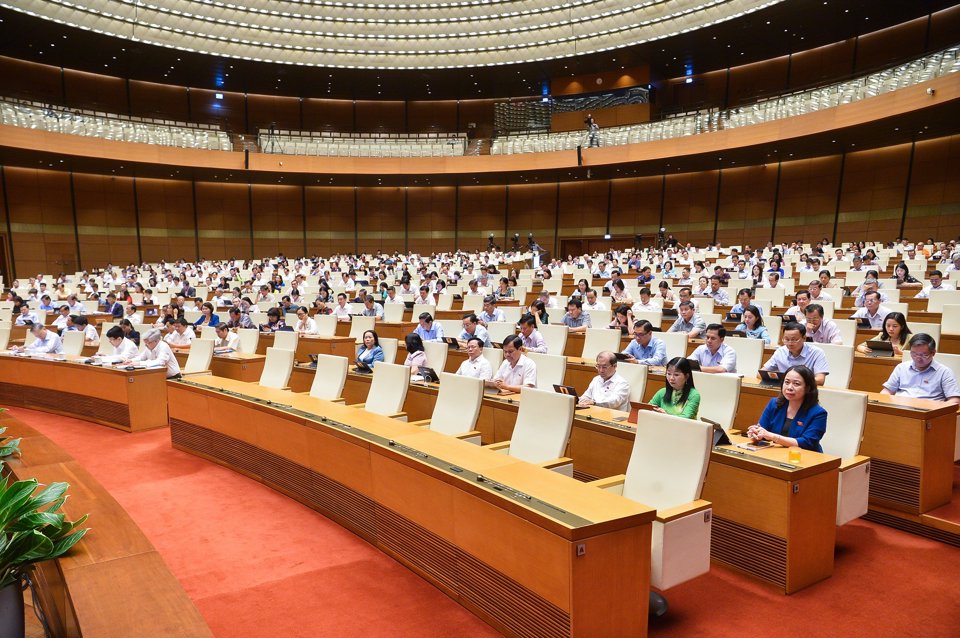
| Overview of the session. |
He cited a VNPT report that an average of 4-5 million orders worth less than VND1 million are shipped daily from China to Vietnam via platforms like Shopee and TikTok. Most orders are broken down into smaller amounts ranging from VND100,000 to VND300,000 ($4-12).
With the exponential growth of cross-border e-commerce, the volume of low-value transactions has surged significantly. Daily transactions through platforms like Shopee, Lazada, and TikTok are estimated at $45-$63 million $1.3-$1.9 billion per month.
During a subsequent group discussion, Nguyen Manh Hung, a standing member of the Economic Committee, acknowledged the significant volume of small transactions under VND1 million (US$40) that are currently exempt from import and VAT taxes through e-commerce platforms. He gave a personal example, noting that his two teenage children place 7-10 orders daily, each worth between VND30,000 and 50,000 ($1.18-1.96). "Nationwide, the value of these small orders is huge," he said.
Hung suggested that the government should consider imposing VAT on low-value imported goods under VND1 million from China and Thailand.
| Minister of Finance Ho Duc Phoc. |

Proposing 5% VAT on other goods
The bill also proposes a 5% VAT on items such as fertilizers, offshore fishing vessels, and securities depositories, which are currently exempt from VAT. This change is aimed at stimulating domestic production and reinvestment by allowing businesses to deduct input VAT.
However, Hoang Van Cuong, Vice Rector of the National Economics University, argued that a 5% VAT on fertilizers could lead to higher prices and burden farmers. He noted that while domestic production meets 70% of demand, the remaining 30% is imported. "Imposing this tax could benefit investors but disadvantage farmers, who would bear the additional 5% VAT for the sake of input tax deductions for businesses," he said.
Manh from the Finance and Budget Committee stated that opinions were divided. Supporters believe a 5% VAT on fertilizers would solve longstanding issues in the sector, while opponents argue it would increase production costs, raise fertilizer prices, and reduce the competitiveness of domestic agricultural products.
Additionally, the Finance and Budget Committee pointed out that Vietnam's current VAT rate of 10% is lower than many countries in the region and globally. This suggests there is room to increase the VAT rate to broaden the tax base. The global average VAT rate is 15%, with Asia averaging 12%, Latin America at 14%, OECD countries around 19%, and the EU at 22%.
Manh noted that some ASEAN countries are considering raising VAT rates to enhance revenue collection post-Covid-19. The tax reform strategy through 2030 also includes plans to gradually increase VAT rates. He, therefore, recommended that the government evaluate the potential impact and consider a suitable VAT rate increase after economic recovery.
The National Assembly is scheduled to discuss the draft amendments to the VAT Law on June 24.