Hanoi builds nearly 1,400 safe food supply chains nationwide for market stability
Hanoi has rapidly expanded safe food supply chains by strengthening agricultural cooperation with other provinces and cities, securing stable supplies for its growing population.
THE HANOI TIMES — Hanoi has built nearly 1,390 safe food supply chains over the past five years, up by 76% from the 2015-2020 period, by strengthening cooperation with provinces nationwide to improve food safety and stabilize market supply, according to a conference on December 24.

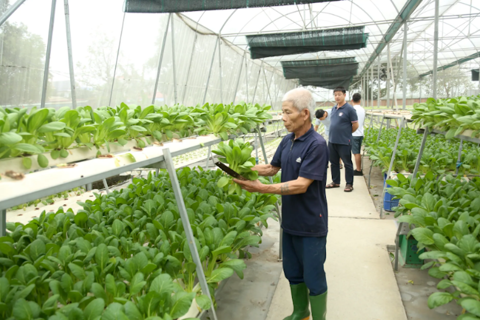
High-tech vegetable farming in Noi Bai Commune, Hanoi. Photo: Pham Hung/The Hanoi Times
At the conference reviewing agricultural product connectivity between Hanoi and other localities for the 2021-2025 period, Tran Thanh Nam, Deputy Minister of Agriculture and Environment, praised the close coordination between Hanoi and other provinces in ensuring food safety, promoting trade and linking agricultural production with consumer markets.
He said this cooperation provides a strong foundation for building safe agricultural, forestry and fisheries supply chains, allowing them to grow more sustainably in the coming period.
“These efforts reinforce Hanoi’s central role in the national agri-food supply system,” Nam said.
Nguyen Manh Quyen, Vice Chairman of the Hanoi People’s Committee, said the city will continue working with the ministry and provinces to launch a new phase of cooperation.
“The priority will be green agriculture and a stable supply of safe agricultural, forestry and fisheries products for consumers,” Quyen said.
According to Ta Van Tuong, Deputy Director of the Hanoi Department of Agriculture and Environment, Hanoi and the ministry jointly carried out a coordination program for 2021-2025 to ensure food safety, improve product quality and promote agricultural trade.
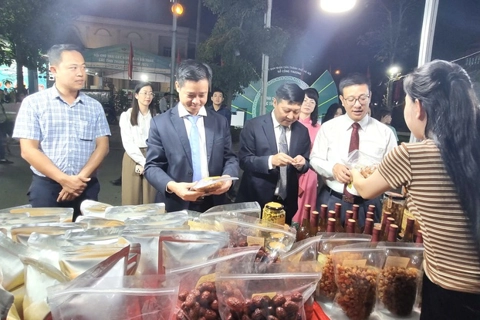
To bring agricultural products closer to consumers, Hanoi has expanded trade promotion activities, specialty fairs and regional product showcases, linking them with modern distribution channels.
As a result, One Commune One Product (OCOP) items and regional specialties have gained stronger access to retail chains, supermarkets and e-commerce platforms, helping diversify and secure the capital’s safe food supply.
Despite these gains, the conference highlighted ongoing challenges.
Many supply chains remain small and lack coordination across localities. Traceability systems still prove difficult to implement effectively, while communication and digital transformation in production–consumption links remain limited.
Looking ahead, Hanoi has identified digital technology as a core tool for managing supply chains and expanding agricultural value chains.
The city plans to rely on leading enterprises as anchors while standardizing production areas under international standards such as VietGAP, GlobalGAP and organic agriculture to strengthen credibility and long-term sustainability.
Hanoi ranks among the country’s leading agricultural hubs, with more than 80,000 establishments engaged in food production, processing and trading. With a population of more than 10 million, the capital represents a vast consumer market.
In recent years, Hanoi-based processors have sourced large volumes of agricultural products from across the country for domestic use and export.
However, local production mainly meets demand for pork, poultry, eggs and freshwater fish. For essential foods such as beef, rice, vegetables and fruits, Hanoi still relies heavily on supplies from neighboring provinces and imports.
Limited breakthrough initiatives, underused digital tools and the modest leadership role of major enterprises continue to constrain efforts to build stronger, long-term agricultural value chains linking provinces with the capital.