Hanoi expands supply chain model of agricultural product
The integration of production along the value chain has brought benefits to cooperatives and farmers, helping to reduce many intermediary stages, lower production costs, and increase product value.
In recent years, Hanoi's agricultural sector has developed and expanded reliable supply chain models from production to processing and consumption of agricultural products. According to local insiders, these supply chain models not only offer high economic efficiency but also assist farmers in using modern manufacturing techniques, maintaining control over the product's origin, cutting out intermediary stages, and raising the value of the finished product.
Models with high economic value
| The rice production area, a link in the supply chain of quality rice in Ung Hoa district. Photo: Lai Tan |
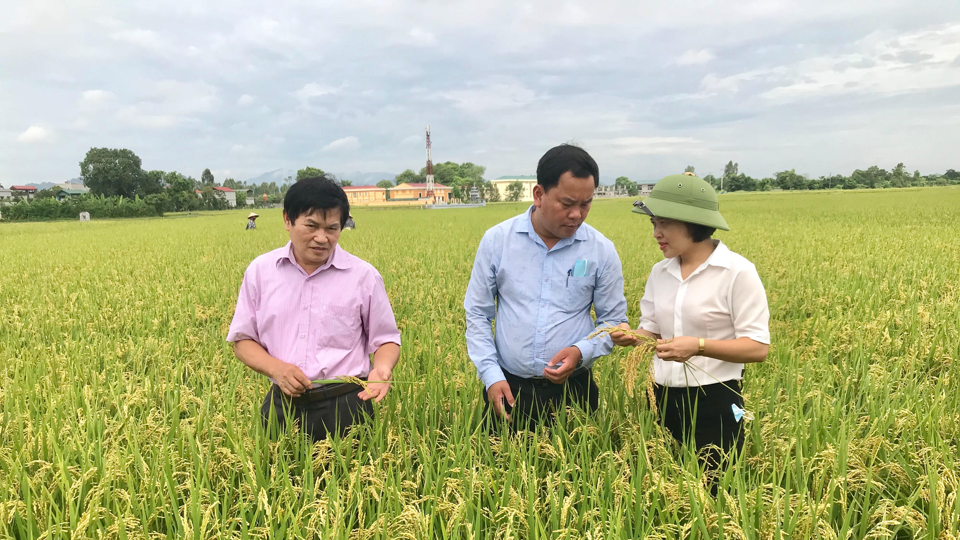
The Doan Ket Agricultural Service Cooperative (in Ung Hoa District) is committed to buying the entire rice production of 2,181 households from ten cooperatives in various neighboring villages, under a partnership agreement signed during the last spring harvest season.
The Director of the Doan Ket Cooperative, Cao Thi Thuy, says the cooperative has planted japonica rice and premium commercial rice that meets export criteria on an area of 100 hectares. The government has fully funded the cooperative for rice seeds, fertilizer and pesticides.
To further boost sales, the cooperative has also partnered with Chau Anh Company, which operates nearly 20 rice retail outlets in Hanoi and distributes to the northern provinces of Bac Ninh, Thai Nguyen, Vinh Phuc and Phu Tho. On average, the cooperative sells around 3,000 tons of paddy and 1,000 tons of Japonica rice produced by local farmers each season at a stable price.
Another typical model can be seen in Thanh Tri District, where Yen My and Duyen Ha communes have successfully integrated the supply chains for growing, harvesting and selling safe vegetable products. So far, more than 200 households have signed contracts to participate in the safe vegetable supply chain with An Phat Cooperative, Dai Lan Commercial and Service Cooperative and Davicop Company, according to Nguyen Thi Tuyet Anh, Head of the district's Economic Division.
She explained that by producing within the supply chain, the buying companies provide stable offtake (around 30% of production volume) at prices 10-15% higher than the market, which helps to increase farmers' incomes.
"In order to sustain the supply chain model, the district has subsidized 50% of the cost of fertilizer and pesticides for participating households," she pointed out.
According to Luu Thi Hang, Director of the Hanoi Sub-Department of Crop Production and Phytosanitary Protection, the spring 2024 season saw the effective implementation of several crop production supply chain models in Hanoi, such as high-quality rice in Ung Hoa District and safe vegetables in Thanh Tri District.
She cited the example of the chilli pepper supply chain model between T9 Agricultural Export Import Company (in Dan Phuong district) and Ung Hoa and Chuong My districts, which has generated significant economic value. The company's director, Bui Thien Truong, said they had provided seedlings, technical advice and purchased products from farmers.
According to the Hanoi Sub-Department, the city has established and developed 159 supply chains, 93 of which are based on crop products. By participating in these supply chain models, farmers have received guidance on production processes, management and community-based organisation, as well as the application of new scientific and technological advances. In particular, they are guaranteed a market for their products.
For the companies and cooperatives, the supply chain model ensures a steady supply of high quality raw materials, large and consistent product volumes and the ability to meet the growing demands of the export market, the agency said.
Quality control
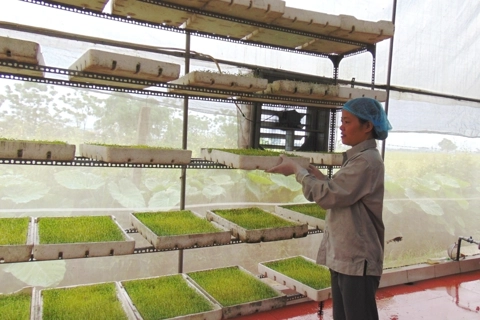
| Growing seedlings at Thanh Ha Agricultural Production and Service Cooperative, Thuong Tin District. Photo: Lam Nguyen/ The Hanoi Times |
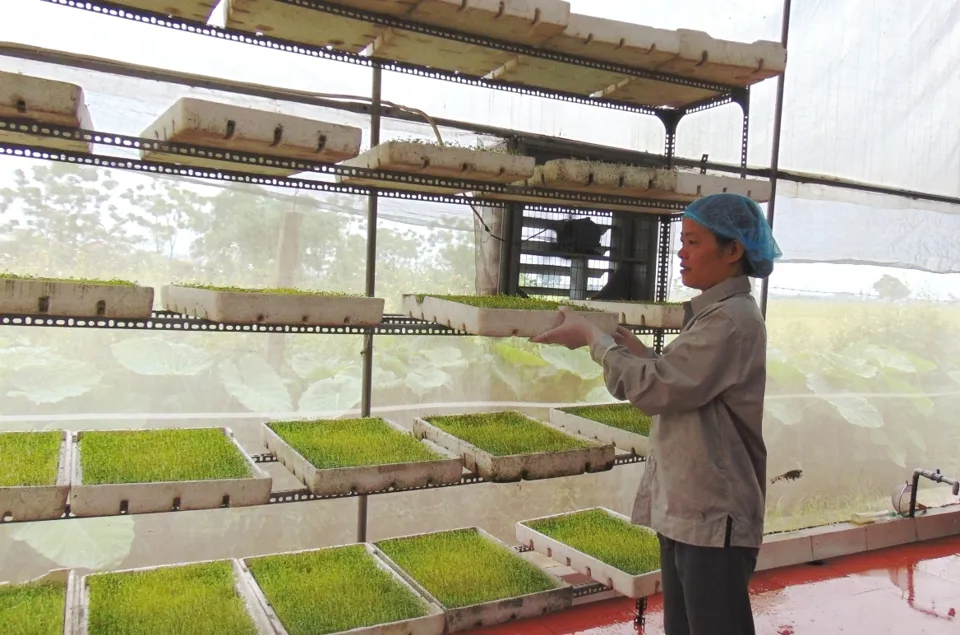
The integration of production along the value chain has brought benefits to cooperatives and farmers, helping to cut out many intermediaries, reduce production costs and increase product value. However, the linkages are still loose, leading to easily broken contracts, according to local insiders.
Bui Hanh Hieu, Director of Bao Minh Agricultural Processing and Trading JSC (Hoang Mai District), said that localities should plan to build production areas with appropriate scale and types of agricultural products, apply safe production methods such as VietGAP, GlobalGAP, ensure quality, and facilitate enterprises to sign large consumption contracts with stable prices.
She recommended that Hanoi focus on establishing production area codes to trace the origin and make information on the production area transparent and the agricultural products produced in the chain.
Nguyen Manh Phuong, Deputy Director of Hanoi's Department of Agriculture and Rural Development, confirmed that the city will continue strengthening production-consumption linkages in the coming period. Localities will focus on building large-scale agricultural production areas, attracting enterprises to invest in production linkages and product consumption.
He added that Hanoi has also supported farmers and cooperatives to participate in product promotion programs, and strengthened the inspection, monitoring and certification of the quality of farm produce.
In addition, local authorities are helping cooperatives improve their management capacity, develop production plans, and connect with the market, acting as intermediaries between farmers and businesses. They will regularly assess and forecast the supply and demand of agricultural products in the market to help the chains adjust their production and business activities accordingly, Phuong said.
"Enterprises and cooperatives have cooperated with provincial and municipal postal services to list their products on e-commerce platforms PostMart.vn and Voso.vn. They have also set up outlets in some localities to sell safe agricultural products to consumers nationwide, thus ensuring a market for the linkages," Phuong said.