Hanoi leverages lotus value chain
Many exquisite products made from lotus flowers have brought economic value and showcased the cultural uniqueness of Hanoi.
Hanoi has developed numerous exquisite products from the lotus flower but the economic potential of this unique plant is still largely untapped, especially in tourism. It requires greater focus and additional solutions to enhance its value.
| Lotus silk is one of the most unique products made from lotus by artisans in Hanoi. Photos: Trong Tung/The Hanoi Times |
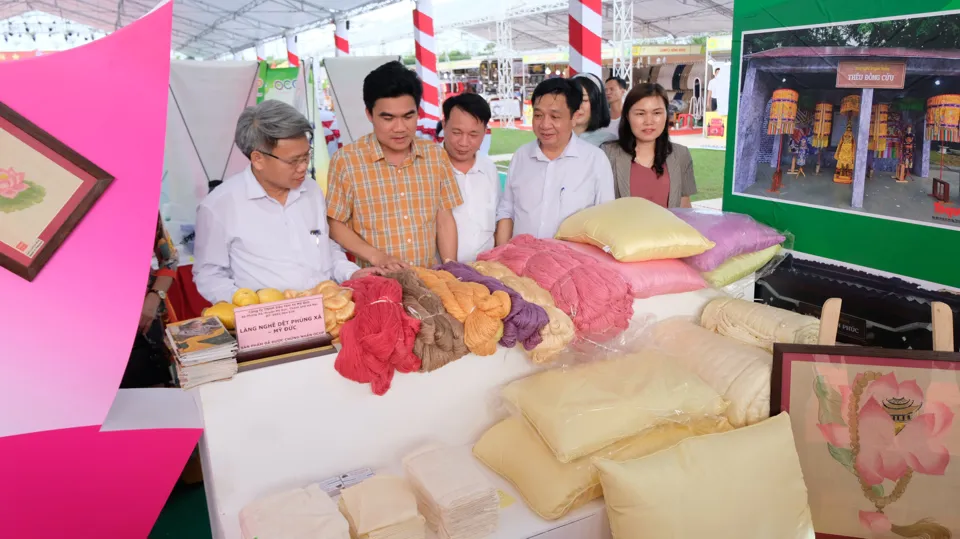
Statistics from the Hanoi Department of Agriculture and Rural Development revealed that the city currently has over 600 hectares of lotus cultivation, primarily in the districts of My Duc, Ba Vi, Me Linh, Phuc Tho, Ung Hoa, Bac Tu Liem, and Tay Ho.
Notably, the West Lake hundred-petal lotus (Tay Ho District) is distinguished by its large blooms with about 100 petals and a unique fragrance, making it a valuable genetic resource that needs preservation and development.
Nguyen Van Chi, Deputy Chief of the Standing Coordination Office of the Hanoi New Rural Areas, noted that many exquisite products made from lotus flowers have been created, adding economic value and showcasing the cultural uniqueness of Hanoi residents. Eighteen lotus-based products have been evaluated and ranked the One Commune One Product (OCOP) Program.
High-value OCOP products from lotus include Hien Xiem lotus tea and Quang An lotus tea (Tay Ho District), Dam Long lotus seeds (Ba Vi District), lotus leaf tea (Soc Son District), lotus heart tea (Thanh Tri District), and Ngo Thuc lotus seed sticky rice with green rice flakes (Nam Tu Liem District).
The development of lotus cultivation has generated significant income for local communities, enhancing residents' livelihoods. However, the economic potential of lotus, particularly in tourism, remains underexploited.
High potential for tourism development
Dang Huong Giang, Director of the Hanoi Department of Tourism, pointed out that many provinces and cities in Vietnam are effectively developing flower tourism products. For example, Haiphong has the Red Flamboyant Festival, Ha Giang the Buckwheat Flower Festival, and Gia Lai the Wild Sunflower Festival.
| Tourists visit a lotus pond in Tay Ho District. |
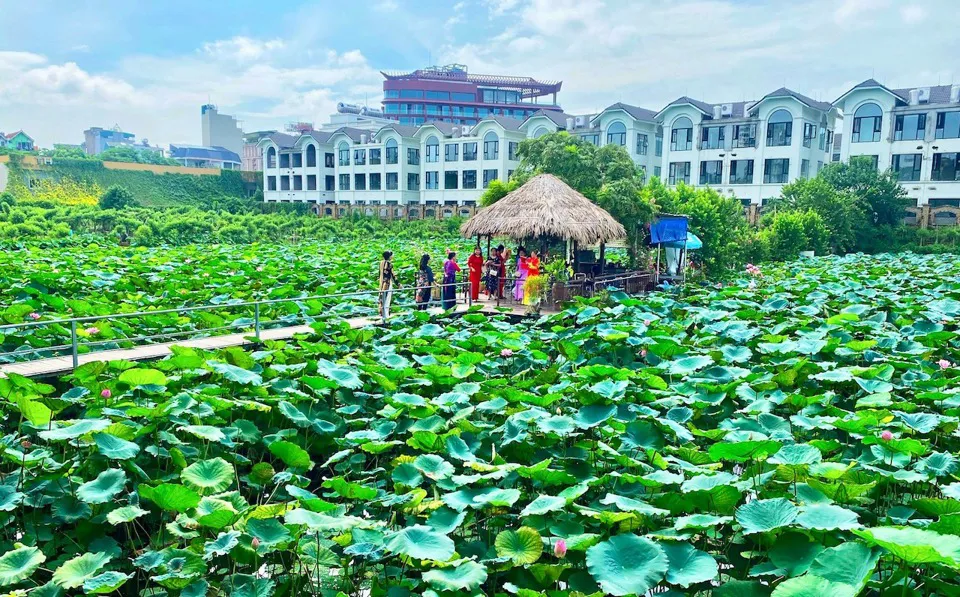
“Hanoi, with its extensive lotus cultivation and numerous OCOP products, has great potential to develop effective lotus tourism products. Certain areas, like Tay Ho District, could become iconic tourist destinations in Hanoi,” Giang suggested.
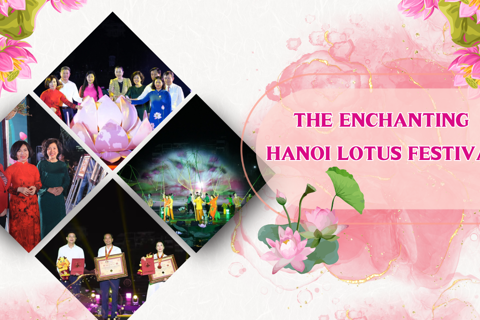
Le Thanh Thao, Chairman of the Hanoi Travel Association, concurred, adding that Tay Ho District could create tours and routes linked to the Hanoi Lotus Festival, establishing its own brand and bolstering the capital's tourism identity.
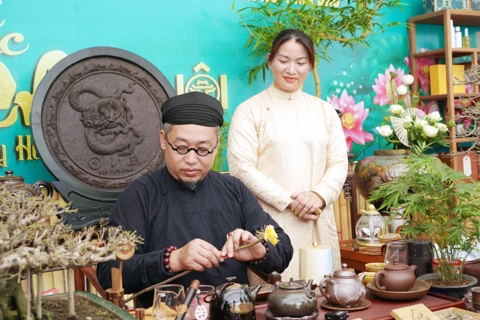
To develop tourism products that highlight the essence of Hanoi's lotus, he urged Tay Ho District to focus on creating cultural and culinary activities related to lotus, such as introducing lotus-infused tea and encouraging restaurants to develop new lotus-based dishes.
Nguyen Dinh Hoa, Deputy Director of the Hanoi Department of Agriculture and Rural Development, said the department has collaborated with the Fruit and Vegetable Research Institute to test over 30 new lotus varieties. Nearly 20 of these varieties have been selected for their adaptability to Hanoi's soil conditions.
“Thanks to scientific and technological advancements, Hanoi now boasts many new lotus varieties, extending the lotus season from April to November, enhancing the experience, and attracting more visitors to enjoy the lotus,” Hoa added.
In the future, Hanoi will continue to develop unique products to attract tourists, promote lotus tourism, and contribute to the socio-economic development of the capital while preserving the traditional cultural values associated with Vietnamese and Hanoi lotus, he continued.
| “In recent years, urbanization has led to a reduction in the area under lotus cultivation in the district. To preserve and develop this valuable lotus species, the district is implementing a project to restore the hundred-petaled lotus in 18 local ponds. Additionally, the district is actively promoting residents' awareness of the potential, advantages, and significance of lotus cultivation. This initiative aims to boost the local community's economic, tourism, and cultural development,” said Le Thi Thu Hang, Secretary of the Tay Ho District Party Committee. |