Hanoi plans to build 100km of urban railways until 2030
By 2030, Hanoi will need approximately US$14.6 billion to build 96.8km of urban railway.
The Hanoi People's Committee plans to build 550 km of urban railway by 2045 having completed 96.8km of the network by 2030.
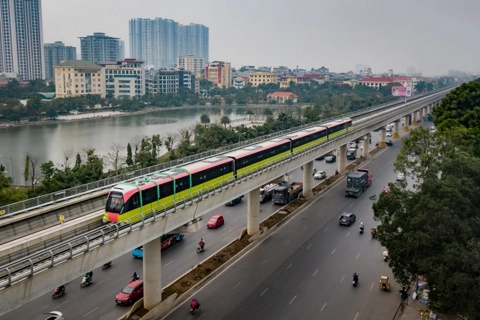
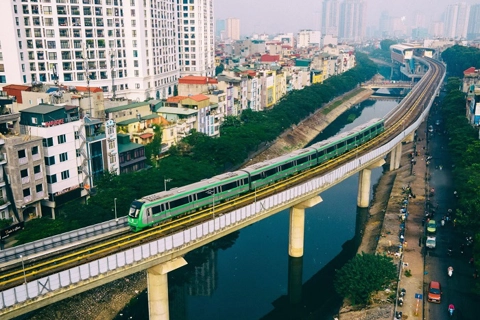
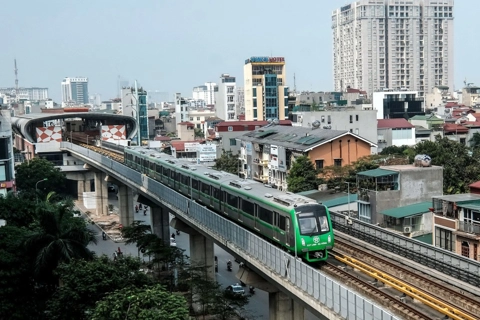
| The Cat Linh - Ha Dong urban railway line. Photo: Pham Cong/The Hanoi Times |
The targets are part of the city's investment proposal for urban railway system development, submitted to the Ministry of Transport for feedback. The city envisions the urban railway as the backbone of its transit system.
Specifically, by 2030, Hanoi aims to construct and put into operation approximately 96.8km of urban railway and propose further investment in lines to be developed before 2035.
By 2035, Hanoi plans to complete and operate around 301 km of urban railway, with a goal of finishing all 14 planned lines, totaling about 550 km, by 2045, as outlined in the city's master plan. To achieve these goals, the Hanoi People's Committee proposes a "one plan, three phases" strategy for expanding the urban railway network.
In the first phase, by 2030, Hanoi will need approximately $14.6 billion to build 96.8 km of urban railway. This will enable the railway to accommodate 7-8% of public transport demand, with a capacity of 2.2-2.6 million trips per day.
By 2035, an additional $22.5 billion will be required to expand the railway to 301km, which is expected to handle 35-40% of the demand for public transport, with a capacity of 9.7-11.8 million trips per day.
By 2045, the goal is to complete the adjusted and supplemented urban railway network as per the updated Hanoi master plan.
The "one plan, three phases" approach aims to achieve a comprehensive urban railway network by 2035 and meet 50-55% of the demand for public transport. However, the extensive workload and high resource requirements present significant challenges, particularly when it comes to mobilizing and allocating the required funds and covering operational and maintenance costs, which will put strain on the city budget.
Achieving the goals set out in the comprehensive urban railway investment proposal will be challenging, requiring innovative approaches to funding and project execution, noted the plan.
The previous master plan envisioned the construction of ten urban railway lines, including nine main lines and one connecting satellite urban areas, totaling 397 km. The revised master plan adds four lines: Ngoc Hoi - Thuong Tin - Airport No.2; Me Linh - Co Loa - Yen Vien - Duong Xa; Cat Linh - Le Van Luong - Ring Road 4; and Vinh Tuy - Minh Khai - Truong Chinh - Lang - Nhat Tan, totaling about 150km.
Only 13 km of the Cat Linh - Ha Dong line have been finished thus far, while 12.5km of Line 3 from Nhon to Hanoi Station are almost completed.
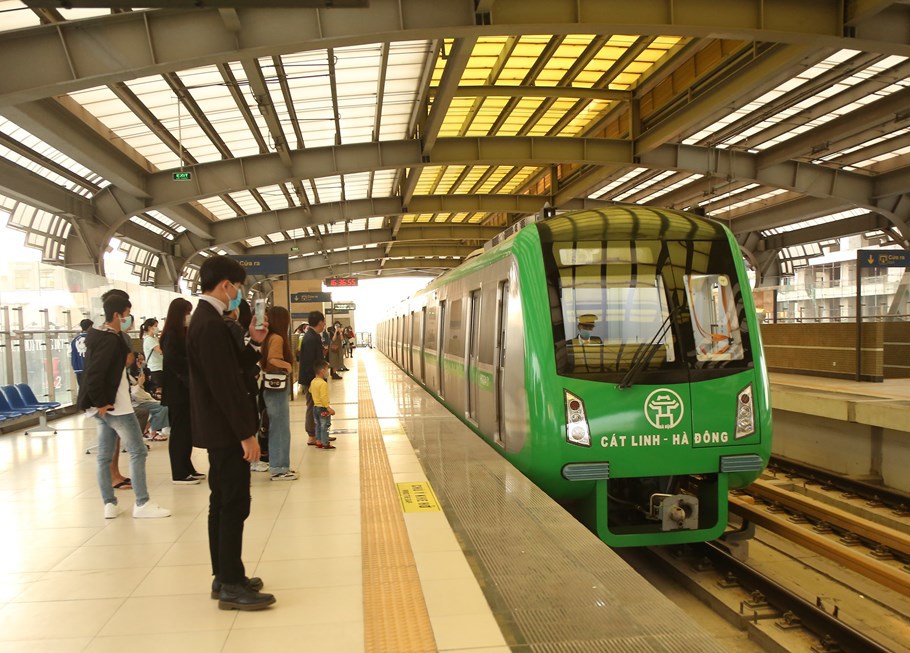
Since it began operation nearly three years ago, the Cat Linh - Ha Dong metro line has seen a considerable increase in ridership, with around 35,000 passengers daily. Among them, 47% commute, 45% are students, and 8% travel for other purposes.