Hanoi to build 14 urban railway lines
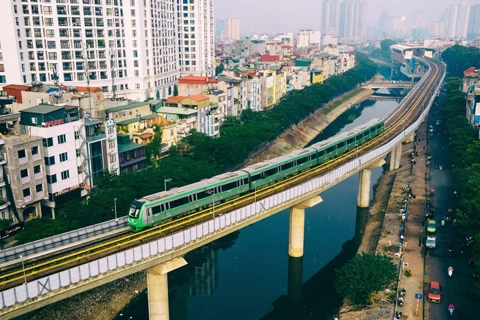
The city will replace the Kim Ma – Yen Nghia Bus Rapid Transit (BRT) line with an urban railway.
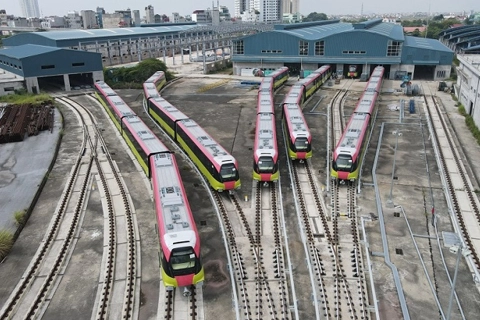
Hanoi intends to build 14 urban railway lines totaling 550 kilometers as part of its recently updated transportation planning.
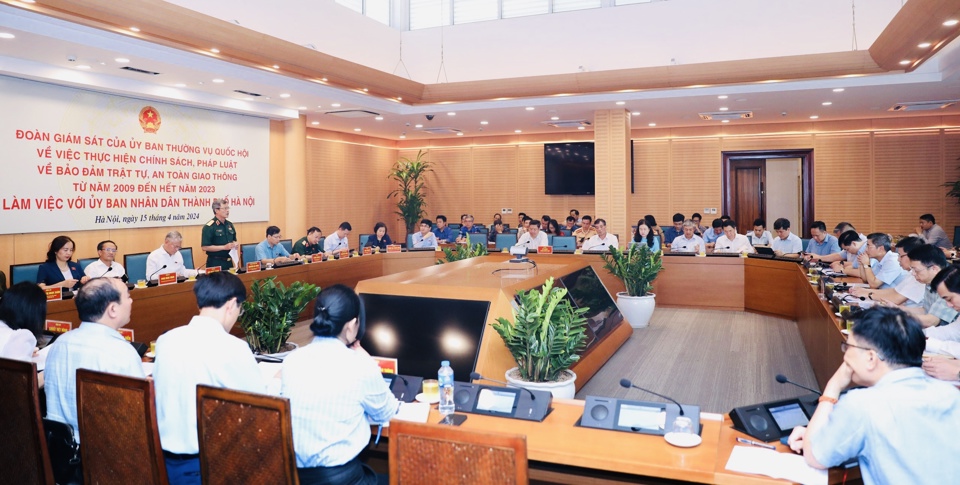
| Overview of the meeting. Photos: The Hanoi Times |
“This urban railway system will serve as the "backbone" of the city's urban transport.
Vice Chairman of the Hanoi People’s Committee Duong Duc Tuan shared the view during a meeting between the city’s leaders and an inspection delegation from the Standing Committee of the National Assembly to discuss Hanoi’s transportation situation during the 2009-2023 period on April 15.
According to Tuan, Hanoi will focus resources on completing seven-ring road projects and radial and regional roads. Additionally, the city aims to transition to green and clean transportation methods and increase the share of public passenger transport to approximately 30% by 2025-2026, Tuan continued.
Hanoi passed Resolution 04 in 2017 to restrict motorcycles in urban districts by 2030. However, seven years later, implementing the resolution has proven challenging due to the low usage of public transportation. Studies have shown that restricting motorcycles would only be feasible when public transport usage reaches 30-50%, which is currently just 19.5% in Hanoi.
"When Hanoi completes its plan to build 400 kilometers of railway by 2035, only then will it be feasible to restrict motorcycles," said Tuan.
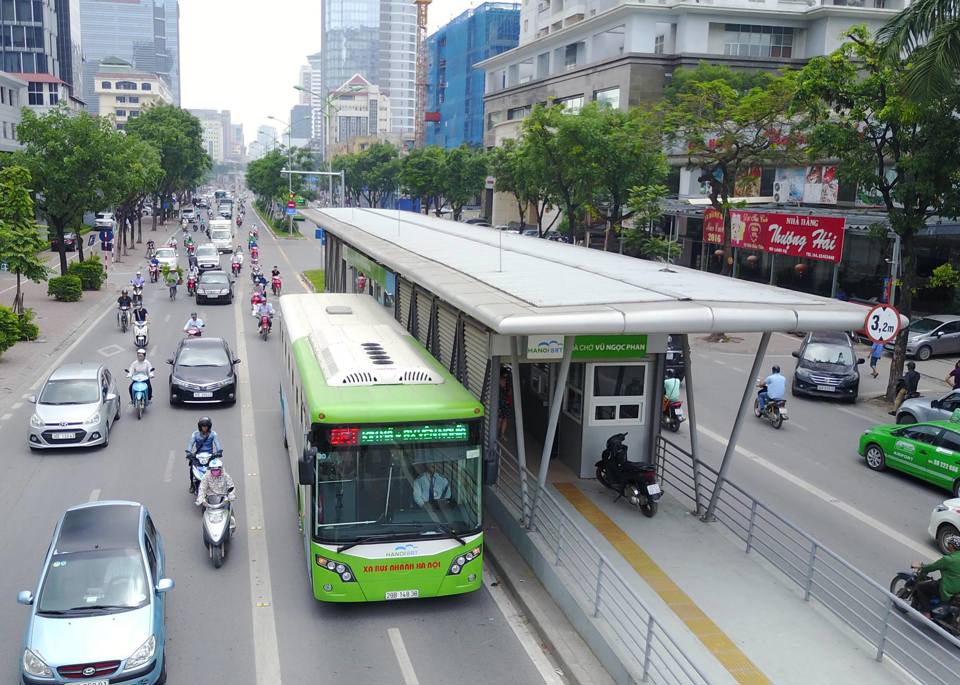
Tuan also noted that the city will replace the existing Kim Ma – Yen Nghia Bus Rapid Transit (BRT) line with an urban railway.
| Vice Chairman of the Hanoi People's Committee Duong Duc Tuan at the meeting. |
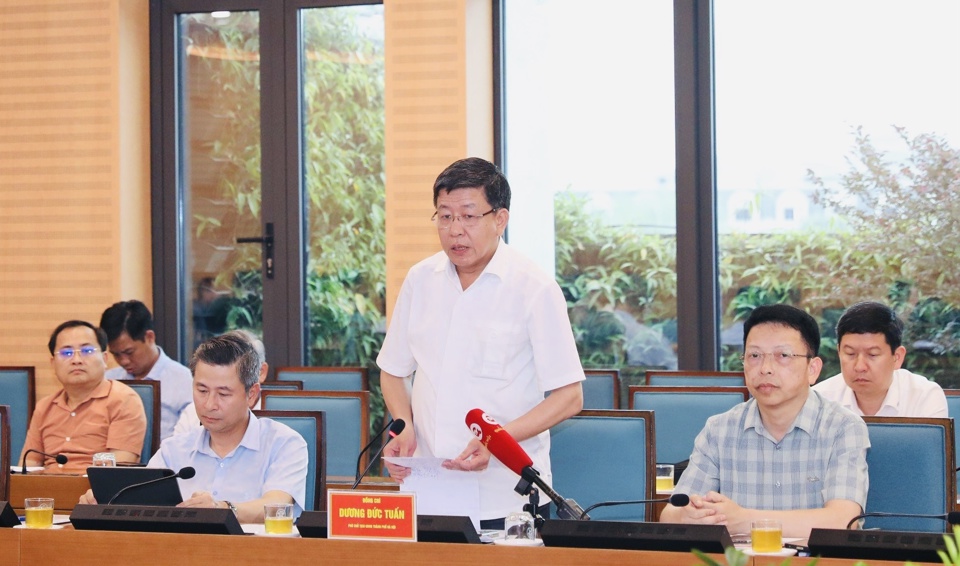
“The BRT system is a precursor to the development of urban railways,” said Tuan.
The 2011 master plan for the capital and the city's 2016 transportation plan envisaged eight BRT lines, but only one has been completed so far. However, this BRT line has significant limitations as it occupies one-third of the width of the Giang Vo - Lang Ha - Le Van Luong radial axis as a priority lane.
"The rapid bus system has turned into a regular, slow bus system. With adjustments to the general plan for transport, the city will replace the Kim Ma - Yen Nghia BRT line with Urban Railway Line 11," said Tuan.
The 01 Kim Ma - Yen Nghia BRT Line was inaugurated in December 2016 with a total investment of over $55 million. The line stretches over 14 km and operates 55 buses with an 80-seat capacity, each costing over VND5 billion ($200,000).
The project was funded by a loan from the World Bank to reduce congestion and pollution and lay the foundation for the development of public transportation infrastructure.
Strengthening management of road transport activities
Director of Hanoi's Department of Transport Nguyen Phi Thuong said that the city's People's Committee has instructed the Department of Transport and related agencies to step up the management of road traffic to ensure order and traffic safety and reduce congestion.
Hanoi currently operates six inter-provincial passenger bus stations and has established 41 inter-provincial bus pick-up and drop-off points.
| The BRT line is set to be replaced by an urban railway. Photo: Pham Hung |
In terms of public bus transportation, the city’s public bus network consists of 156 lines, covering all 30 districts and towns, and connecting with six neighboring provinces.
Regarding taxi transportation, Hanoi has 15,430 licensed taxis managed by 62 companies, excluding a significant number of out-of-province taxis operating in the city. As of November 24, 2023, the city manages 36,726 shared rides vehicles, including 18,459 vehicles with a capacity of fewer than nine seats.
By 2023, the number of traffic congestion hotspots in the capital has been reduced to 33, and there are five accident "black spots" that are being addressed in 2024. The Department of Transport is also reviewing 234 areas of high traffic congestion to deploy traffic guidance personnel and implement diversion measures, 154 school zones for safety improvements, and 193 high-risk traffic areas for mitigation and correction.
From 2009 to 2023, and especially since the administrative boundary expansion, all seven radial expressways (totaling over 110 km) and all eight radial national highways (covering nearly 245 km) have been built and put into operation.
Seven ring roads have been built or are under development, including the strategic Ring Road 4 for the entire capital region, which began construction in June 2023. The city is also expediting investment in four corridors connecting the central city with surrounding satellite towns: Ho Tay-BaVi, Tay Thang Long, Ngoc Hoi-Phu Xuyen, and Ha Dong - Dong Xuan.
The investment in the construction of these expressways has contributed to enhancing connectivity, facilitating the movement of goods and people, and driving economic and social development along key economic corridors in the northern region. These corridors include Lao Cai - Hanoi - Quang Ninh, Hanoi - Hai Phong - Quang Ninh, Lang Son - Bac Giang - Hanoi, and Hanoi - Thai Nguyen.