Hanoi promotes AI in agricultural production
Artificial intelligence (AI) is used in agricultural production to assist farmers and cooperatives in examining, monitoring, and forecasting various environmental effects.
Chuc Son Clean Vegetables Cooperative, located in Chuong My District, Hanoi, has been incorporating artificial intelligence (AI) technology in their agricultural production by setting up iMETOS 3.3, a durable and flexible data logger.
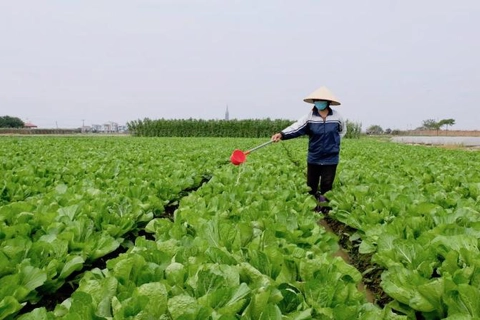
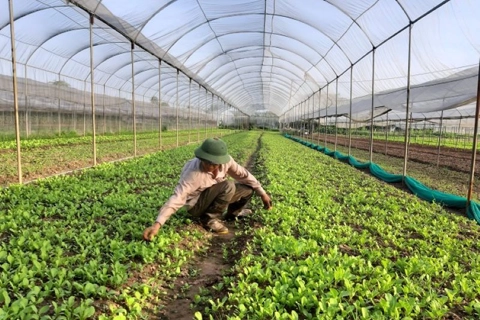
| Applying hi-tech in agricultural production in Hanoi. Photo: Tran Anh/The Hanoi Times |
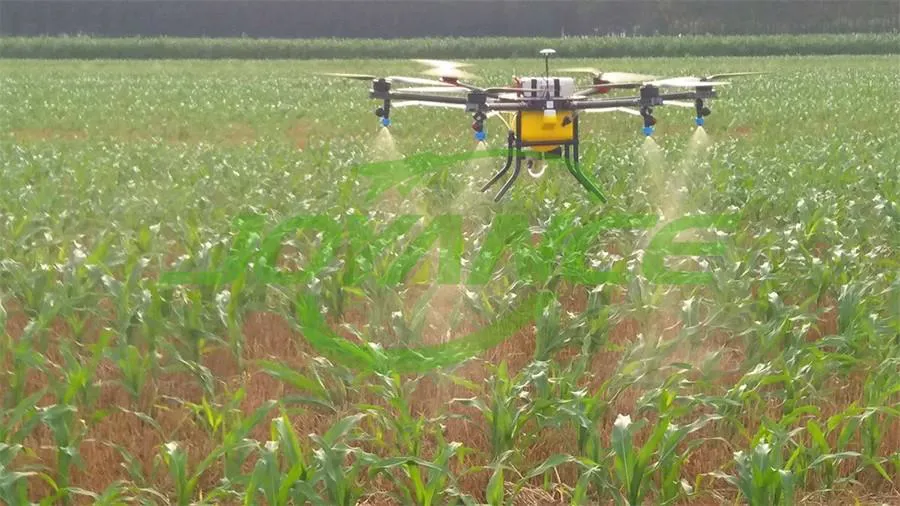
This system provides up-to-date information on pest and disease situations and makes precise predictions on temperature, wind speed, and rainfall, among others, which helps farmers to create appropriate plans for fruits and vegetable cultivation.
Hoang Van Vi, residing in Giap Ngo residential group, Chuc Son Town, shared that his family has constructed a 2,200-square meter house, combined with an automatic sprinkler irrigation system to cultivate vegetables, following the high-tech application guidance provided by the Chuc Son Clean Vegetable Cooperative.
"Although the initial investment cost for high-tech production is quite high, the household can recoup it within 3 to 4 years," Vi said.
The Chuc Son Clean Vegetable Cooperative currently buys the vegetables grown by Vi's family for a steady price of VND8,000/kg (US$0.34).
Artificial intelligence (AI) in agriculture production, according to Ho Xuan Hung, Chairman of the Vietnam General Association of Agriculture and Rural Development, helps farmers and cooperatives examine, monitor, and predict various environmental effects that impact crop output and standards. With the help of this tool, people can adopt productive production methods, reduce risks, and increase agricultural production efficiency.
While AI has been widely used in agricultural production in Hanoi, Hung pointed out that these techniques are still relatively new in other provinces and towns.
Hung cited the Prime Minister's Decision No.127 on the National Strategy on Research, Development, and Application of AI until 2030, promulgated on January 26, 2021, as a significant step in acknowledging the significance of AI in socio-economic development, particularly in high-tech agricultural production.
For example, Netafim Vietnam's large-scale AI farm control management system for coffee replanting has assisted coffee farmers in achieving a yield of 5 tons/ha during the first harvest season, which is a 300% increase compared to conventional techniques. Additionally, this strategy has helped to increase profits by lowering the price of replanting coffee.
Nguyen Quoc Toan, Director of the Center for Digital Transformation and Agricultural Statistics, emphasized that rural areas will play a significant role in the upcoming boom of the digital economy at a workshop on "Application of AI technology in improving agricultural productivity" organized by the General Association of Agriculture and Rural Development last week.
Approximately 77% of people living in remote areas currently have access to the internet, and 91% use it daily. As a result, AI-powered machinery and tools are becoming increasingly common in agricultural production. These devices support automated control, weather tracking and forecasting, and soil data analysis.
In addition, AI applications also forecast output, optimize the supply chain of agricultural products, and enhance product quality, enabling farmers to increase production while using less land and fewer resources, Toan said.
He went on to say that although the use of AI in agricultural production has been effective, some "bottlenecks" still need to be removed. For instance, a sizable collection of traceability, planting area codes, farming regions, and commodity chain data is lacking. Additionally, the equipment infrastructure is dated, dispersed, and out of sync, and there is little to no knowledge among farmers, while AI hardware and software systems are expensive.
According to Tran Quy, Director of the Vietnam Institute of Digital Economy Development, financial and technical support from the government, international organizations, and companies is essential to enabling farmers to access new technologies.
Local governments should support awareness campaigns to inform farmers about the use of AI in agricultural production, proposed Nguyen Quoc Toan from the Center for Digital Transformation and Agricultural Statistics. He anticipated the Government's increased efforts in creating digital platforms and infrastructure, enhancing network security, and collaborating with industry and scientists to conduct research, impart knowledge, and implement technology.
Ho Xuan Hung from the Vietnam General Association of Agriculture and Rural Development stated that the organization would keep advising management agencies to develop suitable policies to increase digital technologies and AI applications in agricultural production.
According to Hung, the goal is to bring together and entice businesses, investors, scientists, and farmers; improve closed, automated, and smart production processes; increase the productivity and quality of agricultural products; guarantee clear origin; and offer customers clean and safe food products.