Hanoi ramps up essential goods reserves to stabilize prices for Tet 2026
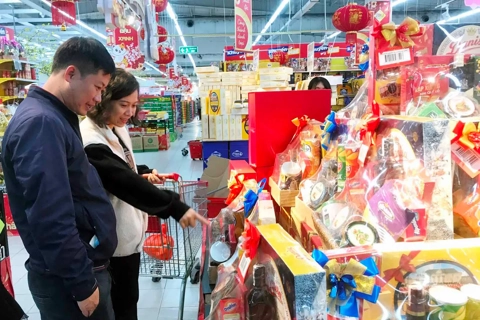
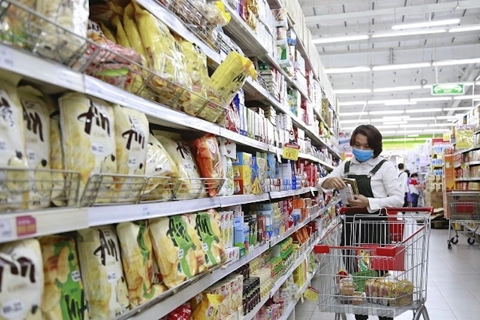
Demand for essential goods in Hanoi is expected to rise sharply ahead of the 2026 Lunar New Year, prompting authorities to require higher inventories, strengthen supply linkages and tighten oversight to prevent shortages and price spikes during the holiday period.
THE HANOI TIMES — Demand for essential goods in Hanoi may rise by up to 30% ahead of the 2026 Tet (Lunar New Year), said Ta Van Tuong, Deputy Director of the Hanoi Department of Agriculture and Environment.
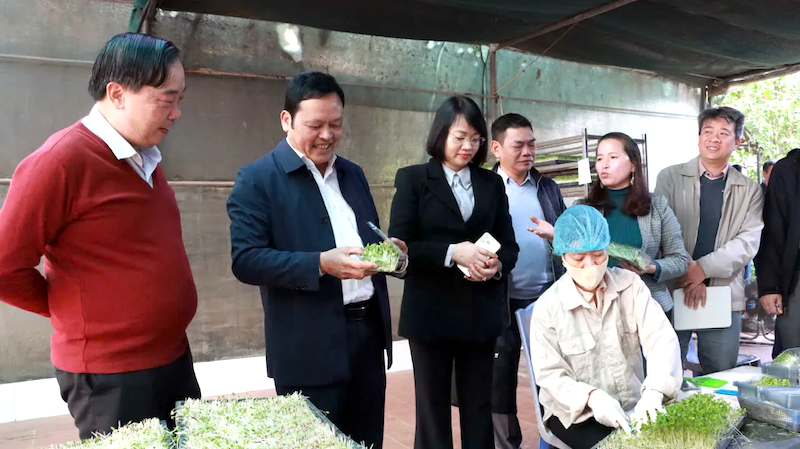
A working delegation from the Ministry of Agriculture and Environment inspects a sprout production facility in Hanoi. Photo: Kinh te & Do thi Newspaper
Rising market demand means the city has to monitor production output, available supply and retail prices while businesses must increase inventories and prepare supply plans early, he said at a meeting with the Ministry of Agriculture and Environment on January 13.
Tuong said that Hanoi pledges to stabilize the market and prevent shortages or sudden price spikes during the year-end period and the Lunar New Year holiday.
Nguyen Manh Quyen, Vice Chairman of the Hanoi People's Committee, said the city will continue promoting safe agricultural production to secure local supply while strengthening links with nearly 13,900 agricultural supply chains connecting Hanoi with provinces nationwide.
He added that authorities will strictly handle violations of food safety regulations across the entire supply chain, from production and processing to distribution and retail.
Hanoi will also intensify trade promotion activities to help businesses access safe and diversified sources of goods for the holiday season, Quyen said.
He noted that the city has consistently prioritized agricultural development to ensure a stable supply and food safety for residents and visitors.
Hanoi remains largely self-sufficient in pork, poultry, eggs and freshwater fish, but can meet only 20%-70% of demand for several other agricultural and food products, Quyen added.
Tran Thanh Nam, Deputy Minister of Agriculture and Environment, urged the city to maintain supply stability, prevent price speculation and avoid sharp price increases that could weaken consumer spending during Tet.
As one of the country’s largest consumption hubs with thousands of supply linkages, Hanoi needs close coordination with other localities to control product quality effectively, Nam said.
According to the Hanoi Department of Industry and Trade, the capital can supply more than 107,600 tons of chicken, duck and pork, 741 million poultry eggs, 65,600 tons of pork, nearly 151,000 tons of rice and 186,000 tons of vegetables, sufficient to meet most market demand.
Items that Hanoi must source from other provinces include brackish- and saltwater seafood, processed foods, beef, rice and certain vegetables.
During Tet 2026, the city expects consumption of about 301,000 tons of rice, 96,000 tons of chicken, duck, beef and pork, 401 million poultry eggs, 334,500 tons of vegetables, 16,700 tons of processed foods and 167,000 tons of seafood.
Other localities have also rolled out measures to secure supplies for the holiday period.
In Ho Chi Minh City, Ngo Hong Y, Deputy Head of the Trade Management Division at the Ho Chi Minh City Department of Industry and Trade, said businesses have prepared goods worth more than VND26 trillion (nearly US$990 million), including over VND9 trillion (US$342.6 million) under the city’s market stabilization program.
Stabilized goods in the southern economic hub are expected to cover 23%-42% of Tet demand, helping contain inflationary pressure.
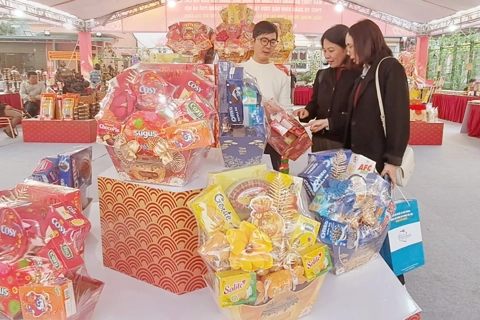
Enterprises have also launched discount programs for essential items such as pork, chicken and eggs, along with Tet products including beverages, confectionery, candied fruits and clothing.
Ho Chi Minh City’s market stabilization and mobile sales programs for Tet 2026 aim to ensure adequate supply at reasonable prices, with priority given to low-income workers in industrial zones and remote areas.
Authorities have also implemented supply-demand balancing measures and regional trade connectivity programs to keep prices stable and expand market access.
The Hue Department of Industry and Trade has instructed businesses to increase reserves of essential consumer goods and fuel, diversify supply sources and participate in supply-demand connection programs to support consumption of local specialties during the holiday season.