Hanoi’s Jan-Oct FDI surges as city becomes high-tech hub
The surge highlights Hanoi’s rising appeal to high-value investors, fueled by administrative reforms, better infrastructure and digital transformation, positioning the capital as a northern hub for high-tech FDI.
THE HANOI TIMES — Hanoi attracted more than US$3.9 billion in foreign direct investment (FDI) during January-October, 2.4 times higher than the same period last year, according to the Hanoi Statistics Office.
The rise results from Hanoi’s faster licensing, greater transparency and stronger business cooperation, boosting investor confidence and its reputation as a high-tech hub.
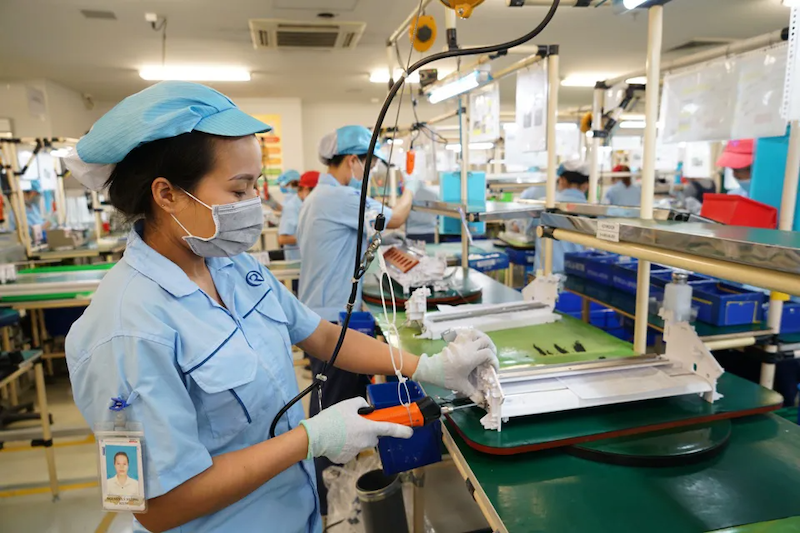
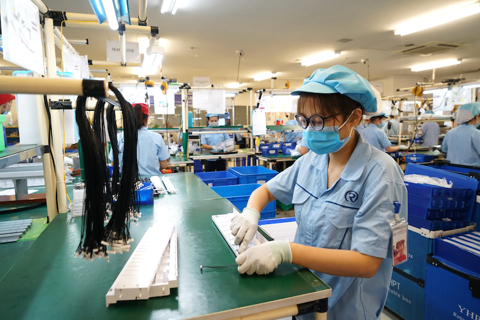
Electronics production at Rhythm Precision Vietnam at Noi Bai Industrial Park, Hanoi. Photo: Pham Hung/The Hanoi Times
The capital granted licenses for 342 new projects, with a total registered capital of $316.7 million and approved adjustments to 120 existing projects, bringing in an additional $3.2 billion in capital.
Among the key investments was the Yen So Park project by Malaysia’s Gamuda Land Vietnam, which had its capital increased by $1.1 billion.
Foreign investors also made 318 deals contributing capital and local share purchases worth $375.3 million.
In October alone, the city recorded $14.9 million in FDI, including 40 newly licensed projects worth $9.9 million and 41 deals of capital contributions and share purchase deals totaling $6.4 million.
Hanoi’s strong FDI inflows stem from multiple factors, including the city’s ongoing effort to improve the investment environment through digital transformation and full-process online public services.
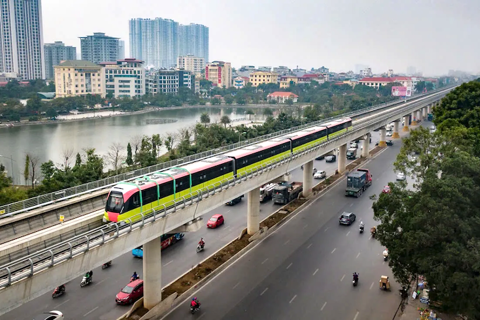
Local authorities of Hanoi have also upgraded hard infrastructures across the city to improve transport, utilities and urban development, especially through major projects such as ring roads, metro lines, and new urban areas, creating favorable conditions for multi-centered investment zoning and sustainable urban expansion.
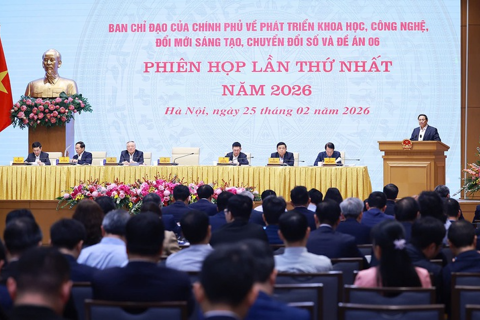
The municipal government has introduced with more investment incentives, targeting multinational corporations, high-tech industries, quality services and projects with strong spillover effects for local businesses.
Furthermore, close coordination among city departments has helped address bottlenecks, ensuring investment efficiency and timely disbursement.
Looking ahead to the 2026-2030 period, Hanoi plans to shift its FDI strategy from quantity to quality, prioritizing high-tech, environmentally friendly projects with strong linkages to domestic enterprises.
The city aims to become the northern region’s hub for high-tech FDI, hosting major projects in semiconductors, data centers, renewable energy, innovation and digital finance.
The city’s multi-centered investment planning connects key growth areas such as Dong Anh-Soc Son-Me Linh (industry and logistics), Gia Lam-Long Bien (commerce and services) and Ha Dong-Hoai Duc (urban development, finance and technology). This approach aligns closely with the Capital Region master plan, ensuring balanced and connected growth.
Integrating FDI attraction with public transport development, particularly in transit-oriented development (TOD) zones, will pave the way for sustainable urban growth, improve quality of life and enhance land-use efficiency, further solidifying Hanoi’s role as a dynamic and forward-looking investment destination in Vietnam and the wider region.