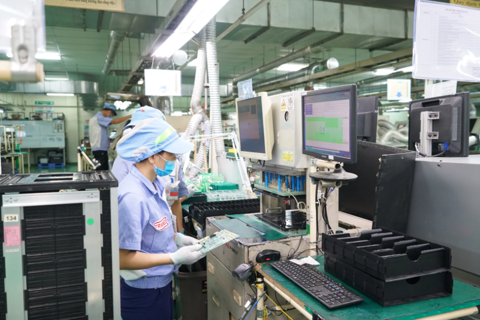
Hanoi's agricultural sector strategizes for export expansion
The city's total agricultural export value exceeded US$1.35 billion in January-September, up about 23% year on year.
Hanoi's abundant supply of a wide range of agricultural products makes it one of the country's top farm producers. The capital's agricultural sector is developing strategies to expand exports.
Agricultural exports exceed US$1.35 billion
The Development on Agriculture and Consultation of Environment Company (DACE), which specializes in developing organic spice products from ginger, turmeric, cinnamon, star anise, garlic, chili, and lemongrass, is considered a pioneer in spice production and export in Hanoi.
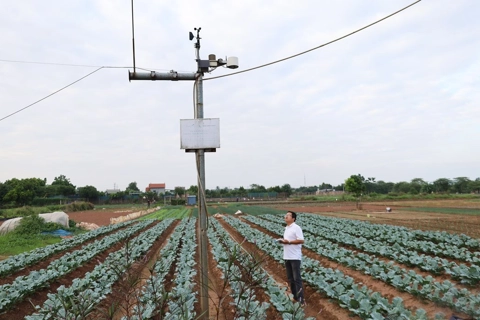
| DACE's farm. Photo: DACE |
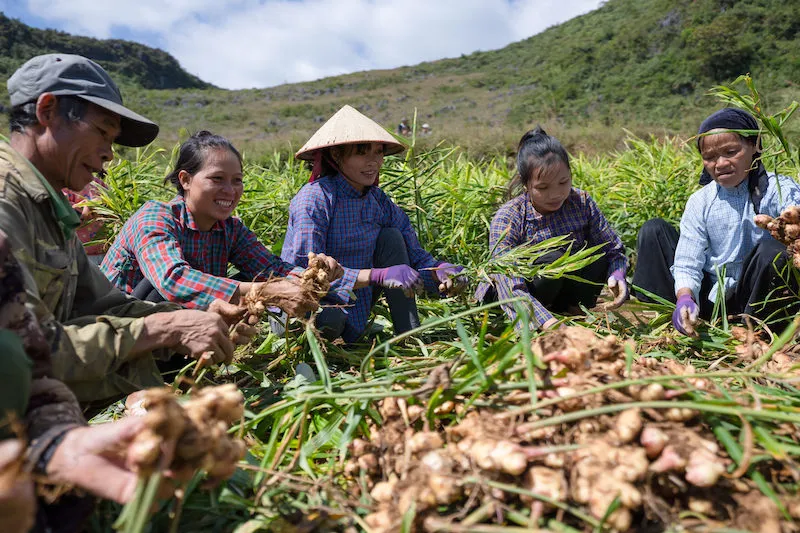
"At present, we export to the US, several European countries, the Middle East, South Korea, and Japan. The annual output totals about 300 tons of dried cinnamon, 200 tons of dried star anise, 500 tons of fresh ginger, 100 tons of dried turmeric, and 200 tons of fresh chili," said Tran Van Hieu, director of DACE.
Meanwhile, Hanoi-based Minh Tien Berest Corporation JSC operates a large coffee processing plant and ships thousands of coffee containers abroad each year.
DACE and Minh Tien Berest are two of the 250 enterprises that contribute to the export value of agricultural products in Hanoi, according to Ha Tien Nghi, deputy director of the Hanoi Agro-Forestry-Fisheries Quality Assurance Sub-Department under the Hanoi Department of Agriculture and Rural Development.
"Data from the Hanoi General Statistics Office showed that in the first nine months of this year, Hanoi's total agricultural export value exceeded US$1.35 billion, marking a year-on-year increase of about 23%," he said.
Hanoi mainly exports cinnamon, star anise, spices (garlic, ginger and chili), green tea, black tea and coffee. In addition to spices and beverages, the city also sends abroad vegetables, tubers, fruits, rice, mushrooms, agarwood, pepper, and cassava starch, he added.
Nghi said the East Asian region is the largest destination market for Hanoi's agricultural exports, buying 69 commodities, followed by the European and American markets (59), South Asia (50), Southeast Asia (19), and the Middle East (13).
Quality - a prerequisite factor
According to Hoang Vinh Long, Secretary General of the Vietnam Tea Association, there are currently 59 companies in Hanoi engaged in the production, processing and export of green and black tea, with a total output of over 20,000 tons per year, accounting for 16-18% of the country's total tea export volume.
However, the challenges of exporting tea are significant given the presence of strong competitors in the market such as China, India, Kenya and Sri Lanka. The target market is also constantly changing and tightening regulations on quality standards, Long added.
Truong Xuan Trung, in charge of Vietnam's trade affairs in the UAE, sees the UAE as a high-potential buyer of Vietnamese agricultural products, including those from Hanoi. The country's agricultural sector accounts for only 0.9% of its economic structure, making it dependent on imports for almost 100% of its agricultural products.
He added that although the export potential is significant, market access is difficult due to intense competition in an open market like the UAE.
"If Vietnamese companies can export agricultural products to the UAE, countries like Thailand and Indonesia can do the same," he said.
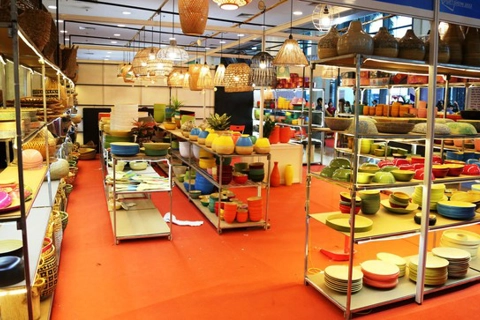
| Hanoi's agricultural authorities host many trade fairs to promote farm produce. Photo: Trong Tung/ The Hanoi Times |

In order to support enterprises in boosting exports, the Hanoi Department of Agriculture and Rural Development said it has organized training activities and disseminated information on regulations and market barriers to agricultural enterprises, focusing on free trade agreements such as EVFTA and CPTPP.
Many enterprises and institutions in Hanoi have had the opportunity to participate in trade promotion programs and study tours, introducing and promoting the city's key products abroad.
According to Ta Van Tuong, deputy director of the Hanoi Department of Agriculture and Rural Development, when products meet safety and quality standards, the likelihood of overcoming technical barrier requirements increases, thus expanding opportunities to access export markets.
To promote the export of farm produce from Hanoi, he suggests that the Ministry of Agriculture and Rural Development continue to invite large enterprises with investment capacity in high-tech farming, slaughtering, processing, and agricultural wholesale markets to invest in the capital.
The ministry is considering organizing trade promotion programs and regional linkages among units and enterprises in the agricultural sector on a more regular basis, he added. Training and consulting for businesses on branding, agricultural product development, and production and business strategies are also important focuses for the ministry.
Tuong stressed that enterprises (including those in Hanoi) need the ministry's support in developing production and business strategies and policies to access potential export markets.