Hanoi pushes SME–large enterprise linkages to drive sustainable supply chain growth
Experts have said that the city can strengthen its competitiveness by deepening cooperation among the Government, large enterprises, and small businesses, especially through more effective supply-chain linkages.
THE HANOI TIMES — When the Government, large enterprises and small businesses work together to build stronger supply chains, they can significantly enhance Hanoi’s competitiveness.
Delegates delivered this message at the roundtable “Linking SMEs with Large Enterprises: Breakthroughs in Supply Chains for the Capital’s Sustainable Development”, held this week in Hanoi.
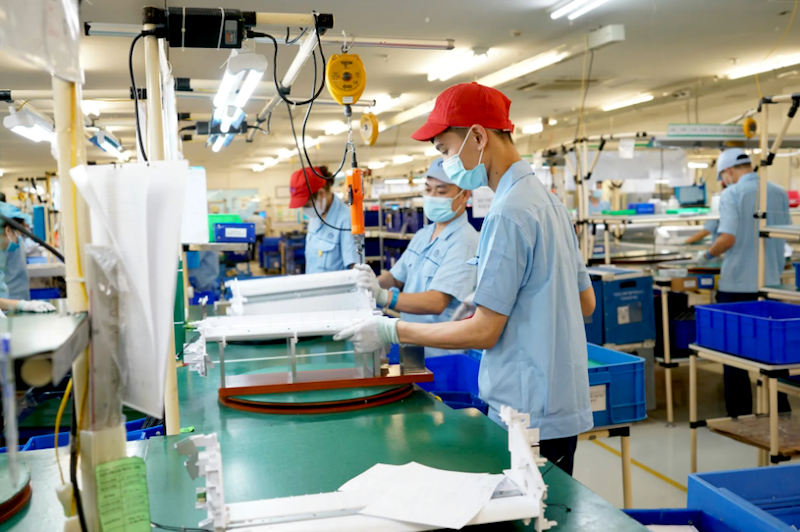
A production line at Hoa Lac Hi-Tech Park. Photo: Pham Hung/The Hanoi Times
The event gathered more than 150 representatives from ministries, local authorities, business associations and private companies to discuss new cooperation models that have become essential for economies facing stronger global competition.
Participants agreed that the Government must create a transparent, stable and predictable legal environment so businesses feel confident to invest.
They said large corporations should act as “locomotives”, while small businesses must improve their capabilities to stay competitive.
Mai Cong Quyen, Deputy Director of the Hanoi Department of Finance, said Hanoi hosts Vietnam’s largest business ecosystem, with more than 420,000 registered enterprises and over 223,000 active ones, accounting for 23% of all businesses nationwide.
Small and medium-sized enterprises (SMEs) represent 98% of the city’s firms, employ 55% of its workforce and contribute more than 40% of Hanoi’s GRDP, making them a central driver of economic growth.
Delegates at the event said SMEs need deeper support to join major supply chains, improve corporate governance, product quality and digital capabilities while meeting the standards set by large domestic corporations and global partners.
They said this challenge also offers an opportunity to advance Vietnamese businesses during deeper international integration.
Tran Thi Ngoc Dung, Director of Gia Bao Import–Export Co Ltd, urged authorities to help small businesses take part in supply chains through better access to information, stronger financial capacity and improved workforce training.
Mac Quoc Anh, Vice Chairman and General Secretary of the Hanoi Association of Small and Medium Enterprises (HANOISME), said the city must develop supply-chain linkages more professionally.
He called for industry clusters and unified standards that align with the expectations of foreign-invested enterprises and multinational corporations.
“When unified standards exist, small firms can reach wider markets and large enterprises can secure stable supplies and lower long-term production costs,” he said.
Experts said a multi-tier linkage model will help Hanoi move toward a more self-reliant, modern and environmentally friendly economy.
They noted that bringing SMEs into major value chains will sharply raise the city’s competitiveness.
Quyen said the Hanoi Department of Finance will continue working with the business community to refine policies, support implementation and clear obstacles.
He added that strengthening cooperation between large enterprises and SMEs will remain a core solution for improving Hanoi’s supply chains and driving sustainable growth in the coming years.