Vietnam debuts EcoHub to advance green B2B supply chains
EcoHub, Vietnam's first green B2B e-commerce platform, is expected to become a trusted marketplace for Vietnamese businesses.
THE HANOI TIMES — In a key step toward sustainable trade and global market integration, Vietnam launched its first green B2B e-commerce platform, EcoHub, in Ho Chi Minh City on July 1 to help businesses decarbonize their supply chains and boost transparency in carbon emissions.
As part of the Green Trade Forum 2025, the EcoHub offers tools for measuring emissions, disclosing data, connecting with technology partners, and accessing the global market, including demanding markets such as the EU, US, and Japan.
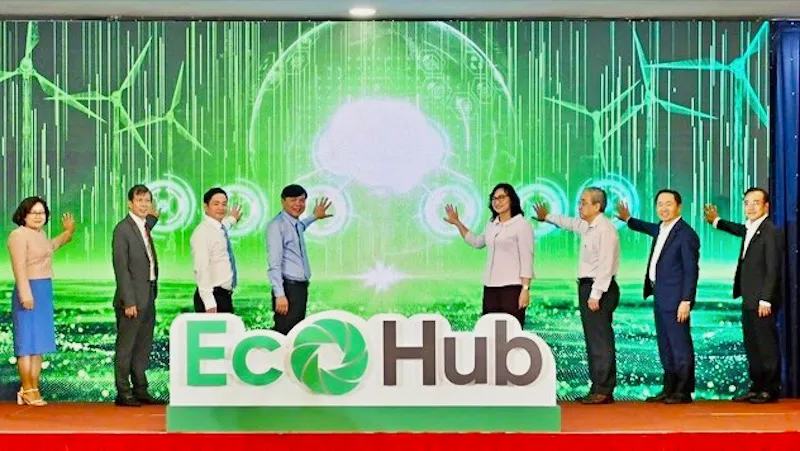
The launching ceremony of EcoHub. Photo: Cong thuong Magazine
According to Deputy Minister of Industry and Trade Phan Thi Thang, EcoHub offers broader and more efficient connectivity than traditional trading methods, giving companies a competitive edge in the global low-carbon economy.
Thang emphasized the government's commitment to improving the legal framework for green trade and green transformation across sectors.
The authorities plan to accelerate the adoption of digital technologies, including the Internet of Things (IoT) and artificial intelligence (AI), to optimize production processes, reduce greenhouse gas emissions, increase clean energy usage, and boost forecasting capacity for sustainable development.
Additionally, they will introduce programs to encourage small and medium-sized enterprises to join green B2B platforms.
EcoHub aligns with the National E-commerce Development Master Plan for 2026-2030, which aims to reduce plastic packaging to no more than 45% of products, increase recyclable packaging to 50%, ensure that at least 40% of enterprises use clean energy for logistics, and ensure that 50% of businesses meet green supply chain standards.
Tackling obstacles to green transformation
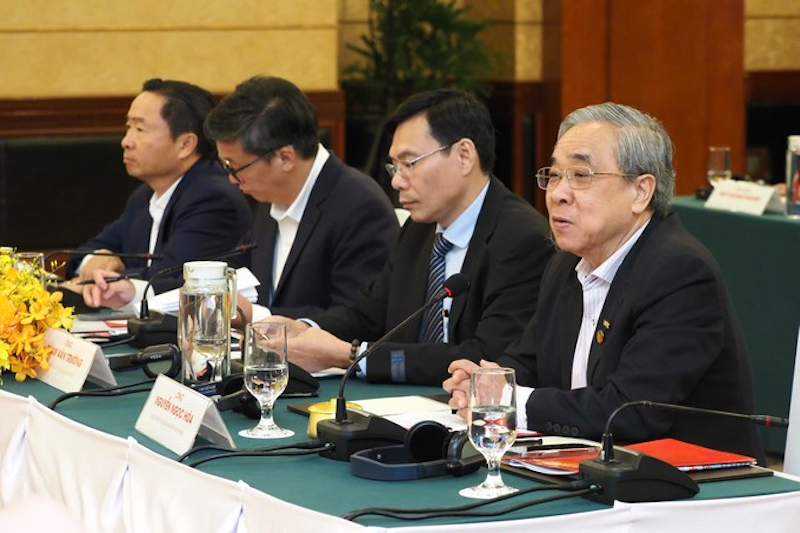
Nguyen Ngoc Hoa, Chairman of the Ho Chi Minh City Union of Business Associations (right). Photo: Saigon Giai phong Newspaper
Nguyen Ngoc Hoa, Chairman of the Ho Chi Minh City Union of Business Associations (HUBA), hoped the platform will become a trusted marketplace for businesses, especially since the government is cracking down on counterfeit and substandard goods. He emphasized the growing demand for verified green products in Vietnam and around the world.
"EcoHub categorizes products by sector, offering detailed information on whether they meet green standards. Businesses that have invested in green transformation can now showcase their progress to customers," Hoa said.
However, he added that financing remains a key barrier. Most Vietnamese enterprises are small or medium-sized and lack the capital required for sustainable upgrades. To address this issue, HUBA has partnered with the Ho Chi Minh City Finance and Investment State-Owned Company (HFIC) to provide financial support to businesses undergoing a green transition.
Hoa suggested solutions tailored to SMEs, such as shared-service models, installment plans, and annual rentals, to make green technologies more accessible.
At the Green Trade Forum 2025, businesses expressed optimism and made specific requests.
Lam Quoc Thanh, CEO of SATRA, emphasized the importance of product verification, secure payment systems, and reliable transaction processing on the platform, especially as participation increases.
Nguyen Ngoc Thang, Deputy General Director of Saigon Co.op, said the platform would help its retail chains access more green products. "We already have policies to prioritize display and competitive pricing for green businesses," he said.
Luong Nguyen Xuan Vu, President of the Saigon Businessmen Club, which supports 300 businesses that have joined EcoHub, proposed several policy measures to accelerate green production.
He called on the government to establish a large-scale green credit fund in partnership with commercial banks, which would have mandatory lending quotas for sustainable ventures. Vu also recommended offering tax incentives to businesses that invest in green manufacturing and urged the government to prioritize green products in public procurement projects.
As part of the forum, the virtual exhibition "EcoHub XPO: Zero Carbon City," showcased a 3D digital model of a carbon-neutral city featuring green production processes, low-carbon materials, electric vehicles, and solar power systems.