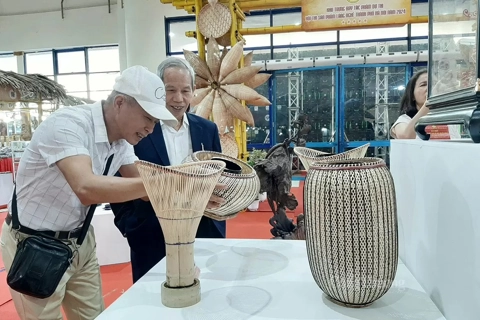
Hanoi's bamboo industry faces shortage of raw materials
Developing sustainable sources of raw materials is vital for the craft industry's long-term growth and for meeting the objectives of Hanoi's 2030 Action Plan.
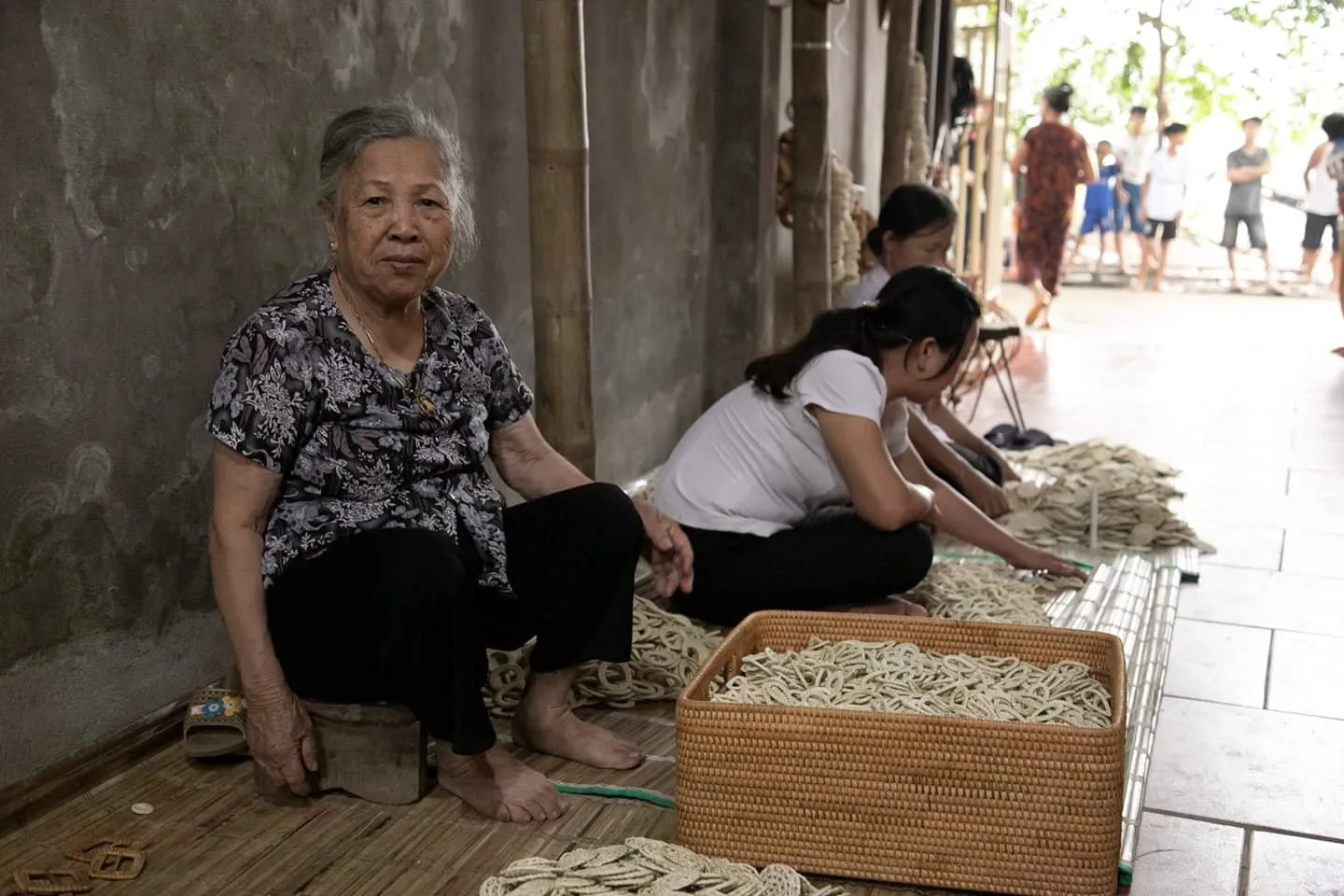
| Local laborers are working at a local workshop in the Phu Vinh Bamboo and Rattan Weaving Village in Phu Nghia Commune. Photo courtesy of the village |
Artisan Nguyen Van Trung, Chairman of the Phu Vinh Bamboo and Rattan Association in Chuong Mỹ District, said that local bamboo and rattan supplies currently meet only 20% of market demand. This has prompted local companies to look for new sourcing areas where they provide technological support for harvesting, processing, and storing production materials.
Another challenge, according to Trung, is the lack of information between producers and raw material suppliers, leading to supply and demand mismatch. The shortage of materials has driven up prices, increasing production costs. "This creates difficulties for businesses and producers," he said.
Vuong Dinh Thanh, Deputy Director of the Hanoi Center for Industrial Promotion and Industrial Development Consulting (IDC Hanoi), acknowledged that the issue is prevalent in craft villages like Phu Nghia.
He pointed out a significant shortage of raw materials for handicraft production, including bamboo, rattan, wood, and sedge, affecting many businesses and cooperatives. Thanh said that the cultivation land becomes narrow while domestic consumption and export demand continue to grow. In particular, wood exporters are facing a severe shortage of domestic materials, forcing them to import. It makes wood the largest category of imports for handicraft production.
Many localities in Vietnam are grappling with the same challenge.
Le Ba Ngoc, Secretary General of the Vietnam Handicraft Exporter Association, reported that raw materials become increasingly scarce and prices are rising rapidly, while export prices for handicrafts remain flat. He cited the ceramics industry as an example, noting that the price of clay has risen more than 90% in the past five years, while kaolin prices have gone up only 75%.
Several provinces and cities have developed resource area plans in recent years. However, these plans have yet to identify specific procurement areas and a comprehensive regional approach to take full advantage of different areas across the country, added Thanh of IDC Hanoi.
Developing regional raw material supply chains
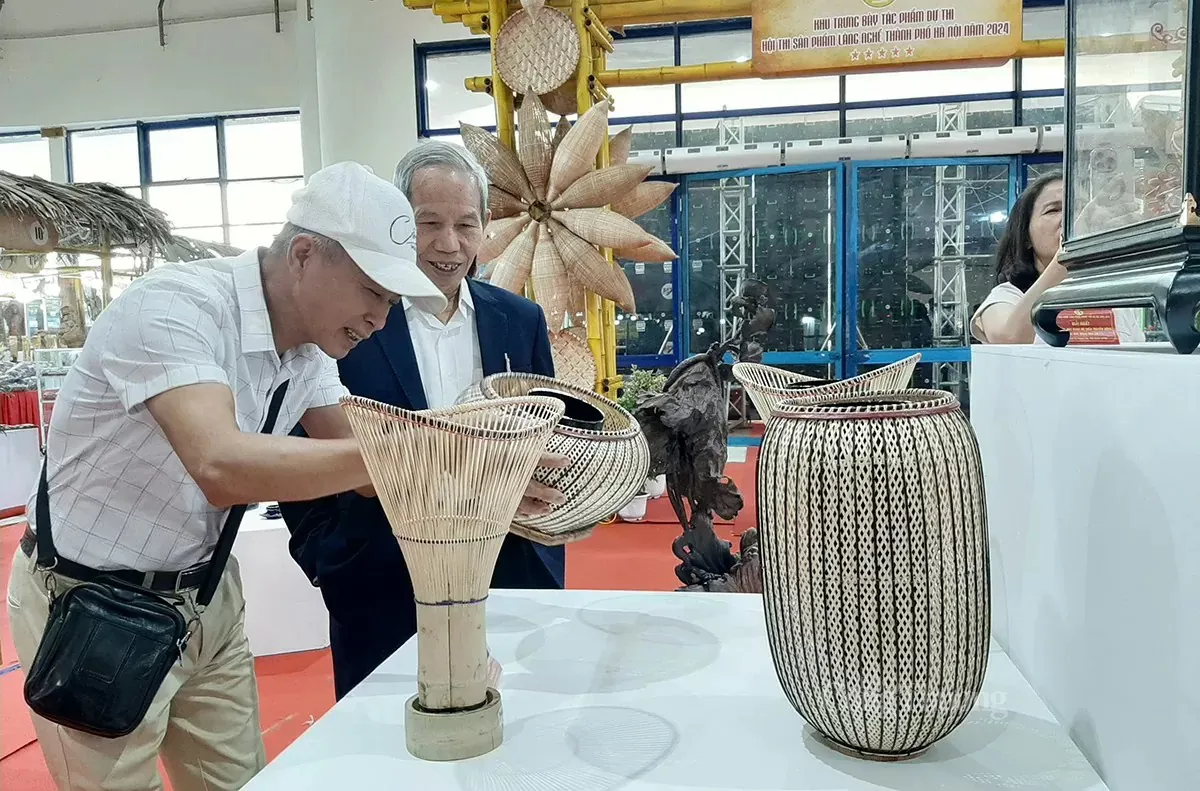
| Residents check out the products on display at a recent craft festival. Photo: Congthuong Newspaper |
According to the latest data from IDC Hanoi, the city's bamboo and rattan craft villages consume nearly 6,800 tons of various raw materials every year. On average, each enterprise needs about 50 tons of materials per month, while each household workshop takes about 20 tons.
Ceramics villages consume about 620,000 tons of raw materials, mainly clay and kaolin. Meanwhile, lacquer villages require about 4,000 tons, and woodcraft villages use over one million cubic meters of wood each year.
To address the shortage of raw materials, Hanoi is encouraging companies, cooperatives, and individuals to lease land and consolidate land use for concentrated raw material development. In addition, the city aims to establish stable supply chains that feed on raw material sources from provinces nationwide to increase efficiency for both sides, according to the IDC Hanoi.
The city also encourages innovation in processing technology among bamboo and rattan product manufacturers to diversify supply, with a particular focus on Chain of Custody (FSC-CoC) certification.
Under the action plan for the commodity import-export strategy by 2030, the city aims to obtain permission from the foreign market to export six to ten groups of handicrafts from Hanoi's villages. It also aims to increase the export share of handicrafts to 3-5% of the city's total exports.
To support development, the government is urged to refine land and resource policies that encourage companies, cooperatives, and individuals to lease and consolidate land for concentrated raw material development in Hanoi.
In addition, stakeholders are encouraged to work closely with regulatory authorities to promote the development of Hanoi's craft villages, ensure a steady supply of inputs, and create a cohesive product development and distribution network.
According to the Vietnam Craft Villages Association, the country has 5,411 craft villages, including 1,864 traditional craft villages and 115 certified traditional crafts. Currently, Vietnamese handicrafts are exported to 163 countries and territories, accounting for nearly 10% of global market demand. The Ministry of Agriculture and Rural Development forecasts Vietnam's handicraft export revenue will reach $2 billion in 2024, down from $3.5 billion in 2023. The exports is projected at $4 billion for 2025, according to the association. |