Hit by Covid-19, Vietnam enterprises turn to domestic market
A market with population of nearly 100 million is more than enough for domestic firms to boost sales and expand market shares.
While the Covid-19 pandemic is causing a demand shock for export-reliant countries, including Vietnam, Vietnamese enterprises are turning to the domestic market of close to 100 million people to overcome this difficult period.
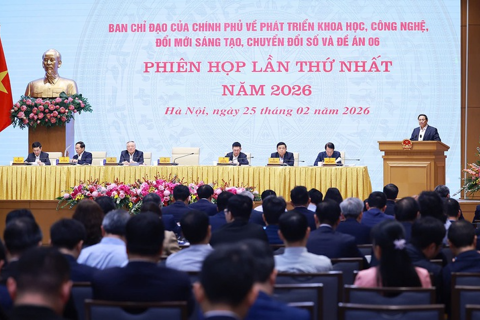
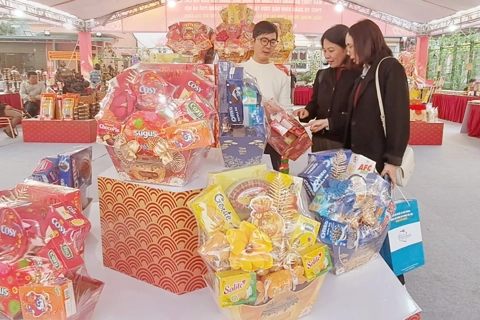
| A goods supply - demand connection program held by HPA to boost domestic consumption. Photo: Le Nam. |

Former Director of the Central Institute for Economic Management (CIEM) Le Dang Doanh said the move is in the right direction.
Doanh cited statistics as saying that total goods retail sales and consumer service revenue in the first four months of 2020 still managed to increase 0.4% year-on-year to VND1,224.5 trillion (US$52.58 billion).
This showed the domestic market remains a viable option for Vietnamese enterprises in the post-pandemic period.
To Hoai Nam, vice president of the Vietnam Association of Small and Medium Enterprises (VinaSME), said Vietnam is one of a handful countries having successfully contained the pandemic, therefore, domestic market at this moment is key for enterprises to boost sales.
“There is strong demand for basic necessities, especially home appliances or apparels,” Nam said.
“Other sectors such as education and training, domestic tourism, hospitality services, public investment and manufacturing would have more opportunities to grow,” he added.
A national survey conducted by the General Statistics Office showed Vietnam has entered the period known as the demographic dividend, in which the active population makes up 60% of the total, and household spending increases 10.5% annually.
These are the key conditions for Vietnamese enterprises to boost sales and expand their market shares.
Stronger linkages in distribution networks needed
However, Vice Director of Hanoi Promotion Agency (HPA) Nguyen Thi Mai Anh said for enterprises to take advantage of the domestic market, there must be close cooperation between producers and retailers.
A strong linkage in this regard would help domestic enterprises enhance competitiveness and promote brands.
Anh said this also opens up opportunities for Vietnamese firms to penetrate export markets via foreign distribution networks in Vietnam.
On this issue, Le Viet Nga, deputy director of the Domestic Market Department under the Ministry of Industry and Trade, said in spite of large number of goods supply – demand matching programs in place, the amount of agricultural products sold via these programs only accounts for only 20% of total production.
Nga attributed this low amount to a lack of efficiency in cooperation between manufacturers and retailers.
As most manufacturers are of small-scale production, retailers do not have sufficient information to form sustainable linkages for goods distribution.
Echoing Nga’s view, President of the Vietnam Retailers Association Vu Thi Hau added many retailers are just waiting for producers to come. Therefore, they do not have first-hand knowledge of the actual production process, or bring more specialties from other provinces/cities into their distribution networks.
The same happens to producers as they do not pay attention to trade promotion events and opportunities of looking for potential partners, Hau concluded.