Human resources: Key for Vietnam's digital economy
To meet the growing demand, Vietnam needs to train around 150,000 digital professionals at universities every year.
Training a skilled workforce is a critical imperative for Vietnam to propel the advancement of its digital economy, which is expected to generate revenues of more than US$74 billion by 2030, making a substantial contribution to overall economic expansion.
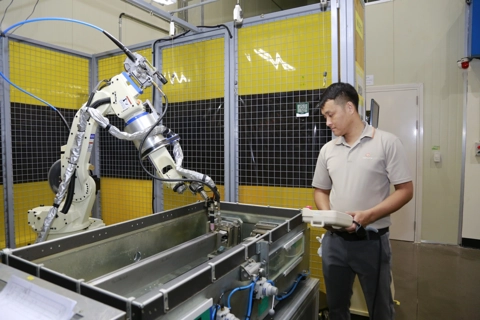
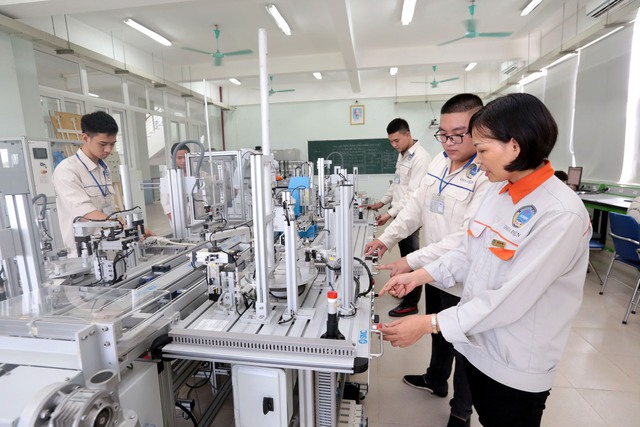
| During a class at the College of Agricultural Mechanics. Photo: Anh Tuan/VNA |
The digital economy is poised to be a prominent driving force in the coming decades in Vietnam, playing a pivotal role in the country's ambition to attain a high-income economy status by 2045.
The country has set the target for the digital economy to account for 20% of the nation's GDP by 2025, and this figure is projected to rise to approximately 30% of GDP by 2030.
Minister of Information and Communications Nguyen Manh Hung in a national conference on the digital economy in late September suggested for Vietnam to effectively and sustainably carry out digital transformation, a key component in realizing the objectives outlined in the National Digital Transformation Program is the development of a competent digital workforce.
Presently, the country faces a shortage of such resources, and the existing pool is relatively underdeveloped.
“To meet the growing demand, Vietnam needs to train around 150,000 digital professionals from colleges or higher education institutions every year. Unfortunately, the current annual training capacity is insufficient, with only 65,000 people being trained, which is less than 50% of the required number,” Hung said.
From a business perspective, Nguyen Tuan Minh, Human Resources Director of FPT Software Company, emphasized the strong demand for IT human resources. FPT Software, which employs nearly 30,000 programmers and engineers globally, is experiencing a shortage of industry experts. In response, the company has been actively recruiting and building teams of specialists in various domains to collaborate with IT teams in delivering optimal solutions for clients.
Nguyen Thi Bich Hong, General Director of HR2, an organization specializing in providing human resources to businesses, underscored that digital transformation encompasses three pillars: business, technology, and people.
“The success or failure of digital transformation is largely contingent on the human element. In the current era of robust digital transformation, the dearth of digital human resources, particularly in managerial positions, is a challenge that most businesses are grappling with. As digital transformation requires comprehensive adoption, the management team plays an integral role,” Hong said.
Training is key
Commenting on the potential for developing digital human resources in Vietnam, HR2's Hong emphasized that the opportunity is immense.
However, to cultivate digital talent, she called for greater Government involvement, with the Government playing a key role in providing supportive mechanisms, policies, and an environment conducive to digital talent development and technological advancement.
In addition, companies should invest in digital transformation by integrating digital technology into all aspects of production, business, and service activities.
Hong also stressed the importance of training institutions and individual employees to take an active role in mastering digital technologies and swiftly adapting to technological shifts. Short-term training courses can help provide an overarching understanding of digital transformation's benefits for businesses and consumers alike.
To cultivate high-quality human resources, Associate Professor Dr. Bui Huy Nhuong of the National Economics University advocated aligning three critical stages: education, employment, and compensation.
“Educational programs should respond to the developmental trends and needs of the Vietnamese economy, offer world-class practices, and invest in advanced, standardized, and modernized school facilities. Vocational education institutions should establish stronger links with businesses, innovate curriculum content, and promote creative thinking and practical application,” he said.
Vu Quoc Huy, Director of the National Innovation Center under the Ministry of Planning and Investment, agreed that education should be at the forefront of addressing the human resource challenges in the digital economy. He suggested a more flexible and robust approach to skills and knowledge acquisition could be achieved by diversifying investment sources and engaging professional resource providers.