Infrastructure development: Key part of Hanoi 2021-2030 planning
A modern and comprehensive infrastructure will provide new momentum for Hanoi's rapid development, with the potential for double-digit growth in the years ahead.
Hanoi’s upcoming planning should concentrate on investing in the development of comprehensive infrastructure, ensuring a cohesive structure, addressing traffic congestion issues, maximizing the use of underground space, and enhancing urban railway systems and other forms of public transport.
| Minister of Planning and Investment Nguyen Chi Dung. Photos: The Hanoi Times |
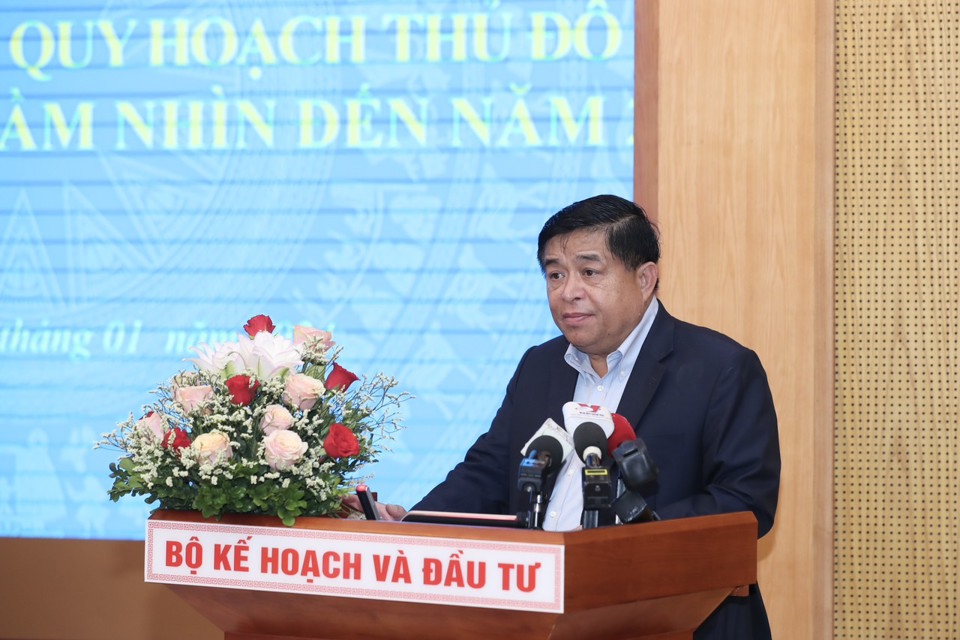
Minister of Planning and Investment Nguyen Chi Dung shared the view during a consultation workshop on January 9 on the capital’s planning for 2021-2030, with a vision for 2050.
“Infrastructure development must be a top priority, leading other breakthroughs. If we can accomplish this, we can simultaneously address numerous issues, reduce traffic congestion, stimulate economic growth, generate employment opportunities, minimize pollution, and transform the city into a desirable place to live. Therefore, a robust mechanism regarding this matter is necessary,” said Dung.
In particular, Dung emphasized the urgent need for major cities such as Hanoi and Ho Chi Minh City to actively promote urban railway projects to meet the escalating demand for public transport.
“Modern and comprehensive infrastructure will provide new momentum for Hanoi's rapid development, potentially achieving double-digit growth over a longer period, not just the current target of 8.5 - 9%,” he continued.
Dung noted Hanoi’s planning reflects a new mindset and vision, in line with the development direction of the country's economic and social development strategy for the 2021-2030 period. In this regard, Hanoi stays central as the driving force for the development of the Capital Region and the Red River Delta.
He suggested that consulting entities and experts analyze the reasons for existing limitations and identify impediments to Hanoi's development that have hampered it from living up to its potential. The proposed solutions require strategic thinking and vision to create new values. The capital city's development should closely adhere to central resolutions, national comprehensive planning, sectoral planning, and local planning.
"Hanoi must maintain its role as a link between the Red River Delta and the Capital Region. How Hanoi impacts the region and how the region affects Hanoi's future development are crucial considerations," said the Minister.
Focusing on selected industries
Christopher Lewis Malone, CEO of Dalberg for Southeast Asia, emphasized the significance of focusing on a select number of industries with robust growth potential rather than spreading attention across numerous sectors with limited growth.
| CEO of Dalberg for Southeast Asia Christopher Lewis Malone. |
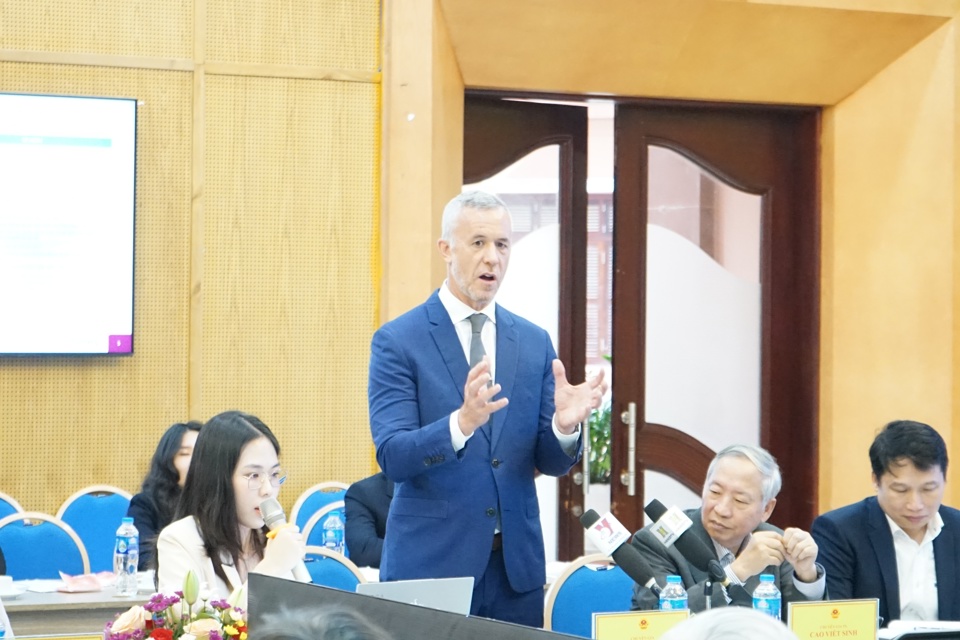
Drawing examples from other Asian cities, he noted that some cities have identified their roles in the region and prioritize only a few key industries for growth. For instance, cities like Singapore and Shenzhen (China) have made high-tech manufacturing and finance their focal points, driving their primary sources of economic growth.
Malone also highlighted the importance of staying abreast of global trends and understanding how these trends impact Hanoi's growth. According to him, three prevailing trends include the shift of manufacturing from China, the green transition (moving from carbon-intensive production to renewable energy), and the artificial intelligence revolution.
He suggested that Hanoi possesses certain advantages and potential to capitalize on these trends, for which the city could focus on key industries, such as finance, industry, and technology, to make breakthroughs.
Professor Dr. Hoang Van Cuong, Deputy Rector of the National Economics University, representing a consortium of seven consultancies, suggested opting for a growth scenario of 8.5 - 9.5%. Potential development sectors include trade and services, industry and construction, and agriculture. Urban economic development will rely on services as a pillar and growth driver, fostering the overall development of services in the digital space.
"The capital city is unique. It must be managed and developed according to special urban standards, which differ from the new national rural standards and urban classification criteria for towns and cities. A special development zone requires different regulations and decision-making powers compared to other areas," recommended Cuong.
He also revealed that the draft capital planning envisions the development of the Hoan Kiem Financial Center by 2030. This area will house the headquarters of major financial institutions, with digital financial services as the centerpiece, interconnected information systems, registration systems, and transaction information connections.
Regarding commercial services, the draft plan emphasizes urban economic development with services as the pillar and growth driver, developing a comprehensive range of services on the digital platform.
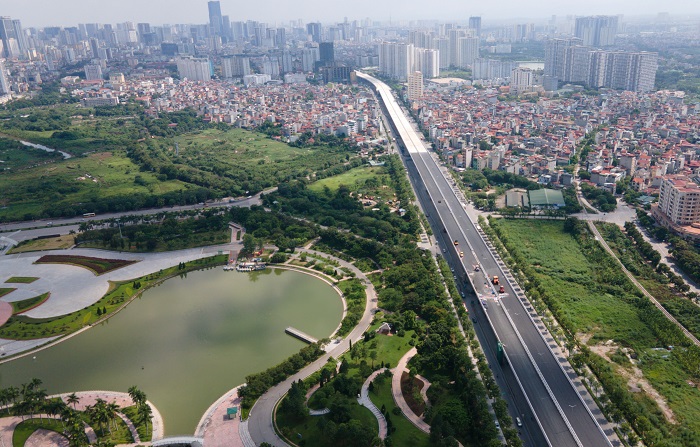
| Hanoi from above. Photo: Pham Hung/The Hanoi Times |
According to Cuong, the core area of the central urban area will develop commercial and service centers for urban residents, combined with services for tourists and transients, including commercial spaces combined with dining and healthcare services in pedestrian shopping areas catering to tourists, along with nighttime economic activities in the Old Quarter along both sides of the Red River.
In the expanded central urban area, high-end commercial and comprehensive service centers will be developed, linked to newly developed urban centers through the transit-oriented development (TOD) model, forming integrated commercial areas in high-rise urban areas with a high population density.
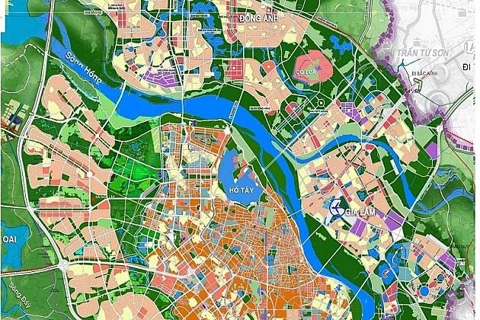
The draft Hanoi Capital Planning for the 2021-2030 period, with a vision to 2050, proposes five general development perspectives and three perspectives on spatial organization. Regarding spatial organization, capital planning focuses on developing concentrated industries and sectors along five corridors and economic belts linked to five development axes. At the same time, it emphasizes the development of five types of space: construction space, underground space, digital space, cultural space, and public space, especially green space.
Among the objectives set for this stage, Hanoi identifies some targets that are higher than the national average, such as The proportion of the digital economy to account for 40% of the GRDP; GRDP per capita to reach around $13,500 - $14,000; public green space in urban areas to achieve about 10 - 12 m2 per person; urbanization rate to hit 65% - 70%, among others.