Hanoi’s government has built a number of bridges in the inner city which have helped change the capital city's urban landscape.
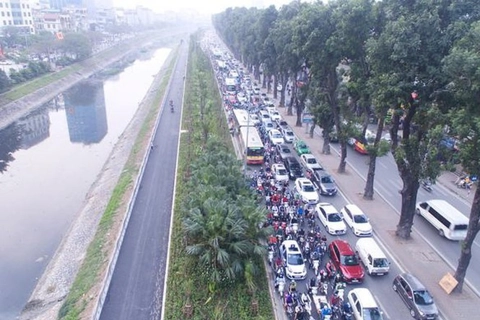
The old and modern inner-city bridges are expected to ease traffic congestion in Hanoi's downtown and contribute to the city’s development.
Road infrastructure of Hanoi has become more modernized in recent years with an increasing number of bridges that are a testimony to the dynamism and determination of Hanoians to grow.
Hanoi’s socio-economic achievements have been greatly highlighted by traffic infrastructure projects. Bridges have improved Hanoi’s connectivity with other provinces, boosting the growth of Hanoi and the northern region.
From the past to the present, each bridge is a turning point in the history of urban development of Hanoi, the capital city with a thousand years of civilization.
|
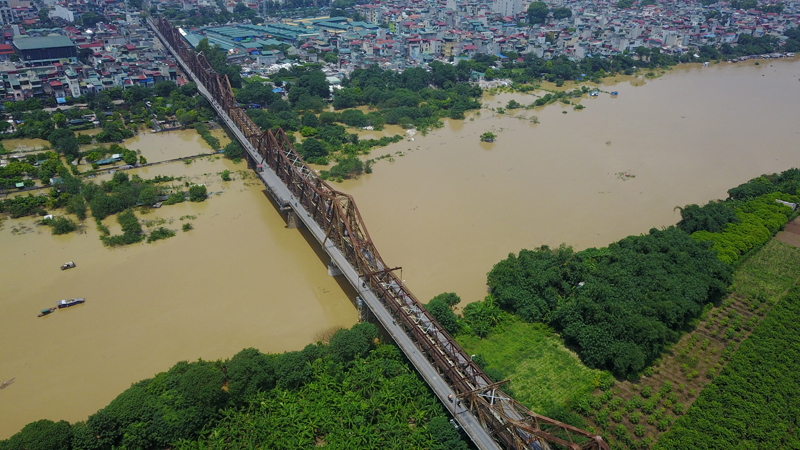
| Long Bien bridge is a witness to the resilience of Hanoi in the two resistance wars as well as the dramatic changes of this city in the new era. It is the first steel bridge in Hanoi, also one of the first bridges built by the French colonial regime in Vietnam. It was originally named after the Governor-General of French Indochina - Paul Doumer and was renamed Long Bien in 1954 when the Vietnamese totally defeated the French in the Dien Bien Phu battle. |
|
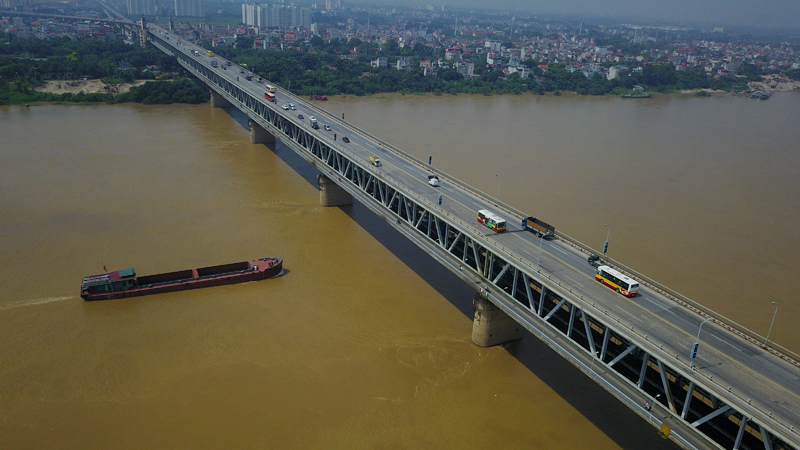
| Work on Thang Long bridge started in 1974 and it was inaugurated after 10 years of construction. It was the only road linking Hanoi's downtown with Noi Bai international airport until Nhat Tan bridge was inaugurated in 2015. The bridge has two levels, with the upper deck reserved for cars and trucks while in the lower deck circulate motorbikes, bicycles and trains. It has become a symbol of friendship between Vietnam and the former Soviet Union. |
|
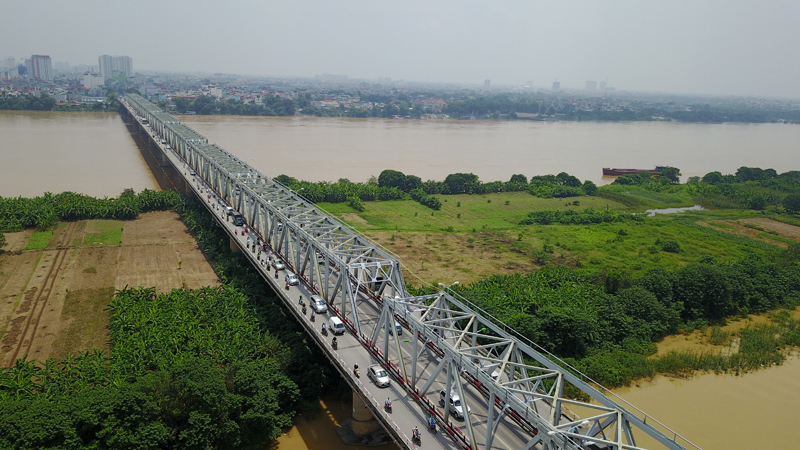
| Chuong Duong bridge was opened to traffic in 1985, just two kilometers to the south of Long Bien bridge. Consisting of 11 spans, it was the first bridge designed and built by Vietnamese using materials left over from the construction of Thang Long bridge. In addition to easing the traffic overload on Long Bien bridge, Chuong Duong bridge has become a symbol of Vietnamese intelligence and creativity.
|
|
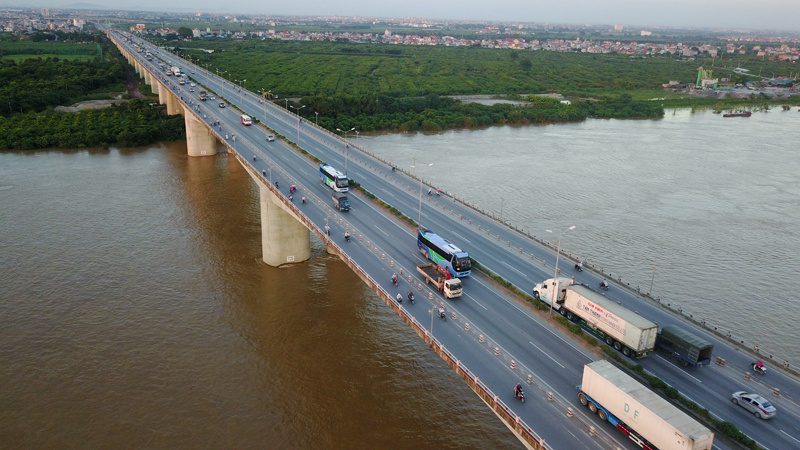
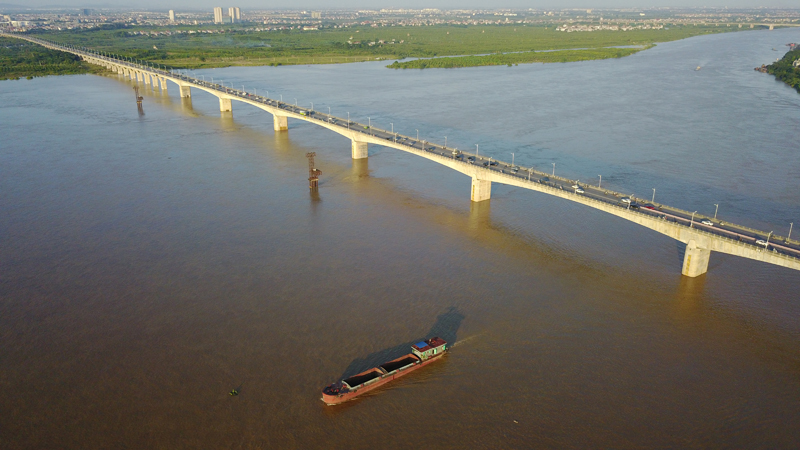
| Thanh Tri bridge was inaugurated in 2008. Its six lanes became the main route between eastern Hanoi and National Highway 1A. It was one of the Millennial Anniversary of Hanoi commemorative projects along with Vinh Tuy bridge. Spanning 3,084 meters, it is one of the longest bridges in Asia. It is part of the Hanoi’s Ring Road 3 and the largest prestressed concrete bridge in Vietnam. |
|
| Vinh Tuy bridge was opened to traffic in 2010, connecting Hanoi’s center with National Highway 5 to northern provinces of Hai Phong and Quang Ninh. It is 3.5 kilometers long with four lanes and 19.25 meters wide. The bridge is a key link that connects the center and northeast of the city. |
|
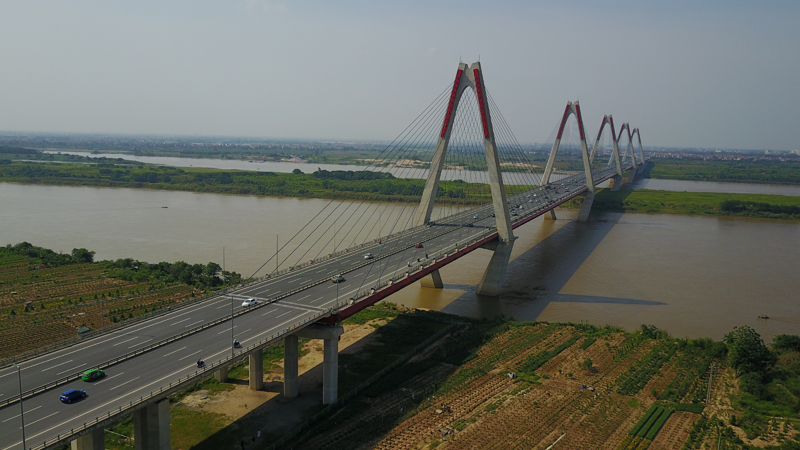
| Located on Ring Road 3, the nine-kilometer Nhat Tan bridge (or Vietnam-Japan Friendship bridge) is the longest suspension bridge in Vietnam. It is a cable-stayed bridge crossing the Red river in Hanoi, inaugurated on January 4, 2015. It forms part of a new six-lane highway linking Hanoi’s center with Noi Bai international airport. The project was funded with a Japan International Cooperation Agency ODA loan.
|
|
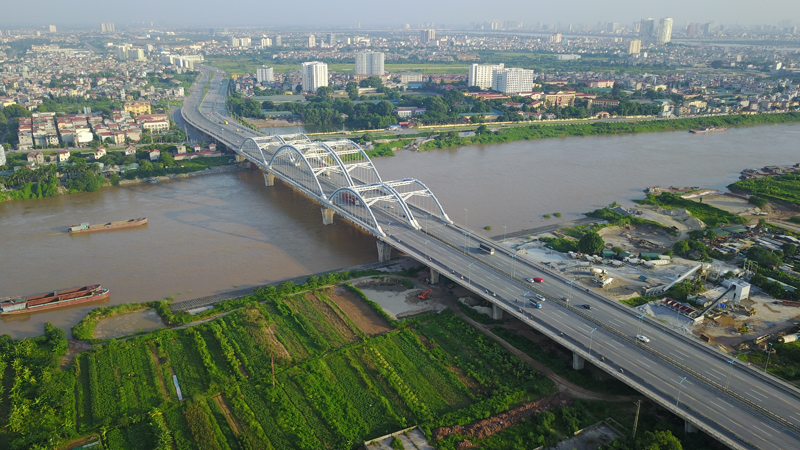
Dong Tru arch bridge, made of steel tubes filled with cement, was opened for safety testing in Hanoi in 2014 as part of the extended Highway No.5 project. The 1.14km long and 55m wide bridge spans the Duong river and links Long Bien district and the suburban district of Dong Anh. It was built entirely by Vietnamese engineers and is among three bridges along the highway. The highway project has contributed greatly to easing the burden on roads to western and northwestern provinces, and strengthening Hanoi’s economic linkages with other localities. The bridge construction was started in 2005 with a total investment of approximately VND6.6 trillion (US$314 million). |