Japanese artist introduces Butoh dance
Renowned Japanese artist Ima Tenko shows the audience how Butoh- the Japanese ‘Dance of Darkness’ could offer a compassionate experience in a suffering world.
Japan Foundation in Hanoi introduces the art of Japanese Butoh dance through performances and lectures given by artist Ima Tenko.
The performance is available at https://vimeo.com/560801476 with Vietnamese and English subtitles.
| Japanese artist Ima Tenko practices Butoh dance. Photo: www.remotelands.com |
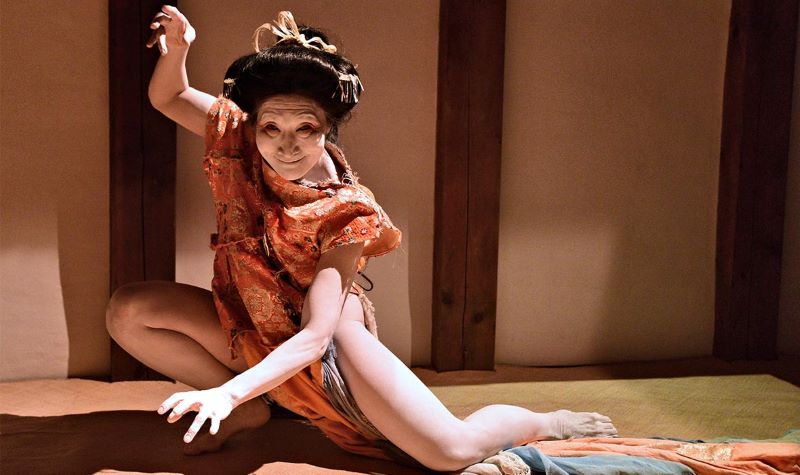
The unique form of Butoh, often translated as ‘Dance of Darkness’, was born out of Japan in the 1960s. It is an extreme avant-garde dance that shocked audiences with its grotesque movements and graphic sexual allusions when it first appeared.
Standing in a dark and almost empty room, performers move awkwardly and slowly with shuffling steps, looking more like zombies than dancers. Their faces twitch while the bodies shake with tension.
The acknowledgment of Butoh as a significant art form is now firmly established in Europe and America in addition to Japan. At the same time, the “practice” of Butoh has grown as a way, like meditation or yoga, to gain self-awareness and wake up.
| Ima Tenko is also the founder of Butoh company Kiraza in 2000. Photo: www.remotelands.com |
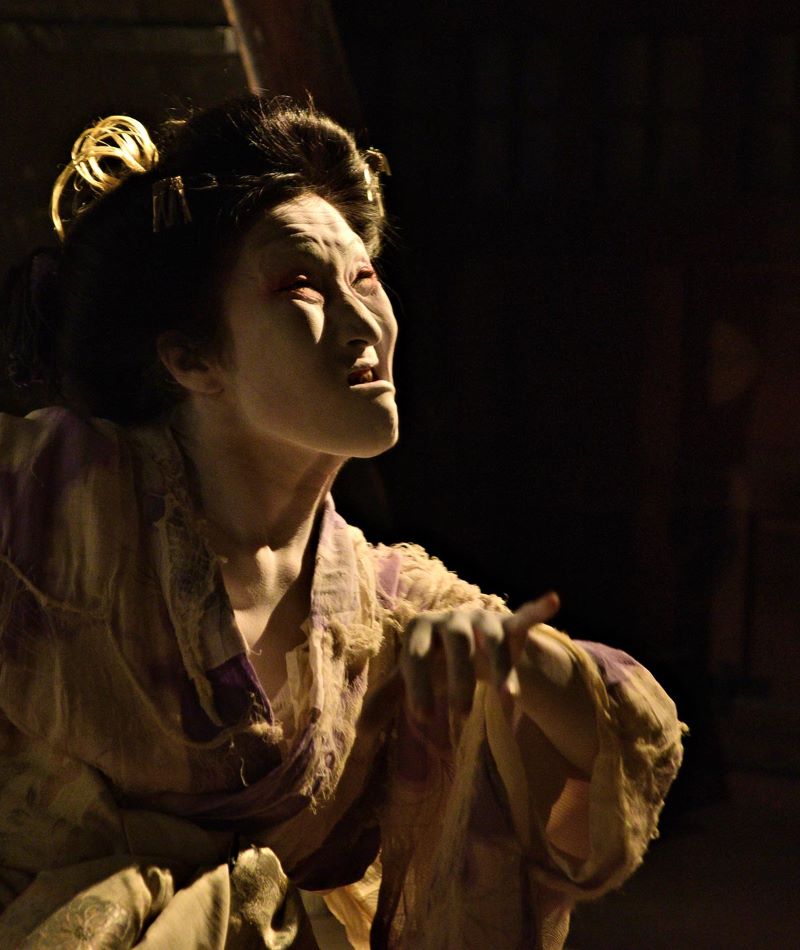
According to Japanese cultural researchers, Butoh shares the tenets of selflessness, transformation through changes of consciousness, and above all, compassion.
“Its grotesque elements do not constitute the core of Butoh,” wrote the dance historian Juliette Crump.
Born in 1958, Ima Tenko is the director of Butoh Company Kiraza and Ima Tenko Butoh Studio. She has given many Butoh performances at historical theaters, temples and shrines in Kyoto. In 2020, she was awarded the National Arts Festival Excellence Prize.
The artist is also said to ‘broke new ground through the exploration of avant-garde Butoh, supported by the “power of Tamafuri (the revitalization of life)” found in the origins of the Japanese arts’.
| Since the opening of Kyoto Butoh-kan in 2016, the artist has been performing solo works for a long time. Photo: www.remotelands.com |
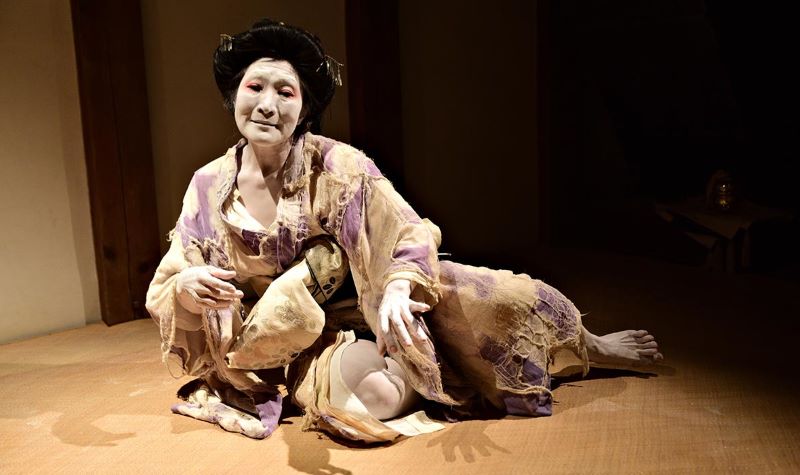
Today, Butoh is known internationally and there are practitioners all over the world, but as a result of the coronavirus pandemic, opportunities for people to access Butoh have plummeted. In such times, Butoh Choreo Lab strives to develop, popularize and pass on Butoh, by sharing Butoh dancers’ thoughts and techniques on choreography from the Kazuo Ohno Dance Studio to an online platform.
Through her online performances and lectures, the artist hopes the audience would depart with a more open understanding of the body as a form of expression.
“Sometimes the ‘butoh’ dancer is like a transmitter. I hold an empty body and things are translated through me to the audience,” she said. “The classical forms of ‘kabuki’ and ‘noh’ are preserving ancient movements, but they are perhaps not so timely or contemporary. Without a decided form, the Butoh is able to soak in the current mood of society and reflect it in a way that the traditional forms cannot.”
BUTOH CHOREO LAB #3
Demonstration & Short Lecture by IMA TENKO
(Credit: Butoh Choreo Lab)