Clay flowers bloom in Hanoi market
THE HANOI TIMES — Under the skillful hands of artisans, primitive pottery is transformed into unique flowers with artistic and high commercial value in Hanoi market.
Doan Vuong Hung, a resident of Hanoi's Cau Giay District, gifted his wife a vase of clay flowers on her birthday. "My wife likes clay flowers immensely, so I gave it to her to decorate her office desk. It's hard to tell the clay flowers from the natural ones. The flowers are carefully made and eye-catching," Hung told The Hanoi Times.
The couple is among many customers I talked with to hear about their interest in clay flowers amid different choices for their anniversaries or special occasions, mostly in the big cities like Hanoi.
At present, there are many clay flower shops in Hanoi owned by experienced craftsmen. They often open clay flower making classes for interested people. The art becomes a source of income for those who are passionate about it.
Nguyen Thi Huong Thuy, an experienced clay flower maker in Cau Giay District, Hanoi, will decode the reasons behind the unique appeal and popularity of clay flowers. She said it requires a special type of clay to make the flowers, and materials are crucial in making the flowers beautiful and durable.
"We often use clay from Japan and Thailand to make the flowers. It takes time for the craftsmen to shape the petals," said Thuy, who has been training hundreds of learners on clay flowers.
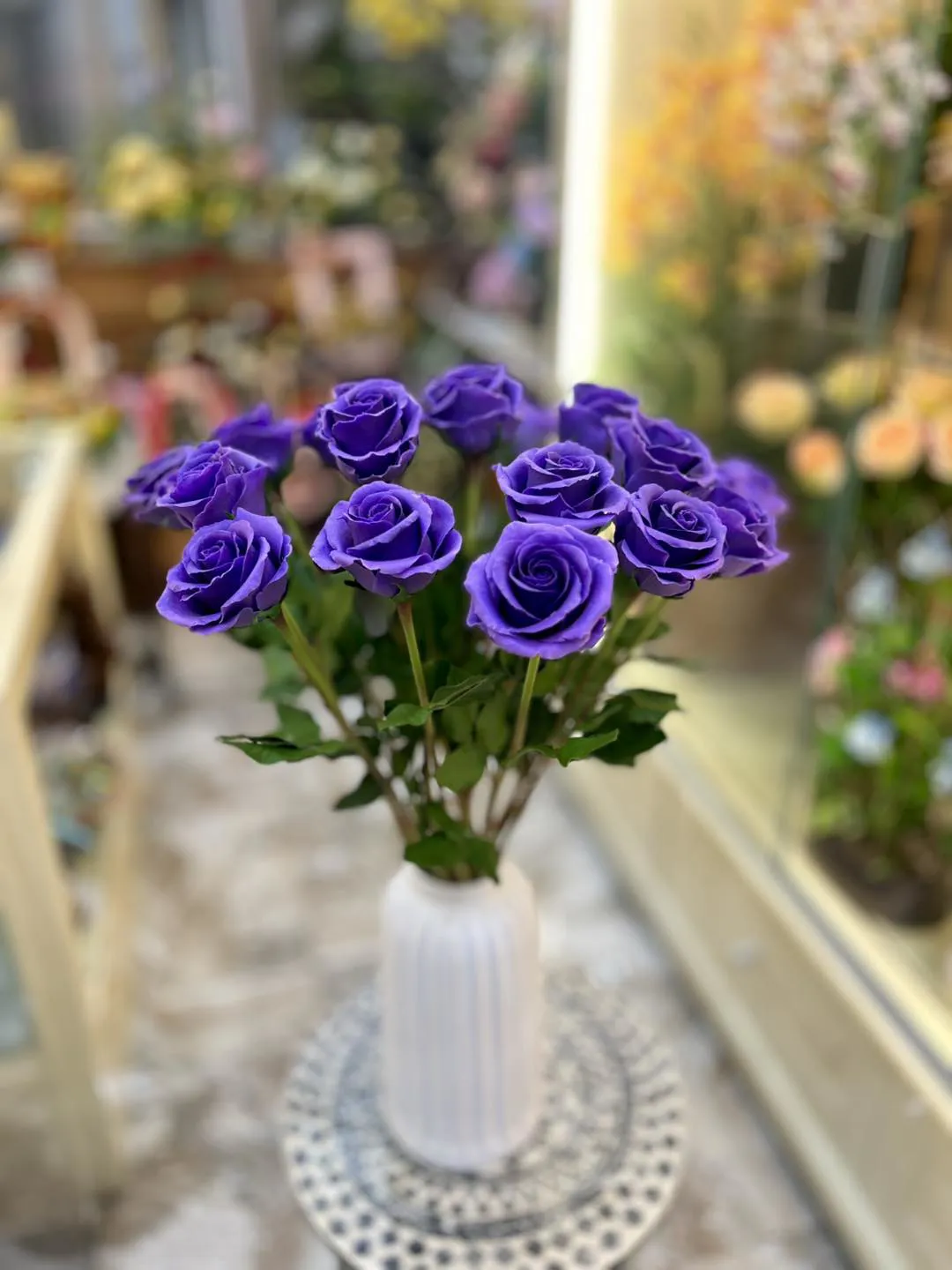
A vase of delicate and eye-catching clay roses displayed in Nguyen Thi Huong Thuy's shop, which look like real ones. Photo: Anh Kiet/The Hanoi Times
The art form comes from abroad, but craftswoman Huong Thuy has breathed life into each product. Her shop is decorated with vases and lifelike clay orchids, lotuses, roses, dahlias, and tulips, among others.
"The art, which originated in Japan and was first introduced to Vietnam in 2007, has caught the interest of local enthusiasts," she said. Making clay flowers requires sensitivity, dexterity, and creativity from the artisans, as there are many steps, from mixing the clay, shaping the petals and leaves, painting, kneading the bud, and assembling the various parts into whole flowers. It is the artistic skills of the makers that turn lifeless clay into beautiful flowers," Thuy told The Hanoi Times.
"Each stage is equally crucial, whether it's combining colors, kneading buds, or shaping petals. The whole flower won't be exquisite if one of its parts isn't. The artisans must pay attention to each step, especially when creating the petals and mixing the colors," she added.
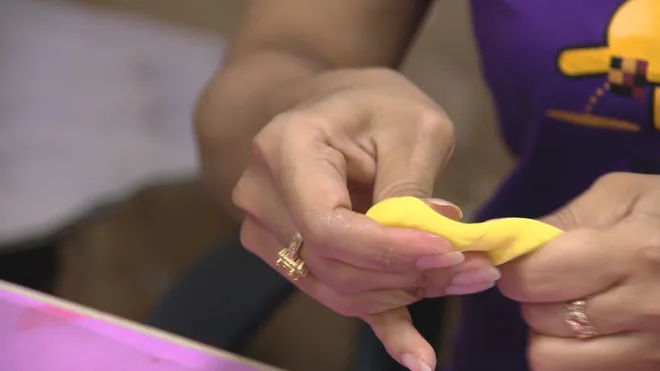
Thuy is molding the clay.
Thuy said that to maintain the flower's durability and avoid the influence of humidity, each petal is coated with a thin layer of paint, while the supporting steel wire is stainless.
Her clay creations have won her many awards in arts and crafts competitions in Hanoi, most notably the title of Hanoi’s skilled craftsperson title of 2019, awarded by the city government.
Today, Thuy's clay flowers have gained a cult following with many customers at home and abroad buying them as gifts for family and friends or business partners while others buy them to decorate their own homes.
Pham Thi Mai Thanh, a customer at Thuy's shop, told The Hanoi Times: "I would like to buy a pot of clay lotus as a gift for my friends who now live in the US. Lotus is a typical flower of Vietnam. It will remind them of their homeland."
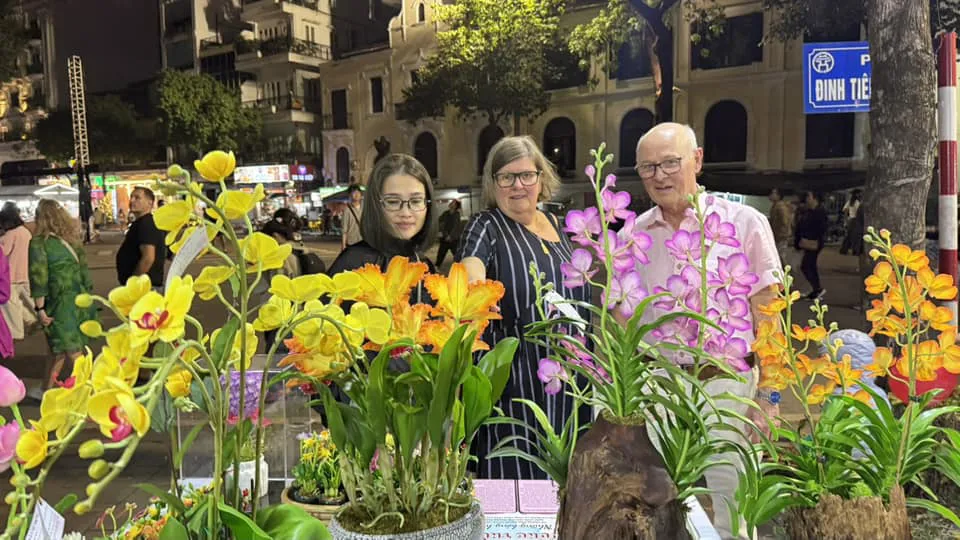
Foreigners are attracted by Thuy's quintessential and unique products representing Cau Giay District at the Women's Festival for Peace and Development 2025 held at the Hoan Kiem Lake walking area. Photo: Huong Thuy
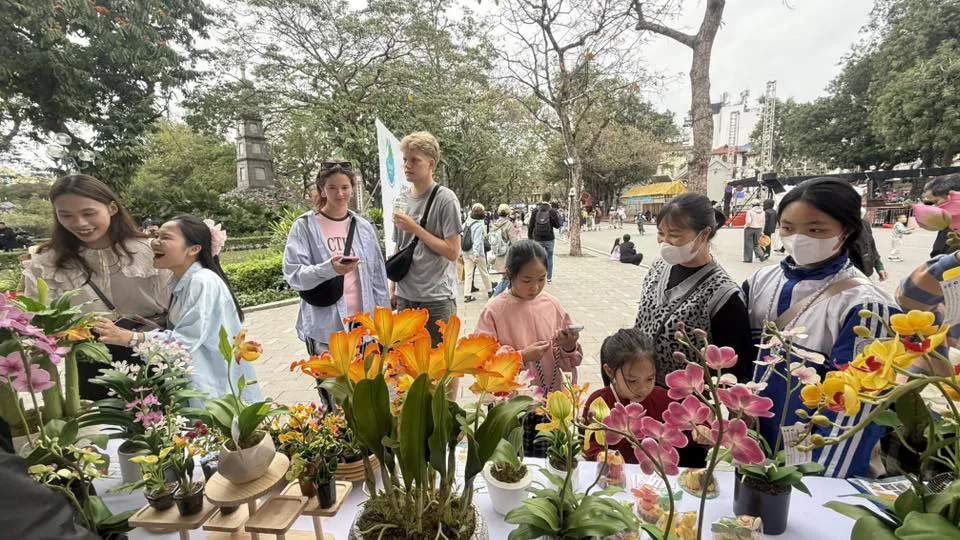
Many tourists enjoy watching Thuy's clay flowers at the Women's Festival for Peace and Development 2025. Photo: Huong Thuy
Using scissors designed for each type of flower and special tools, the soft clay is cut into pieces such as petals, sepals, stamens, and a stalk. After drying, these parts are very precisely assembled into a complete flower.
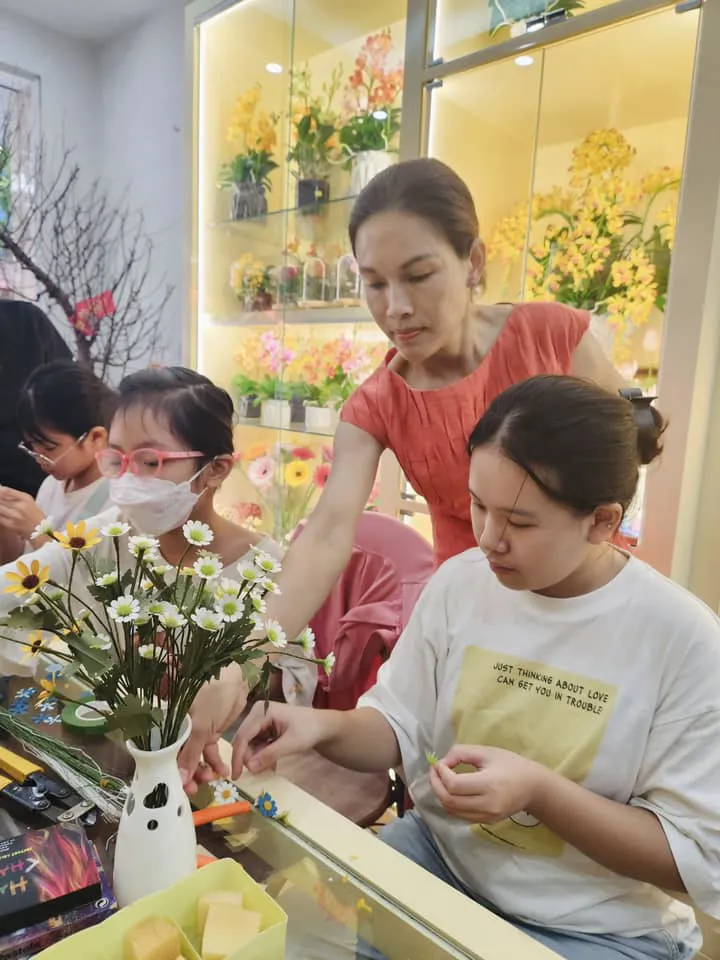
Thuy guides her young students to complete a clay daisy vase. Photo: Anh Kiet/The Hanoi Times
Le Thi Thanh Tra, owner of Bees Shop on Phung Chi Kien Street in Cau Giay District, holds clay flower making classes every Saturday.
Hoang Thi Phuong, a 48-year-old trainee at Bees Shop, told The Hanoi Times: "I love handmade things, so the more I learn to make clay flowers, the more passion I give to the art." Phuong is now able to make simple flowers after two days of learning.
-1743696331.jpeg "Hình ảnh 6")
Tools and materials to create clay flowers.
Tra has over 10 years of experience in making clay flowers. She said that the most challenging process is choosing the colors to make the flowers and arranging them. Diligently and meticulously guiding her students, Tra took a ball of clay, began to mix in color and knead it, then put it into a rolling machine and used molds to make petals.
These are just the first stages with as many as 10 to 15 different steps required to complete a product. "The sculpting process, for example the veins of the flowers, takes a lot of finesse so that when it dries, the flowers look soft and lifelike. Then come the next steps of coloring and drawing details, making buds, leaves and branches, and putting it all together to make clay flowers."
-1743696331.jpeg "Hình ảnh 7")
Le Thi Thanh Tra (right) works painstakingly on clay floral objects.
Tra's ingenious skills have created orchids, lotus, daisy, lagerstroemia, and other flower types. After 10 years in the craft, she's lost track of how many types of flowers she's created. "While some take only a few days to complete, others can take up to half a year for me to be satisfied," she said.
"Beautiful clay flowers are highly praised by people for their durability, which can last up to seven years. They are chosen to decorate homes and workplaces, present friends, and exported to many foreign countries such as Japan, Australia, and Canada," Tra told The Hanoi Times.
-1743696331.jpeg "Hình ảnh 8")
A clay flower lover experiences making her own products at Bees Shop. Photo: Thanh Tra
-1743696331.jpeg "Hình ảnh 9")
Colorful clay flowers made by students at the Bees Shop. Photo: Thanh Tra