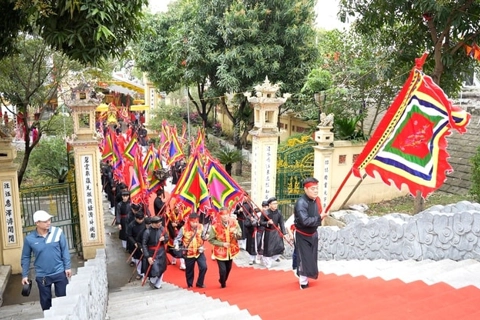
Lai Xa Photography Museum - where to snap Vietnam’s photography
The museum preserves many valuable items which tell the history of the country’s photography.
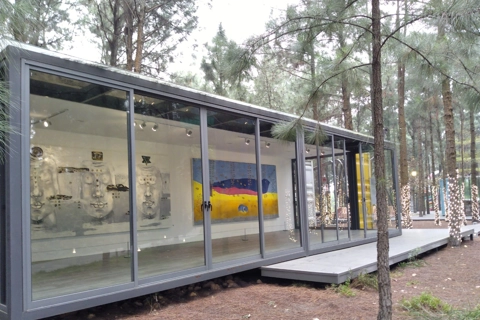
Only 15 km from Hanoi’s center, Lai Xa Photography Museum in Lai Xa village, Kim Chung Commune in Hoai Duc District is regarded as the first and only craft village dedicated to photography and the birthplace of photography in Vietnam.
| A visitor to Lai Xa Photography Museum. Photo courtesy of the museum |
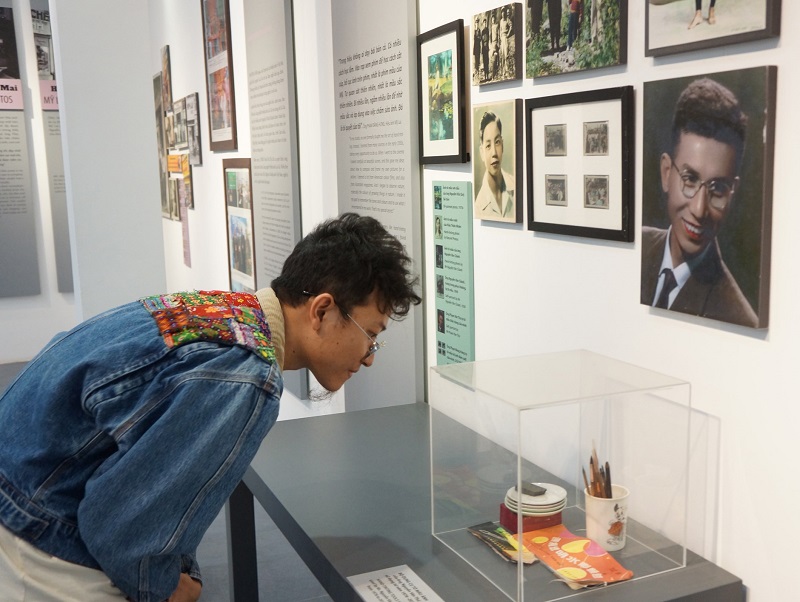
The museum was introduced to the public in 2017 to commemorate 125 years that Nguyen Dinh Khanh, a villager who was regarded as the “father” of the village’s photography trade and played a key role in the development of photography throughout Vietnam and abroad, opened his first photography shop.
The museum is a two-story building, located in the middle of the village. It has a display area of nearly 300 square meters showcasing about 150 photos and over 100 artifacts associated with the history of the trade.
Among them, there is a valuable collection of different old film cameras and a darkroom space which demonstrates the old techniques used by Lai Xa villagers for photo development. Using a red-light familiar in photo-labs, it displays equipment for developing films, such as photo cutting tools, a film dryer, a table and tools for hand-tinting, an Axomat photo enlarger, and chemicals.
| The Photo of Vi Kim Yen, a Hanoi resident was taken by Lai Xa’s photographer Nguyen Dinh Khanh (aka Khanh Ky) in 1930 at his own studio in Hanoi. Photo collector: Alain Phan |
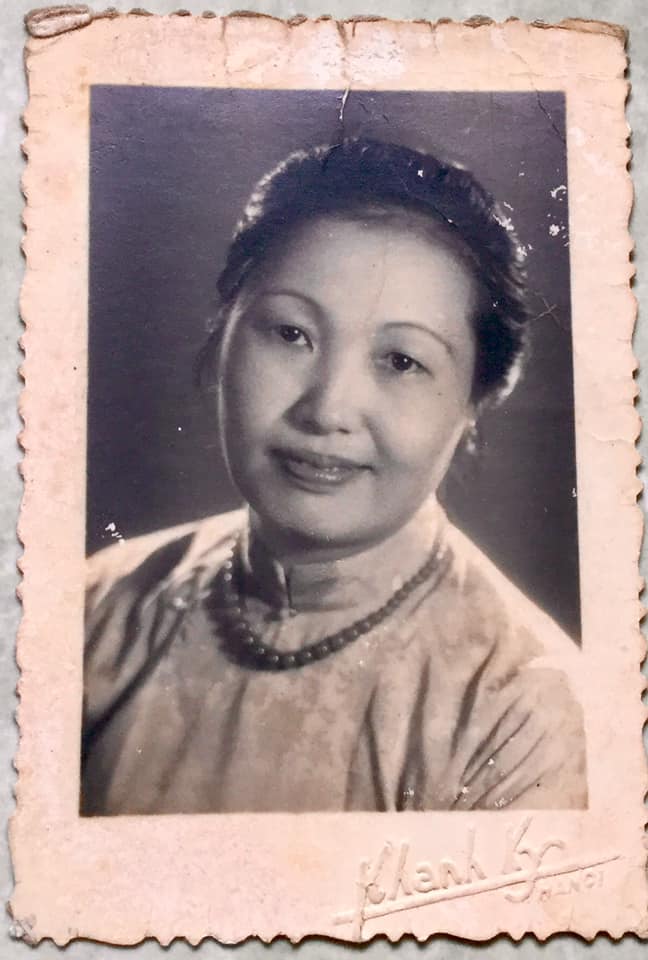
In particular, the stories of the photos, camera, and career of Nguyen Dinh Khanh are also told here for visitors to learn about the photography history of the village and the country.
After working as an assistant at a photo studio owned by a Chinese in Hanoi, Khanh opened his first one known as Khanh Ky on Hang Da Street at the age of 18. From here, the fame of his brand spread to Hai Phong and Saigon as well as France, Germany, and China.
Khanh later returned to Lai Xa to teach villagers photographic techniques and encouraged them to open their own studios. More and more studios from the people of Lai Xa appeared in Vietnam and abroad. There was a time about 80% of households in the village pursued the photography trade and about 150 studios owned by Lai Xa people nationwide, accounting for 70 to 80% of the studios in Hanoi and Saigon, according to Dang Tich, a villager who has a collection of documents and photos of Khanh and other outstanding Lai Xa photographers, which inspired the idea for the museum.
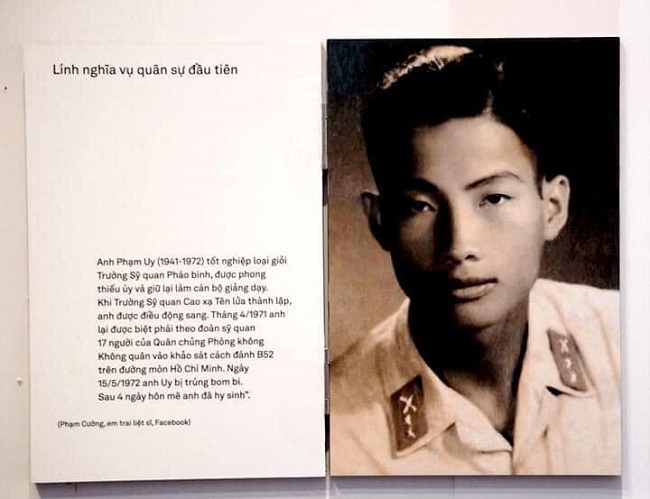
| The portrait of Vietnamese war martyr Pham Uy was taken in 1960 by Nguyen Van Thang, Director of Lai Xa Photography Museum. Photo collector: Cuong Pham |
“A common feature of these studios was the words ‘Ky’ or ‘Lai’ in their names, such as An Ky, Thinh Ky, Thien Ky, Phuc Lai, and Kim Lai, which aimed to honor Khanh and ‘Khanh Ky’ and promote the village’s reputation,” he told The Hanoi Times. “These studios were also larger in size and busier than others.”
In the museum, precious items were contributed by different generations of photographers in the village after a call for donations made by village elders and the Lai Xa Photography Club, according to Nguyen Van Thang - Director of the museum.
“It took us a lot of time and effort to look for families of photographers in different cities and provinces in Vietnam and persuade them to donate,” he told The Hanoi Times, “we volunteer to do it and build the museum to show the younger generations the splendid and proud past of our trade village as a tribute to our ancestors and homeland.”
According to Dr. Nguyen Van Huy, former Director of Vietnam Museum of Ethnology, without Lai Xa Photography Museum, today nobody would know how rich the local photographic history is. “It is the Lai Xa villagers that have contributed to the local photography in particular and the country in general,” he said.