Land clearance should be one step ahead
Experts agree that land acquisition must be a separate task of any infrastructure project, one that should be one step ahead of the rest.
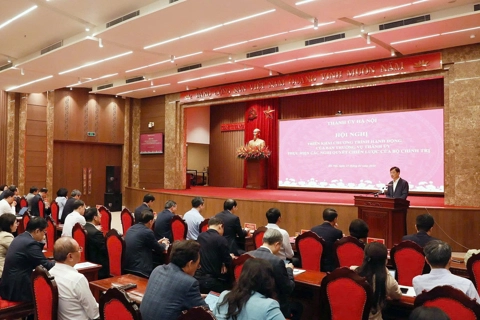
Land requisition, or land clearance, should be done in advance as it is the primary stage for proper implementation of a metro development project, specialists said at a seminar on January 18.
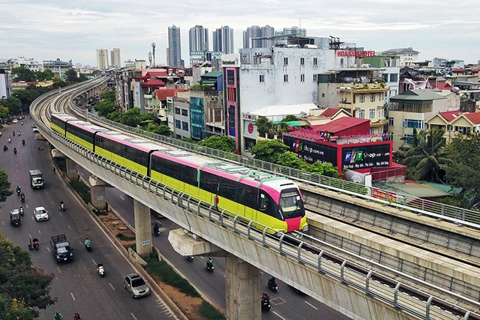
| Metro test run on the Nhon - Hanoi Station line. Photo: Pham Dong/The Hanoi Times |
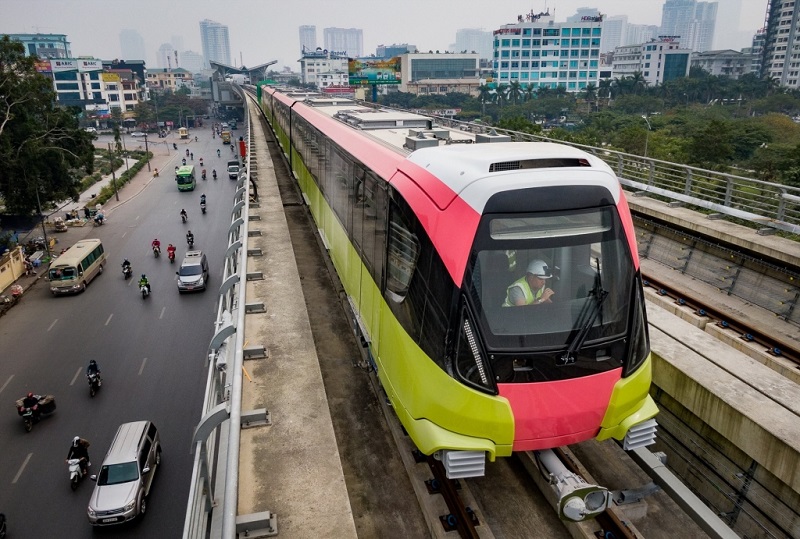
The seminar discussed solutions for land clearance for the construction of metro lines and the development of new urban areas according to the Transit Oriented Development (TOD) model.
Land clearance facilitates project implementation, said Nguyen Trong Dong, Deputy Chairman of the Hanoi People's Committee.
"Good land clearance work would better attract investors to the city and create a transparent investment environment," he told the seminar co-hosted by the Hanoi and Ho Chi Minh City People's Committees.
"It also ensures the benefits to the people by all means and limits social conflicts between people and between people and the authorities," he added.
Site clearance, if carefully planned and carried out with precision, can boost the project from the very beginning and improve its efficiency, he said.
Do Dinh Phan, Director of the Hanoi Transport Infrastructure Construction Management Department, said that land acquisition should be a separate task to be completed before the project kicks off.
At the seminar, Phan shared his team's experience in dealing with land clearance during the implementation of Ring Road No.4 – Hanoi Capital Region.
The 113 km project has seven sub-components. Three of them relate to land acquisition, and the projects are funded from the public budget.
"So far, more than 1,300 hectares of land have been acquired for project implementation, representing 93.9% of the total area," Phan said.
"More than 11,500 graves and cemeteries, or 74.2% of the total, have been relocated. We have started the construction of service roads with 37 construction sites," he added.
Phan said the Hanoi authorities had decided to carry out land clearance without waiting for technical analysis to ensure the ground was ready for construction.
"By making land clearance a separate task from the overall project, we are making it go faster, without technical delays and with less workload," the director said.
"Funding for compensation to affected households comes directly from the city budget".
It is important that local authorities reach a consensus with people before taking any action, he said.
"Local authorities should guarantee the best deals for people, such as allowing them to settle in fully developed areas with good transport links and job opportunities."
Land expropriation
Another way to persuade people to willingly give up their land for the project is through benefit sharing, said Dang Hung Vo, former Deputy Minister of Natural Resources and Environment.
According to the expert, "The authorities need to gain the trust and consent of the people who are giving up their property for the project. Socio-economic growth is important, but it's more important to ensure social sustainability."
Vo said there are two problems with land expropriation: land expropriated for public transport development, and land expropriated for urban landscape transformation.
Land requisition for road construction is governed by the law on social infrastructure construction.
There must be solutions that allow affected landowners to benefit from the project, the former deputy minister said, adding that the authorities should compensate households that cannot build their houses high due to the height limit of the metro project.