Now or never for Hanoi's urban railway TOD projects: Expert
It is imperative to encourage a paradigm shift towards adopting public transport, moving away from the pitfalls of unsustainable reliance on personal vehicles.
Urban Transport Specialist and Former Deputy Director of Japan’s Ministry of Land, Infrastructure, Transportation and Tourism Shige Sakaki told The Hanoi Times about the prospects of implementing the transit oriented development-based (TOD) urban railway projects in Hanoi and what they mean for the city’s quest for sustainable development.
| Urban Transport Specialist Shige Sakaki. |

What do you think about the potential of TOD in Hanoi?
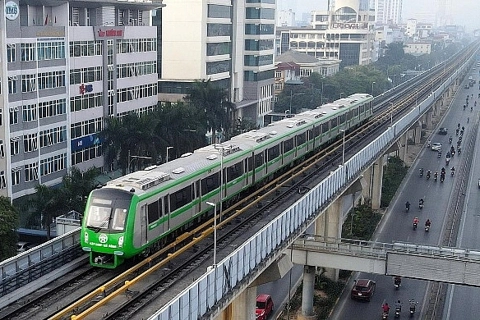
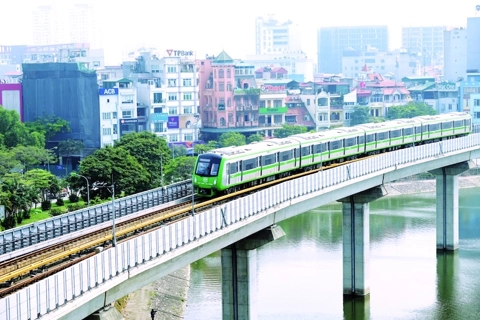
The potential for development in Hanoi is huge, especially as the city is in the process of expanding its transport network. Currently, only one metro line (Nhon – Hanoi Station) is under the testing phase. Moreover, there are plans for further metro lines that would extend into the suburban areas, presenting an opportune environment for implementing TOD and maximizing Land Value Capture (LVC). These suburban zones, being relatively underdeveloped, offer a greenfield setting, making the development process more feasible and advantageous.
Looking at international examples, TOD is usually overseen by railway companies, which are often privately owned, as in Japan. In Vietnam, however, the operation of metro line companies is restricted by some existing laws. Consequently, these companies are compelled to collaborate with various stakeholders such as land developers, financial institutions, and banks to effectively execute TOD and capitalize on LVC. This collaborative approach becomes imperative due to the legal restrictions on the independent actions of metro line companies in Vietnam.
What are Hanoi's priorities in implementing TOD?
In our view, Hanoi should prioritize metro lines, choosing among the current eight under consideration based on their high potential for TOD. Subsequently, the second step involves identifying the most suitable locations for stations.
From a legal standpoint, it is recommended that Hanoi, or Ho Chi Minh City, be granted a special mechanism that allows for the requisition of lands in the surrounding areas—not limited to the project site alone. This extension should also encompass the broadening of non-land capture TOD, facilitating TOD implementation without the need for land requisition. This approach supports the idea of encouraging higher density around the station. Attention should also be paid to infrastructure development in the surrounding areas. While these factors present challenges in practice, they highlight the need for guidance from the central government, instructing metro development to prioritize TOD.
For effective TOD implementation, government agencies such as the Department of Planning and Investment or the Department of Architecture should provide guidelines that encourage higher density around stations. Such guidance will be crucial for cities to successfully execute TOD. Despite the challenges, Vietnam can still implement TOD by changing land use around the station, and having specific instructions from the government would streamline and facilitate this process for cities.
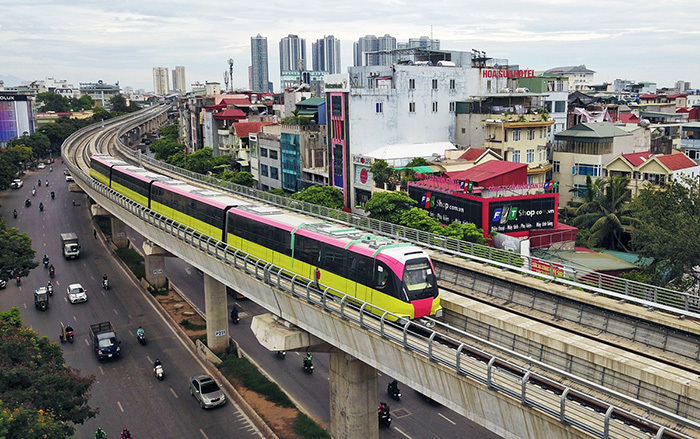
| The Nhon - Hanoi Station metro line is currently in the testing phase. Photo: Viet Hai/The Hanoi Times |
How can TOD contribute to Hanoi's sustainable development?
For Hanoi, the window of opportunity is closing fast—it's a now-or-never scenario. As people have become accustomed to the convenience of motorbikes, cars, and their current lifestyles, the transition from personal vehicles to public transport is increasingly challenging. Delaying this transition risks making it even more difficult, given the entrenched habits of using individual vehicles. The prevailing belief in the convenience of private vehicles, if left unchecked, would jeopardize the city's functionality.
The cautionary tale of US cities such as Atlanta, Houston, or Los Angeles, where car-centric commuting has led to significant environmental impacts, shows that such a model is unsustainable in the Asian context. Unlike the US, Asian cities, including Hanoi, lack the large land areas needed to accommodate widespread car use. In Vietnam, motorcycles dominate the transport landscape, and as people become more affluent, the inevitable transition to cars would exacerbate road congestion, similar to the situations in cities such as Bangkok or Manila, and ultimately hamper the city's functionality.
TOD emerges as a critical catalyst in fostering sustainability for Hanoi. By strategically integrating transport, residential, and commercial spaces, TOD not only addresses the imminent challenges of congestion but also offers a viable solution to ensure the city's long-term sustainability. The imperative is to encourage a paradigm shift towards the adoption of public transport, moving away from the pitfalls of unsustainable dependence on personal vehicles.
Thank you for your time!
| Urban development towards TOD (Transit-Oriented Development) is characterized by a model that focuses on public transport to improve the accessibility and convenience of residents to transit hubs and urban railway stations. By prioritizing public transport infrastructure, the reliance on personal vehicles diminishes, promoting the use of sustainable and eco-friendly modes of transport. |