Hanoi's $2.67 billion urban railway project to be TOD pilot
The project, scheduled to be complete by the end of 2025, would contribute to the city’s goal of finalizing its urban railway network by 2035.
Hanoi is considering piloting the concept of transit-oriented urban development (TOD) with the No.5 urban rail line (Van Cao - Ngoc Khanh - Lang - Hoa Lac).
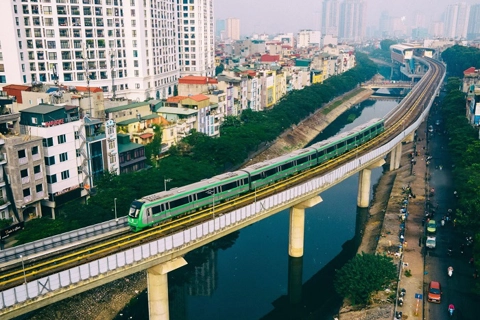
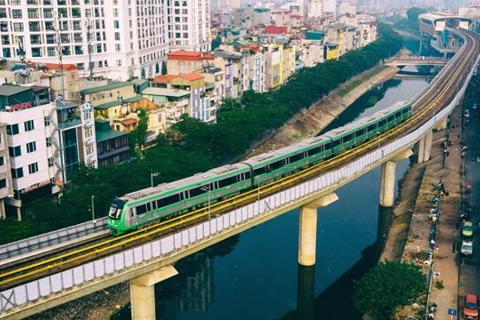
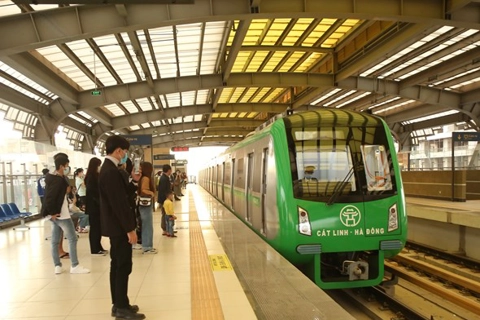
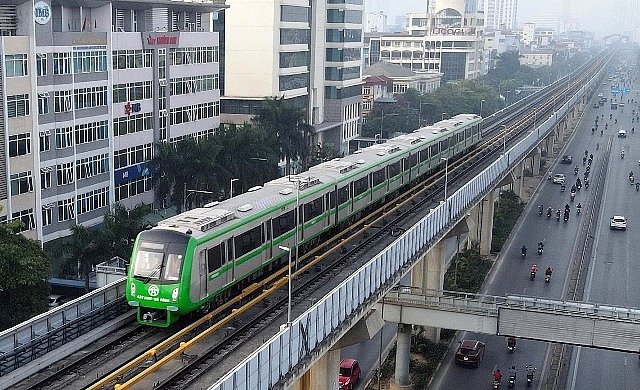
| The Cat Linh - Ha Dong urban railway line in Hanoi. Photo: TN/The Hanoi Times |
Once completed, the project is seen as a major piece contributing to the ambitious objective set by the Politburo for the development of Vietnam's railway network by 2030, which aims to "complete the urban railway network in Hanoi (with links to the Capital Region) by the year 2035."
Urban Railway Line No.5 is 38.43 kilometers long, double-track standard, and electrified, with 6.5 kilometers underground, 2 kilometers on elevated tracks, and 29.93 kilometers above ground.
This line passes through several districts, including Ba Dinh, Dong Da, Cau Giay, Nam Tu Liem, Hoai Duc, Quoc Oai, and Thach That. It has a rolling stock of 25-40 trains, with a maximum operating speed of 120 kilometers per hour and 90 kilometers per hour for the underground sections. Passengers can expect a short train waiting time of around 3.3 minutes.
The total investment for this project is estimated at about VND65.4 trillion (US$2.67 billion), with construction costs at VND24.8 trillion ($1 billion) and equipment costs at VND16.6 trillion ($679.3 million).
In terms of timeline, the investment preparation phase spanned from 2018 to 2022, while the project's implementation phase runs from 2022 to 2026, encompassing trial operation and project handover by the end of 2025.
To finance the project, the Hanoi People's Committee will allocate VND15 trillion ($614 million) from public investment capital and cost savings during the period from 2021 to 2025. Additionally, VND10-12 trillion ($409-491 million) will be sourced from the sale of enterprises, VND15 trillion ($614 million) from the auction of land, VND10 trillion ($409 million) from the Government bond issuance, and VND6.9 trillion ($282.4 million) borrowed from financial institutions.
According to Vice Chairman Duong Duc Tuan of the Hanoi People's Committee, the increasing traffic congestion and environmental pollution in the city underscore the importance of research and investment in Urban Railway Line No.5.
“This project is seen as a crucial step towards completing the urban railway network as outlined in the city's planning,” he noted.
Nguyen Phi Thuong, Director of the Hanoi Department of Transport, emphasized the slow progress in building urban railway lines according to the existing plans. Consequently, a shift in approach and investment strategies is deemed necessary, with the TOD concept seen as a solution to the current challenges faced by urban transportation.
The Hanoi Metropolitan Railway Management Board (MRB) has identified the advantages of this approach including investing in the entire line in a single phase, avoiding phased investment as in the initial planning, and using funds from the budget to ensure proactive and efficient investment.
This approach aims to expedite the project, reduce construction costs, ensure technological synchronization from the outset, and enhance the efficiency of equipment and vehicle systems, noted the MRB in a report.
According to the MRB, the project's strategic location, connecting the city center with the Hoa Lac satellite urban area, the Hoa Lac high-tech park, the national university campus, and the Cultural-Tourism Village of Vietnamese ethnic groups is expected to improve investment efficiency, provide better access for passengers, and meet the growing demand in new urban areas and industrial parks as per the approved planning.
The city can also explore the possibility of applying the TOD model to set up a specific mechanism for land funds and land auctions to generate revenue for project implementation, it continued.
MRB’s Deputy Head Le Trung Hieu added that investing in a substantial volume of vehicle systems and equipment is expected to reduce costs and offer advantages in vehicle investment and maintenance. This approach is expected to attract investment in the domestic railway industry and facilitate the domestic manufacture and assembly of locomotives and carriages.
Hieu also expected the Urban Railway Line No.5 would support the planned relocation of educational institutions from the downtown area, create a pivotal public transport link to the High-Tech Park in Hoa Lac, and, once operational, help alleviate population density in the downtown area as people move to the western districts.