Liberalization of logistics sector - a key for Vietnam's greater competitiveness
A well-functioning logistics sector underpins most economic activities and is fundamental for productivity and growth.
Greater liberalization efforts in the logistics sector would help Vietnam to benefit from potential economy-wide productivity gains from increased foreign direct investment (FDI).
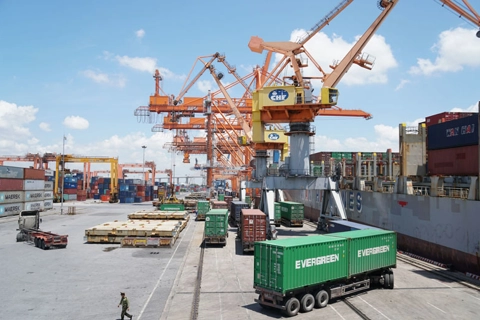
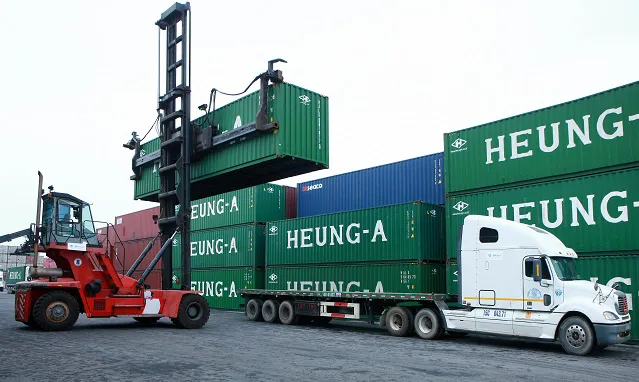
| Cargo handling at Haiphong Port. Photo: Lam Khanh |
This is one of the 36 recommendations on specific legal provisions that should be removed or amended raised by the Organization for Economic Cooperation and Development (OECD) to ensure greater competitiveness of Vietnam’s logistics sector.
According to OECD’s latest report, such issues have hampered the development of the local transport sector, leading to higher logistics costs.
Logistics costs in Vietnam as a percentage of GDP were estimated at 18% in 2017. This compares favorably to some ASEAN countries such as the Philippines (27.2%), which however is significantly higher compared to other countries such as Thailand (8.5%) or other developed countries, noted the OECD.
Stakeholders also highlighted that transportation costs account for 30-40% of production costs, and this negatively affects the competitiveness of Vietnamese goods and services, it added.
The OECD suggested there remain rooms for foreign investors to be more active in the road and maritime freight transport. At present, if a foreign investor wishes to provide road or inland waterway transport services, it must sign a cooperation agreement or enter a joint venture (JV) with a Vietnamese entity. A foreign investor may not, however, own more than 51% of a company.
According to the OECD such regulations, while is aimed at protecting national industry against foreign competition, have restricted access by foreign companies and may result in a lower number of suppliers in Vietnam, potentially leading to higher consumer prices and reduced quality.
“Although being less restrictive than other ASEAN countries such as the Philippines, Vietnam still has more restrictions than the OECD average and other ASEAN peers,” added the report.
The organization called for Vietnam to progressively relax foreign equity limits towards allowing up to 100% foreign ownership in the long term.
Regarding the road freight transport, the OECD referred to a government’s decree that requires operators to own a minimum number of vehicles of from three to over 10 to provide goods transport services beyond a 300-kilometer distance, which it sees a move that raises costs for firms, especially small and medium enterprises (SMEs).
This may force firms to own assets above their actual needs and may certain SMEs from entering the market in the first place. Moreover, the imposition of a minimum number of vehicles to start a business limited the ability of these operators to enter the markets and increased their operational costs, which could lead to higher prices charged to consumers, added the OECD.
Meanwhile, the OECD said Vietnam has a total of 41,900 kilometers of navigable inland waterways, 224 river ports, and 8,000 landing stages, and inland waterway transport account for 17.8% of its cargo movements.
“This mode of transport is more fuel-efficient than other means of transport and could therefore be a way to address the likely increase in transportation needs brought about by GDP growth,” stated the OECD.
While the waterway transport market has huge room for development, foreign firms are required to have at least 51% stake owned by Vietnamese nationals or companies and the owner must have an office in Vietnam, which may restrict access of foreigners to the market and further increase consumer prices.
The OECD called for opening the domestic shipping market to foreign competition by lifting the ban on foreign vessels to provide shipping services between ports in Vietnam, as well as to allow international ships to operate in the domestic shipping market on specific routes where there is demand.
n 2019, the Vietnamese freight and logistics markets were estimated at US$61.83 billion with an expected annual growth of 4.89% by 2025. In terms of overall logistics performance, Vietnam ranked 39 in the World Bank’s Global Logistics Performance Index and third among ASEAN countries. Recognizing the importance of the logistics industry to spur economic growth, Hanoi has set the goal of becoming one of the top three biggest logistics hubs in the country and of the region by 2025, with the logistics sector contributing 9-11% of the gross regional domestic product and an average growth rate of 17-21%. At present, the capital city has nine operational industrial parks attracting over 600 projects, while the annual average revenue from industrial production is estimated at over US$6 billion. Besides, Hanoi is in the course of developing other 89 industrial clusters across the city, of which the majority are in rural districts including Thach That, Quoc Oai, Chuong My, Thuong Tin, Phuc Tho, Dan Phuong, and Hoai Duc. Industrial parks are homes to potential customers for logistics services, at the same time creating large-scale flows of goods for exports. |