Hanoi
Limit private vehicles: reduce congestion and pollution
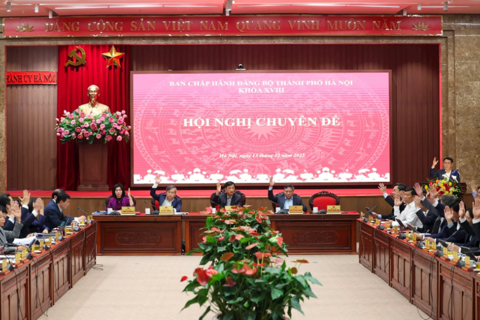
The Hanoi People’s Committee has just passed the Resolution on Urban Transportation Management from 2017 to 2020, with vision towards the year of 2030. The main content of the resolution is to limit the flow of private vehicles, motorcycles in particular.
Many experts say that the solution is forceful, but will bring practical and long-term benefits.
Suitable routes
In many urban centers of the world, limiting the flow of private vehicles is always the top choice to manage and organize the traffic landscape. In the context of stringent budget, increasing amount of vehicles and underdeveloped infrastructure that cannot keep up with the urban development in Hanoi, this strategy needs to be initiated as soon as possible.
The Director of the Hanoi Department of Transport Vu Van Viet says that the City has attempted to focus the investment on the development of transportation infrastructure. In comparison to other provinces and cities, Hanoi City has invested accurately in joint ventures, ring roads, radial roads, etc. However, despite the considerable amount of investment, the situation of congestion and traffic insecurity is still very urgent and complex, especially during peak hours or holidays. Besides, the environmental pollution in Hanoi has exceeded the allowed standards. Indeed, the air pollution in Hanoi is alarming.
In urban areas in China, Myanmar, etc., the suspension of motorcycle usage usually lasts from three to six years. “At first, the Department of Transport and other related agencies expect the suspension of motorcycle to happen in 2025. However, after collecting other opinions, many experts suppose that the timeline is not suitable. As a result, the designated year shifts to 2030, three to four times compared to other cities,” Mr. Vien states. Many experts also think that in 2030, the City has invested in a relatively synchronous manner all of the transportation infrastructure as well as has developed a strong public transportation system, allowing the suspension of motorcycles. Moreover, Mr. Viet affirms that: “We give out this timeline to lay a guideline for other activities. At the same time, citizens and enterprises will have enough time to change their transportation habit.”
Stop relying on motorcycles
After the Resolution on Urban Transportation Management in Hanoi was passed, the public became worried that if motorcycles cannot be used in central areas, how can they mobilize?
According to many urban exports, this is a question coming from the chain of thought that relies heavily on motorcycles. “There are no urban centers that can both develop the public transportation system while letting private vehicles explode in number. The reason is simple: no infrastructure network can support two types at the same time. We have to get rid of our reliance on motorcycles in order to achieve a truly developed public transportation system, fully capable of supporting the City,” the transportation expert Mr. Nguyen Manh Thang comments.
More spaces for public transport
Le Do Muoi – the Deputy Director of the Transport Development and Strategy Institute at the Ministry of Transport said it is uncommon to set up plan to ban motorbikes based on the capacity of public transport. For example, in Jakarta, Indonesia, public transport only meets 7% demand of the citizens but the city has already scraped motorcycles. The same decision is given to Guangzhou and Kunming city in China with the rates of public transport operation at 15% and 10% respectively. In Hanoi, plan to ban motorbikes will be implemented when public transport meets 40 - 50% of transportation demand.
Mr. Muoi also adds, the target of this plan are not only motorbikes but also personal cars. However, international experiences show no country in the world has banned cars, but only applying financial measures for restriction. In China, after 10 years, there has been 148 cities banning motorbikes, while motorbikes are only used in certain hours in 170 other cities. Till 2016, GDP of those cities has outgrown cities with motorbikes from 0.5-1% GDP, at the same time reducing pollution significantly.
Statistics shows that until the end of 2016, Hanoi has more than 5 million motorbikes, 500,000 cars with the growth rate of 10% per year, outpacing transport infrastructure development. According to scientists, motorbikes emission is a lot higher than cars emission, while it is easier to control emission of the latters than the formers. Moreover, Vietnam is applying Euro 3 and Euro 4 emission standard to limit environmental pollution caused by vehicles. It is therefore hard to say cars cause more pollution than motorbikes.
Suitable routes
In many urban centers of the world, limiting the flow of private vehicles is always the top choice to manage and organize the traffic landscape. In the context of stringent budget, increasing amount of vehicles and underdeveloped infrastructure that cannot keep up with the urban development in Hanoi, this strategy needs to be initiated as soon as possible.

Emisison from personal vehicles is the main factor for pollution.
|
In urban areas in China, Myanmar, etc., the suspension of motorcycle usage usually lasts from three to six years. “At first, the Department of Transport and other related agencies expect the suspension of motorcycle to happen in 2025. However, after collecting other opinions, many experts suppose that the timeline is not suitable. As a result, the designated year shifts to 2030, three to four times compared to other cities,” Mr. Vien states. Many experts also think that in 2030, the City has invested in a relatively synchronous manner all of the transportation infrastructure as well as has developed a strong public transportation system, allowing the suspension of motorcycles. Moreover, Mr. Viet affirms that: “We give out this timeline to lay a guideline for other activities. At the same time, citizens and enterprises will have enough time to change their transportation habit.”
Stop relying on motorcycles
After the Resolution on Urban Transportation Management in Hanoi was passed, the public became worried that if motorcycles cannot be used in central areas, how can they mobilize?
According to many urban exports, this is a question coming from the chain of thought that relies heavily on motorcycles. “There are no urban centers that can both develop the public transportation system while letting private vehicles explode in number. The reason is simple: no infrastructure network can support two types at the same time. We have to get rid of our reliance on motorcycles in order to achieve a truly developed public transportation system, fully capable of supporting the City,” the transportation expert Mr. Nguyen Manh Thang comments.
More spaces for public transport
Le Do Muoi – the Deputy Director of the Transport Development and Strategy Institute at the Ministry of Transport said it is uncommon to set up plan to ban motorbikes based on the capacity of public transport. For example, in Jakarta, Indonesia, public transport only meets 7% demand of the citizens but the city has already scraped motorcycles. The same decision is given to Guangzhou and Kunming city in China with the rates of public transport operation at 15% and 10% respectively. In Hanoi, plan to ban motorbikes will be implemented when public transport meets 40 - 50% of transportation demand.
Mr. Muoi also adds, the target of this plan are not only motorbikes but also personal cars. However, international experiences show no country in the world has banned cars, but only applying financial measures for restriction. In China, after 10 years, there has been 148 cities banning motorbikes, while motorbikes are only used in certain hours in 170 other cities. Till 2016, GDP of those cities has outgrown cities with motorbikes from 0.5-1% GDP, at the same time reducing pollution significantly.
Statistics shows that until the end of 2016, Hanoi has more than 5 million motorbikes, 500,000 cars with the growth rate of 10% per year, outpacing transport infrastructure development. According to scientists, motorbikes emission is a lot higher than cars emission, while it is easier to control emission of the latters than the formers. Moreover, Vietnam is applying Euro 3 and Euro 4 emission standard to limit environmental pollution caused by vehicles. It is therefore hard to say cars cause more pollution than motorbikes.