Log in
Business

Noi Bai International Airport set for major upgrade

The construction of the runway and passenger terminal should start in the 2024-2025 period.

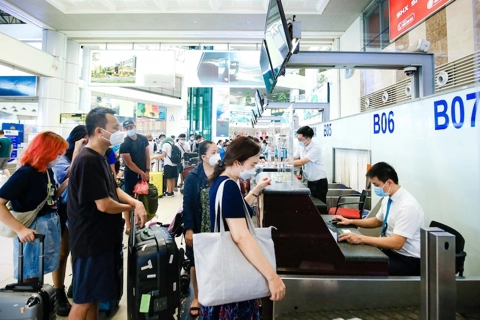
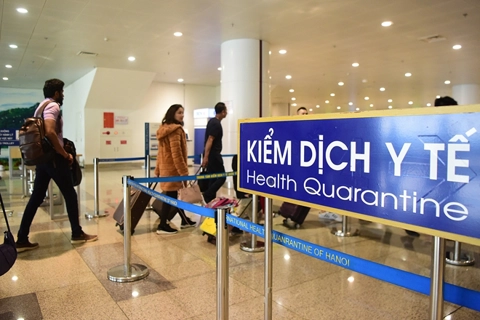
Noi Bai International Airport is on course to handle 50 million passengers by 2030, for which a major upgrade is needed to avoid the risk of being overloaded.

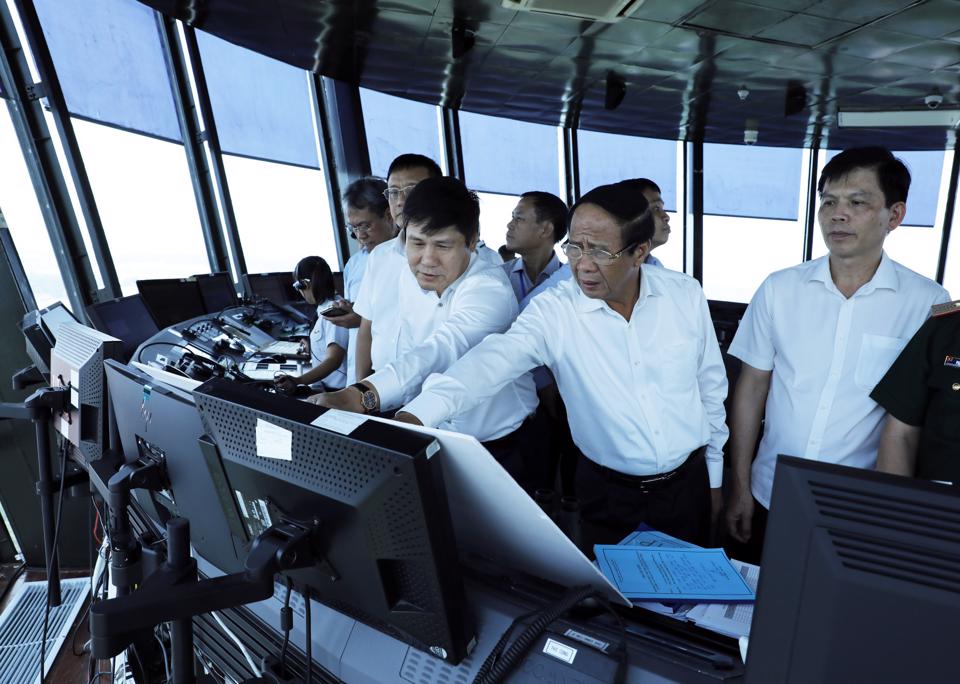
 Deputy Prime Minister Le Van Thanh at Noi Bai's air traffic control tower. Source: VGP

"Major investments are needed to make Noi Bai airport worthy of being an infrastructure of the capital and the country," Deputy Prime Minister Le Van Thanh gave remarks during his visit to the airport on September 21 to review its planning for the 2021-2030 period, with a vision for 2050.

Given the huge magnitude of the project, Thanh called for each process to strictly follow regulations and the Government’s instructions.

He requested that Hanoi’s authorities work closely with government agencies in identifying the locations for the expansion, soon finalizing the detailed planning and submitting an investment proposal to the Government.

“The construction for the runway and passenger terminal should start in the 2024-2025 period,” he added.

During the visit, Director of the Civil Aviation Authority of Vietnam (CAAV) Dinh Viet Thang stressed Noi Bai along with upcoming Long Thanh International Airport would be the two largest air transportation hubs in the country.

According to Thang, Noi Bai currently has two passenger terminals with a capacity of 25 million passengers per year each; and a cargo terminal of 400,000 tons per year.

The number of passenger transportation during 2010-2019 expanded by an average of 13%, and 14.5% for cargo transportation.

In 2019, the airport handled 29 million passengers and 695,000 tons of goods.

Thang noted French consultant ADPi has completed construction planning for the airport, which is subject to recommendations from government agencies.

“The goal is to expand the airport to a capacity of 100 million passengers by 2050,” he added.

Under ADPi’s proposal, by 2030, Noibai would have three runways and three passenger terminals; in which the T2 terminal is expected to be expanded for the combined T1 and T2 to serve 30-40 million passengers per year; build the T3 terminal in the south of the Airport with a capacity of 30 million passengers per year.

By 2050, the airport is set to have five runways and four terminals.

Vu The Phiet, general director of the Airports Corporation of Vietnam (ACV), the operator of 22 commercial airports in the country, suggested the Government carry out a partial upgrade before the detailed planning would be approved, saying the move is essential to deal with rising air transport demand.

Vice Chairman of the Hanoi People’s Committee Nguyen Trong Dong noted for their part, the local authorities are willing to take part in the site clearance process and ensure the successful realization of the project.
Reactions:
Share:
Trending
Most Viewed
Related news
Vietnam to tighten biometric authentication for new bank cards next year

Vietnam to tighten biometric authentication for new bank cards next year

Bank card issuers must conduct a face-to-face meeting and match the biometric data of individual customers or the legal representative of organizational customers with their identity documents.

Make in Vietnam forum spotlights breakthroughs shaping digital future in the country

Make in Vietnam forum spotlights breakthroughs shaping digital future in the country

Vietnam will host the seventh National Forum on Vietnamese Digital Technology Enterprises on December 25 in Hanoi, highlighting policy directions, strategic technologies and progress under the “Make in Vietnam” initiative as the country pushes toward a stronger digital economy.

Hanoi and Moscow seek new economic momentum as partnership marks 75 years

Hanoi and Moscow seek new economic momentum as partnership marks 75 years

At the Moscow–Hanoi Business Forum, leaders from both capitals said 75 years of Vietnam–Russia ties provide a strong foundation to deepen economic and investment cooperation, especially in technology, trade and urban development.

Vietnam manufacturing maintains strong momentum despite storms disrupting supply chains

Vietnam manufacturing maintains strong momentum despite storms disrupting supply chains

Vietnam’s manufacturing sector continued to expand in November, marking the fifth straight month of improvement, even as severe storms caused supply-chain delays and slowed production, according to S&P Global.

Techfest 2025 returns to Hanoi, spotlighting Vietnam’s vibrant startup community

Techfest 2025 returns to Hanoi, spotlighting Vietnam’s vibrant startup community

Hanoi’s Hoan Kiem pedestrian street will host Techfest Vietnam 2025 from December 12 to December 14, welcoming entrepreneurs, investors and the public to explore emerging technologies and celebrate the country’s growing culture of innovation.

Vietnam expands major entrepreneurship program to unlock opportunities for women nationwide

Vietnam expands major entrepreneurship program to unlock opportunities for women nationwide

The Vietnam Women’s Entrepreneurship Support Program has surpassed nearly every target set for 2017–2025, empowering more than 118,000 women to launch new ventures and laying the groundwork for a stronger, more inclusive entrepreneurial ecosystem in the next decade.

HHTIP accompanies businesses in efficient energy use for sustainability

HHTIP accompanies businesses in efficient energy use for sustainability

As green transition becomes a decisive factor shaping future growth, Hanoi is intensifying efforts to push energy efficiency across its industrial zones. The city’s management board is building a development model centered on clean energy, responsible production and sustainable operations.

Vietnam launches Semiconductor Alliance to build skilled workforce, strengthen global industry ties

Vietnam launches Semiconductor Alliance to build skilled workforce, strengthen global industry ties

The newly launched Semiconductor Alliance in Vietnam seeks to develop skilled professionals, foster collaboration between universities and businesses while preparing the country to play a more active role in the global semiconductor industry.