14TH NATIONAL CONGRESS OF THE COMMUNIST PARTY OF VIETNAM
Log in
Business

Non-cash payment fast becoming the norm in Vietnam

Non-cash payment is crucial to reducing the volume of cash in circulation, which in turn lowers the social costs associated with cash handling.

A recent Visa study on consumer payment attitudes highlights the significant growth of non-cash payments in Vietnam, particularly through electronic wallets.

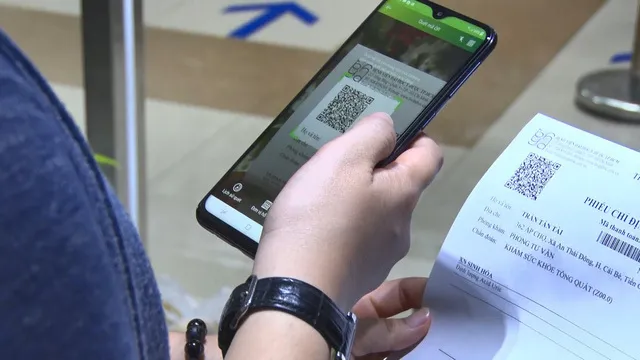
 Payment via QR code at a hospital in Ho Chi Minh City. Photo: Tran Anh/The Hanoi Times

The report notes that 79% of food and beverage (F&B) businesses and 74% of retail and convenience stores now accept cashless payments.

For small and medium-sized businesses (SMBs), the study reveals that over 40% of Vietnamese SMBs accept card payments, emphasizing the critical role of digital payments in business operations. The growing trend towards digital payment methods enhances transaction optimization and security.

Data from the State Bank of Vietnam (SBV) shows a positive trajectory in non-cash payments and digital banking activities. By the end of 2023, the number of individual payment accounts exceeded 182.88 million, marking a 21.8% increase from the end of 2022. Non-cash payment indicators have seen significant growth, with some methods showing impressive increases.

For example, in January 2024, non-cash payment transactions grew by 63.3% in volume and 41.45% in value compared to January 2023. Specifically, internet-based transactions increased by 57.85% in volume and 32.43% in value, while mobile transactions rose by 68.54% in volume and 41.12% in value. QR code transactions saw a staggering rise of 892.95% in volume and 1,062.01% in value.

SBV Deputy Governor Pham Quang Dung, during a recent conference on non-cash payment, suggested the method is crucial to reducing the amount of cash in circulation, which in turn lowers the social costs associated with cash handling.

Traditional cash transactions incur significant expenses, including printing, counting, transporting, and managing old or damaged banknotes, as well as counterfeiting issues. Conversely, non-cash payments can cut these costs, he noted.

Dung stated that the bank will continue to work with relevant ministries and agencies to effectively implement measures under the 2021-2025 Cashless Payment Development Project, the Banking Sector Digital Transformation Plan, and the Vietnam Payment Systems Development Strategy until 2030.

The SBV will also support banks and payment intermediaries in providing safe, secure, and convenient payment products and services to meet the growing demands of customers. Efforts will focus on integrating with the National Population Database to facilitate customer identity verification, clean data, and improve access to banking services. There will also be a push to enhance cashless payments for public services, especially in healthcare, education, and social security sectors, he noted.


Reactions:
Share:
Trending
Most Viewed
Related news
Hanoi’s banking sector pushes for non-cash payment

Hanoi’s banking sector pushes for non-cash payment

31 Oct, 17:04

A network of 90,000 of points of sale (POS), electronic funds transfer at point of sale (EFTPOS), and electronic data capture (EDC) is established, while over 2,780 ATMs are installed across Hanoi.

Vietnam commits 3% budget to turbocharge AI and data economy

Vietnam commits 3% budget to turbocharge AI and data economy

At least 3% of state budget spending will fund digital transformation, accelerating Vietnam’s shift toward a data-driven and AI-powered economy.

From labor-intensive to high-tech: Hanoi retrains for global edge

From labor-intensive to high-tech: Hanoi retrains for global edge

Raising the skill standards of high-tech workers is emerging as a decisive factor in strengthening Hanoi’s competitiveness as the capital accelerates its shift toward a knowledge-based industrial economy.

Hanoi craft villages resume production early, aiming for growth in 2026

Hanoi craft villages resume production early, aiming for growth in 2026

After the Lunar New Year break, Hanoi’s traditional craft villages have quickly resumed production, fulfilled orders and prepared for new markets while blending heritage craftsmanship with modern technology to strengthen competitiveness and sustain growth in 2026.

Vietnam stock market poised for post-Tet gains

Vietnam stock market poised for post-Tet gains

The post-Tet period often presents attractive opportunities for investors in the following months.

Spring Fair draws 500,000 visits, elevates Vietnamese brands nationwide

Spring Fair draws 500,000 visits, elevates Vietnamese brands nationwide

Drawing large crowds and strong commercial momentum, the 2026 Spring Fair turned Hanoi into a vibrant showcase of Vietnamese products, culture and innovation, where shopping met heritage experiences and businesses forged valuable partnerships.

Firms seek clearer policy framework for new tech, digital platforms

Firms seek clearer policy framework for new tech, digital platforms

Hanoi’s tech firms are calling for clearer demand mechanisms and transparent evaluation as the city pilots its Technology Exchange and Digital Transformation Market to boost commercialization, innovation and digital growth.

Vietnam Airlines to open first nonstop Hanoi-Amsterdam route to enhance Europe ties

Vietnam Airlines to open first nonstop Hanoi-Amsterdam route to enhance Europe ties

The move aims to open a new gateway to Europe and advance the national flag carrier’s strategy to expand its European network.

Vietnamese goods reach rural areas through Tet fairs

Vietnamese goods reach rural areas through Tet fairs

Hanoi is intensifying communication and outreach for the “Vietnamese people prioritize using Vietnamese goods” campaign to boost consumption ahead of Tet, the country’s most important holiday.