North-South high-speed railway to open up new economic opportunities
The government proposes a design speed of 350 km/h for the railway to ensure a modern, integrated, and forward-looking infrastructure appropriate to Vietnam’s geographical and economic conditions.
The North-South high-speed railway project, once completed, would unlock new economic opportunities and resources by optimizing land use, boosting the construction and building materials industries, and promoting tourism, services, and urban development.
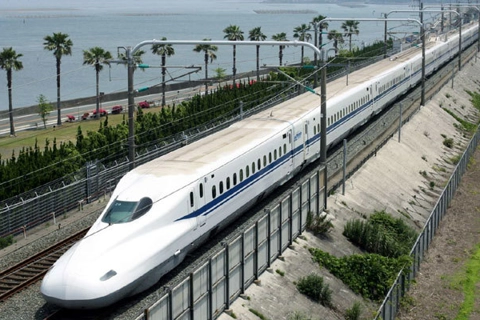
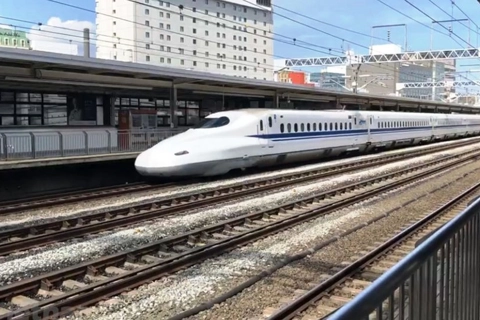
| A high-speed railway in Tokyo. Photo: Tokyo News |
.jpg)
Minister of Transport Nguyen Van Thang shared this view when he presented the draft project proposal to the National Assembly on November 13.
According to Thang, the project is of strategic importance to the country’s socio-economic development and national security.
“The investment in this railway line is expected to drive development in a new era, enhance national competitiveness, and meet growing transportation demands,” he noted.
The minister added that the project aims to reduce environmental pollution, curb traffic accidents, and create millions of jobs. During its construction, it is estimated to contribute about 0.97% annually to the national GDP.
Initial estimates indicate that in the first four years of operation, the government will have to subsidize part of the infrastructure maintenance costs from the state budget funds, similar to the current national railway system, with a projected payback period of approximately 33.6 years.
The investment in the railway line is expected to generate a construction market valued at around $33.5 billion. Including the broader railway system and urban rail lines, this could create a construction market worth approximately $75.6 billion, with an additional $34.1 billion in equipment and materials, and millions of jobs.
"With proper technology transfer, Vietnam could develop a domestic railway industry by mastering railway construction and localizing the production of rolling stock and power supply systems," said Thang.
The 2019 pre-feasibility report proposed a public-private partnership (PPP) model, with public investment covering infrastructure construction and private investment in equipment. At that time, Vietnam's economy was valued at $266 billion, with public debt at 56.1% of GDP. In 2023, the economy reached $430 billion, with public debt at around 37%. By the time the project is scheduled to start in 2027, Vietnam’s GDP is expected to reach $564 billion, indicating that financing the North-South high-speed rail project is becoming less of an obstacle.
The railway is planned to start from Ngoc Hoi Station in Hanoi and end at Thu Thiem Station in Ho Chi Minh City, with a main route length of approximately 1,541 km and passing through 20 provinces and cities, including Hanoi, Ha Nam, Nam Dinh, Ninh Binh, Thanh Hoa, Nghe An, Ha Tinh, Quang Binh, Quang Tri, Thua Thien Hue, Danang, Quang Nam, Quang Ngai, Binh Dinh, Phu Yen, Khanh Hoa, Ninh Thuan, Binh Thuan, Dong Nai, and Ho Chi Minh City.
The government proposes a design speed of 350 km/h for the railway to ensure a modern, integrated, and forward-looking infrastructure appropriate to Vietnam’s geographical and economic conditions.
Speaking on behalf of the oversight body, Vu Hong Thanh, Chairman of the National Assembly’s Economic Committee, emphasized the importance of the North-South corridor as the country’s largest transportation artery and its crucial role in national socio-economic development. However, he noted that insufficient investment in the railway system has led to its current obsolete state. Thanh said that the high-speed railway project is essential to realize the Party and State’s strategic direction to modernize transportation infrastructure, foster connections within the region and across Asia, and open up new economic development spaces.
The proposed scale and scope are consistent with the National Railway Network Plan for 2021-2030, with a vision to 2050. However, the Economic Committee recommends clarifying how the high-speed railway will be integrated with the national railway, urban rail systems, and other transportation networks, as well as ensuring connectivity with regional and international rail networks.
The committee suggests that the route be as straight as possible, particularly through Nam Dinh Province, to maximize project efficiency and that a higher investment ratio in bridge infrastructure is considered to enhance operational safety and limit environmental impacts.
The pre-feasibility report indicates that the project is economically viable, but given the uncertain global economic and political landscape, the committee recommends that alternative scenarios be developed for informed decision-making.
The growth of digital commerce in the Industry 4.0 era, may reduce the need for physical travel in the near future, as businesses, organizations, and individuals conduct more transactions online. Therefore, the committee urges cautious reassessment and risk analysis of the project’s potential impacts.
Additionally, the Economic Committee calls for a comprehensive financial assessment of the project’s operational phase, placing it in the broader context of public investment needs, and suggests incorporating international best practices in the management and operation of high-speed rail systems.
The National Assembly will discuss the proposal on November 20, with a vote scheduled for November 30, the last day of the 8th session.