PM urges greater efficiency in SOEs operation
State firms should have greater autonomy to operate fully in the market mechanism.
Despite the huge capital and resources under disposal, state-owned enterprises (SOEs) have not fulfilled their potential as the pioneering force to ensure economic development and social advancement.
| Prime Minister Pham Minh Chinh at the conference. Photos: VGP |
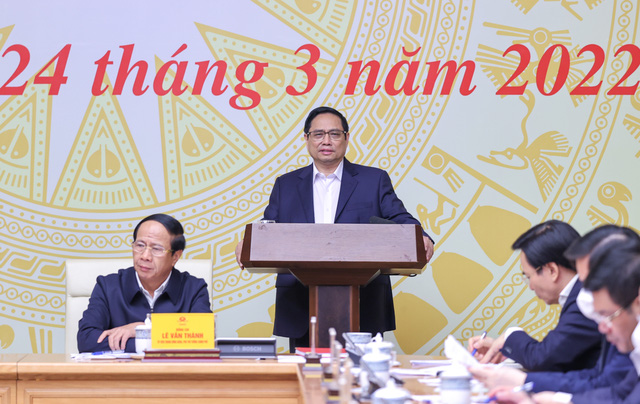
Prime Minister Pham Minh Chinh gave the remarks at a conference discussing the performance of SOEs which was held today [March 24].
Chinh stressed the necessity for Government agencies to identify legal bottlenecks and policies to improve SOEs’ efficiency and make better use of the state resources for stabilizing macro-economic conditions and socio-economic development.
Minister of Planning and Investment Nguyen Chi Dung added the combined asset value of state companies is estimated at VND4,000 trillion (US$175 billion), of which each SOE would have an average registered capital of VND4.1 trillion ($180 million), 10 times higher than that of foreign-invested companies and 109-fold higher than domestic private ones.
Dung noted the state sector posts a return on equity of 10.46%, and return on asset (ROA) of 4.87%, higher than the private sector; contributes 28% of total tax revenue and operates in key economic fields; accounts for 24.6% of total state investment capital and 12% of social investment.
Dung, however, acknowledged that state firms have failed to realize their role as the driving force for economic growth, and in turn to create spillover effects to enhance the economy’s competitiveness.
In addition, SOEs have been on the decline in terms of size and contribution to the state budget, as well as having the highest amount of debt.
| Minister of Planning and Investment Nguyen Chi Dung. |
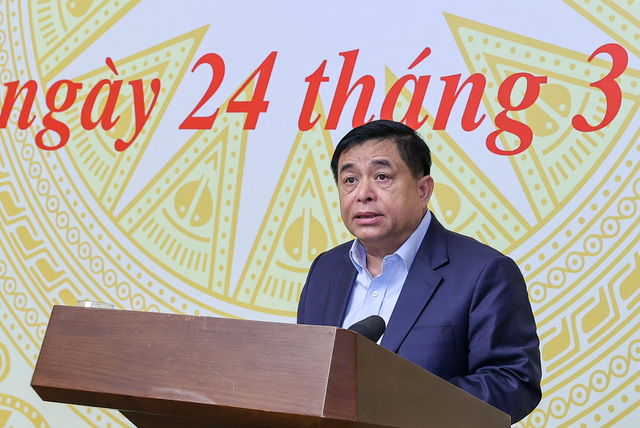
“State firms’ successes are only limited to a few sectors with considerable advantages, including mining, finance-banking, and telecommunications,” Dung said while referring to weaknesses in competitiveness, IT application, and innovation.
Dung attributed the issues to slow improvements in corporate governance, and rigid operation mechanisms that have not obeyed the fast-changing nature of the business world, partly due to the lack of consistency in-laws and regulations related to corporate governance.
Meanwhile, there has been a lack of new large-scale projects from SOEs, Dung said, pointing out the fact that only three investment projects of the national A-level were carried out among 19 major corporations under the administration of the Committee for State Capital Management (CSCM) in the past years.
“The inability to generate new-added value would further limit the contribution of SOEs to the economy, which currently stands at 29%,” Dung said.
On the other hand, the restructuring process of SOEs has left much to desire with the lack of vision for development, especially in further integrating into the global value chains.
To address these issues, Dung said greater autonomy should be granted to SOEs for them to fully operate under the market mechanism.
“SOEs need to change their mindset and place greater urgency in enhancing innovation,” Dung stressed, and expected those industry-leading companies to “think big, do big” and invest in major projects with high spillover effects to the economy.
In addition, SOEs should further focus on strategic fields such as renewable, hi-tech, and infrastructure developments.
Dung also noted SOEs should better understand the objective of privatization and state capital divestment which aim at not purely withdrawing state capital from state firms but restructuring the investment portfolio for greater quality and efficiency of investment.