Preserving heritage: Artisans thrive in Hanoi's rural villages
Some periods are characterized by the birth of unique and high-quality artistic works that have gained fame.
Through ups and downs, traditional craft villages in Phu Xuyen district, on the outskirts of Hanoi, have persisted in their development, mainly thanks to the dedication and passion of craftsmen and skilled artisans.
Role of nucleus in full play
Speaking as one of the local craftsmen, Hoang Van Luan, chairman of the Dai Nghiep Village's Traditional Wood Craft Village Association, said that in the face of market competition, staying loyal to the village's traditional trade is crucial for survival.
"Therefore, the role of craftsmen is becoming increasingly important, even to the extent of turning into the main force for the existence and development of the craft village," he said. "We are proud of Dai Nghiep Wooden Craft Village, which has a strong workforce of skilled craftsmen and has prospered through craftsmanship."
Currently, woodwork from Dai Nghiep Village can be found in numerous resorts, historical sites, community houses, temples, and large pagodas, meeting the criteria of five- to six-star resorts.
| The gout grass products of Luu Thuong village, Phu Tuc commune. Photo: Hanoimoi newspaper |
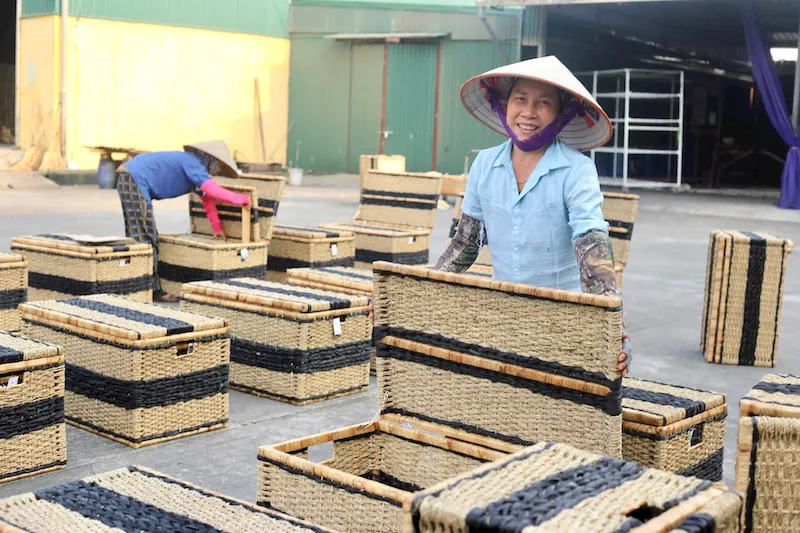
Nguyen Thi Luong, a bamboo weaver in Luu Thuong Village, Phu Tuc Commune, has been practicing her craft for decades. She proudly shared that her products made of gout grass (a kind of fern) are sold in many places around the world.
"The interest of foreign consumers motivates us to create even more unique products. Fortunately, we have many young artisans who are as skilled as the more seasoned ones," she said.
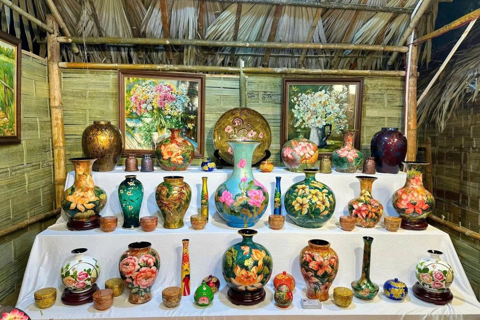
Artisan Nguyen Van Bac from Chuyen My mother-of-pearl inlay village said their products have become a well-known brand nationwide and beyond Vietnam's borders for their uniqueness and quality.
He added that among hundreds of artisans, only ten are truly skilled, and among dozens of skilled artisans, it is rare to find someone with the passion and dedication to create truly unique products.
It can take from several months to a year to create a product, which is a testament to the passion for the craft, Bac said.
Bui Xuan Loi, owner of a handicraft workshop specializing in wood art in Cau Gam hamlet, Son Ha commune, is one of the highly skilled and young craftsmen in Phu Xuyen district.
"I have been immersed in traditional handicrafts since I was young. I consider myself fortunate to have received an education and acquired expertise in fine art and design, which allows me to add new dimensions to our products," he said, adding, "With distinctive items made using contemporary techniques, we continue to impress discerning customers."
Spreading the value of tradition
Hoang Van Luan, Chairman of Dai Nghiep Hamlet's Traditional Wood Craft Village Association in Tan Dan Commune, said traditional handicrafts require techniques and craftsmen must learn to create products from simple to complex before becoming independent in production, which takes several years.
He further explained that traditional handicraft courses, which last three to four months, only train learners to create simple products or a specific production stage.
"Therefore, the transfer of skills from skilled craftsmen and artisans is essential to maintain and develop artisan villages and avoid labor shortages. Support for training and honoring artisans should be done more often to create motivation for them to continue their dedication to society," Luan stressed.
Le Tien Xuan, head of the Phu Xuyen District's economic division, reported that the district is home to 17 artisans from various craft villages who have received government recognition.
Among them, two outstanding artisans, Dang Van Tien, who specializes in clay figurines in Xuan La Hamlet, Phuong Duc Commune, and Nguyen Duc Viet, famous for mother-of-pearl inlays in Ngo hamlet, Chuyen My Commune, have been honored by the President. The city also recognized the achievements of 15 other craftsmen.
"In addition, there are hundreds of skilled artisans and craftsmen in the district who have been recognized and honored by the Vietnam Craft Village Association and other prestigious organizations," Xuan said.
| A product made by a craftsman of Chuyen My mother-of-pearl inlay village. Photo: Congthuong newspaper |
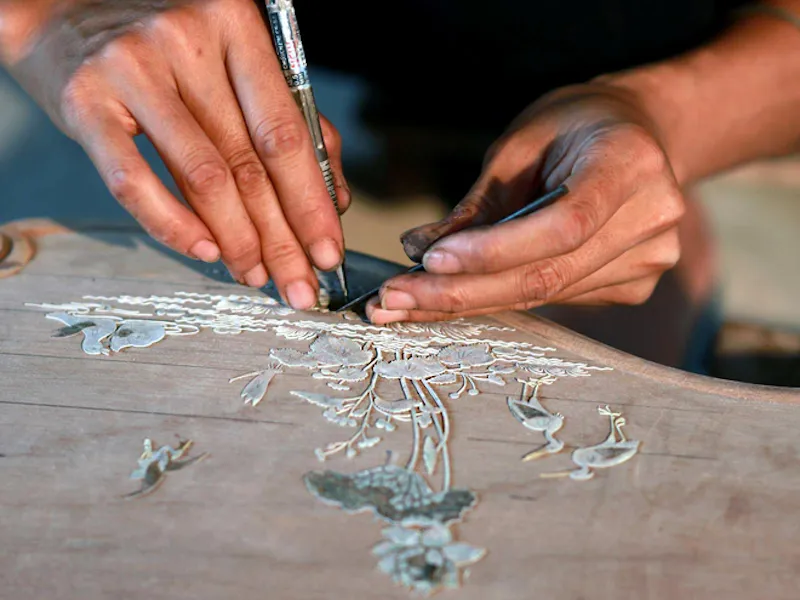
Nguyen Xuan Thanh, secretary of the Phu Xuyen District Party Committee, said that the locality ranks third in Hanoi regarding the number of traditional handicraft villages, with 154 villages and residential clusters dedicated to practicing traditional crafts. Among them, 43 villages have been officially recognized as traditional handicraft villages by the Hanoi People's Committee.
He added that famous craft villages include mother-of-pearl inlay and lacquerware in Chuyen My Commune, with a history of over 1,000 years; gout grass weaving in Phu Tuc commune; textile production in Van Tu commune; leather and footwear in Phu Yen commune; high-quality wooden furniture in Tan Dan and Van Nhan communes; net weaving in Quang Trung commune; metalworking in Dai Thang commune and Phu Minh City.
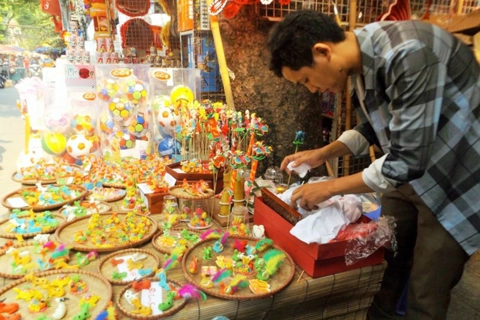
Of particular note is the unique craft of clay figurine making in Xuan La - Phuong Duc, with a 300-year history, the only clay figurine village in Vietnam, according to Thanh.
He stressed that Phu Xuyen District leaders plan to organize more activities to honor skilled artisans and craftsmen, promote unique and high-quality products, and contribute to the prosperous development of the local economy and society.