Social Affairs
President calls for educational reform at academic year start
President Truong Tan Sang has urged the education sector to continue urgent reforms in education and training ahead of the start of the new academic year.
The President hoped the sector would collect opinions from the public, educators and educational managers to get results.
In his letter for the start of the new academic year 2015-16 which resumes on September 5, President Truong Tan Sang asked the education sector to be prepared for reform of curriculum and textbooks.
In April, a national project worth about 36 million USD to reform textbooks and curriculum for schools was approved. The project was targeted to change the entire education system (from grades 1 to 12), and focus on building students' practical learning skills and increasing interaction between teachers and students.
A complete set of new textbooks will be introduced at the start of the 2018-19 school year.
In many cities and provinces, the preparations for the start of new academic year have gotten under-way.
In Kien Giang province, nearly 400 new classrooms have been built and 120 upgraded at a cost of 266 billion VND (11.7 million USD).
In Rach Gia city, three new pre-schools were put into use with room for 960 children from 18 months to five years old. More than 80 teachers have been hired to solve the shortage of teachers in the city.
In Go Quao district, 28 classrooms have been built and more than 30 have been upgraded at a cost of more than 13 billion VND (572,000 USD). However, the building of infrastructure, especially for pre-schools, remained difficult.
Nguyen Tan Phat, head of the district's sub-department of education and training said that pre-school students had to use 55 classrooms in primary schools as temporary study places.
Many parents said they were afraid that their children would study at schools without playgrounds or in overcrowded classrooms. Many preferred keeping their children at home or sending them to schools in Hau Giang and Bac Lieu provinces.
Phat said the sub-department has required local schools to go to these households and encourage them to send their children to school. Local schools were asked to organise boarding classrooms so children were looked after while their parents went to work.
In Bac Ninh Province, director of the provincial department of education and training Nguyen Duc Buoi said the province has planned to apply the new school model for Vietnam at 42 primary schools in this academic year, raising the total to 77.
The model, being applied on a trial basis at some schools in the province since 2012, has created positive changes. Teachers reportedly no longer had to take time making lesson plans and students could study actively, voice their thoughts and correct mistakes themselves.
Buoi said after receiving support from parents, students and educators, the province had decided to increase the use of this model, with half of primary schools now using it.
In Tram Tau district, Yen Bai province, one of the poorest regions in the country with more than 90 percent ethnic people, universal pre-school education for children aged five has become the key task.
Ha Thi Bay, principal of Sao Mai Pre-school in Hat Luu commune said that the school, as well as authorised agencies, has decided that all five year olds must go to school.
The school has worked with students' families to set up a nutrition regime for children, reducing the percentage of malnourished children to 8.6 percent since 2011. All classrooms were upgraded and equipped with studying tools and toys.
Tran Thi Tuyet, deputy head of the district's sub-department of education and training said that the sub-department has called for support from local authorities and associations to help poor students while upgrading facilities at schools.
There is still a shortage of labs and classrooms in the central highland province of Gia Lai, even though the local educational authority had spent 116 billion VND (5.1 million USD) on infrastructure.
Huynh Minh Thuan, deputy head of the provincial department of education and training said many schools lacked labs or had outdated ones. Other facilities such as libraries did not meet national standards.
He cited Le Van Tam primary school in Po To commune as an example. The school had no fence, so nearby cattle grazed in the playground. Many windows, tables and chairs were broken down.
Other schools were in a similar state. Financing the building and upgrading the infrastructure of schools has remained difficult for the local educational authority.
To encourage students before the start of new academic year, many organisations and units have offered scholarships. In Da Lat city, 174 scholarships worth 8.5 million VND (374 USD) each have been presented to ethnic students and poor students who performed well.
The Vallet Scholarship Fund has presented 2,250 scholarships worth more than 20 billion VND (880,000 USD) to disadvantaged students.
In Thai Nguyen province, as many as 200 students have received financial support of 1 million VND (44 USD) each.
In his letter for the start of the new academic year 2015-16 which resumes on September 5, President Truong Tan Sang asked the education sector to be prepared for reform of curriculum and textbooks.
In April, a national project worth about 36 million USD to reform textbooks and curriculum for schools was approved. The project was targeted to change the entire education system (from grades 1 to 12), and focus on building students' practical learning skills and increasing interaction between teachers and students.
A complete set of new textbooks will be introduced at the start of the 2018-19 school year.
In many cities and provinces, the preparations for the start of new academic year have gotten under-way.
In Kien Giang province, nearly 400 new classrooms have been built and 120 upgraded at a cost of 266 billion VND (11.7 million USD).
In Rach Gia city, three new pre-schools were put into use with room for 960 children from 18 months to five years old. More than 80 teachers have been hired to solve the shortage of teachers in the city.
In Go Quao district, 28 classrooms have been built and more than 30 have been upgraded at a cost of more than 13 billion VND (572,000 USD). However, the building of infrastructure, especially for pre-schools, remained difficult.
Nguyen Tan Phat, head of the district's sub-department of education and training said that pre-school students had to use 55 classrooms in primary schools as temporary study places.
Many parents said they were afraid that their children would study at schools without playgrounds or in overcrowded classrooms. Many preferred keeping their children at home or sending them to schools in Hau Giang and Bac Lieu provinces.
Phat said the sub-department has required local schools to go to these households and encourage them to send their children to school. Local schools were asked to organise boarding classrooms so children were looked after while their parents went to work.
In Bac Ninh Province, director of the provincial department of education and training Nguyen Duc Buoi said the province has planned to apply the new school model for Vietnam at 42 primary schools in this academic year, raising the total to 77.
The model, being applied on a trial basis at some schools in the province since 2012, has created positive changes. Teachers reportedly no longer had to take time making lesson plans and students could study actively, voice their thoughts and correct mistakes themselves.
Buoi said after receiving support from parents, students and educators, the province had decided to increase the use of this model, with half of primary schools now using it.

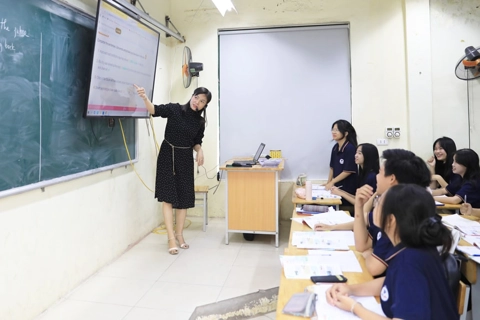
Photo for illustration
|
Ha Thi Bay, principal of Sao Mai Pre-school in Hat Luu commune said that the school, as well as authorised agencies, has decided that all five year olds must go to school.
The school has worked with students' families to set up a nutrition regime for children, reducing the percentage of malnourished children to 8.6 percent since 2011. All classrooms were upgraded and equipped with studying tools and toys.
Tran Thi Tuyet, deputy head of the district's sub-department of education and training said that the sub-department has called for support from local authorities and associations to help poor students while upgrading facilities at schools.
There is still a shortage of labs and classrooms in the central highland province of Gia Lai, even though the local educational authority had spent 116 billion VND (5.1 million USD) on infrastructure.
Huynh Minh Thuan, deputy head of the provincial department of education and training said many schools lacked labs or had outdated ones. Other facilities such as libraries did not meet national standards.
He cited Le Van Tam primary school in Po To commune as an example. The school had no fence, so nearby cattle grazed in the playground. Many windows, tables and chairs were broken down.
Other schools were in a similar state. Financing the building and upgrading the infrastructure of schools has remained difficult for the local educational authority.
To encourage students before the start of new academic year, many organisations and units have offered scholarships. In Da Lat city, 174 scholarships worth 8.5 million VND (374 USD) each have been presented to ethnic students and poor students who performed well.
The Vallet Scholarship Fund has presented 2,250 scholarships worth more than 20 billion VND (880,000 USD) to disadvantaged students.
In Thai Nguyen province, as many as 200 students have received financial support of 1 million VND (44 USD) each.