Quan Thanh Temple, imprint of Thang Long ancient citadel
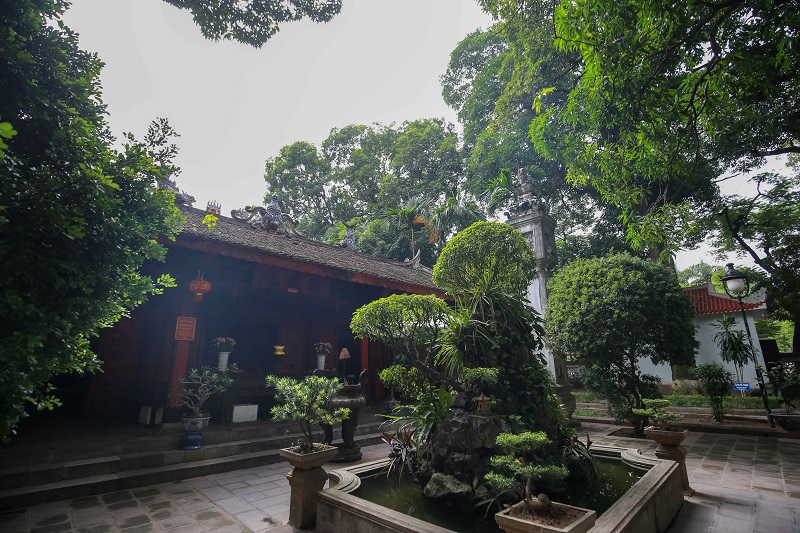
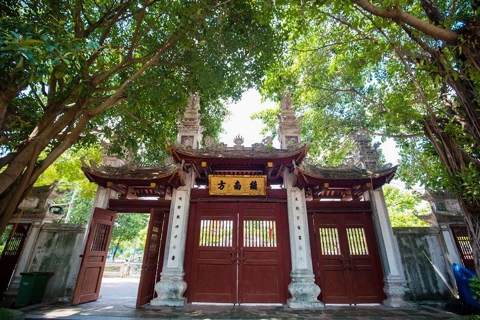
The complex consists of a beautiful gate, bronze statue, bronze bell, altars, banyan trees and much more wonderful artifacts for visitors to explore.
Quan Thanh is a Taoist temple built during the Ly Dynasty (1010-1225) to honor ‘Tran Vu’, the ‘God of the North’, and nowadays becomes an iconic venue of Thang Long ancient citadel.
Quan Thanh Temple is one of the Four Sacred Temples that were built in the four directions to protect Thang Long imperial citadel from malevolent spirits. Quan Thanh Temple is the protector of the North. The other three temples are Bach Ma (East), Kim Liem (South) and Linh Lang Genie (West).
Throughout its long history, Quan Thanh Temple has been renovated several times, most recently in 1893 when the principal gate and the shrine were rebuilt, so the temple’s architecture is a mixture of the different styles throughout the feudal era.
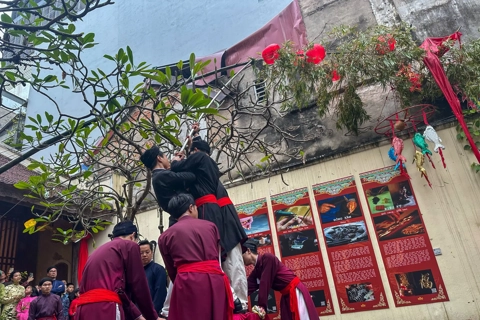
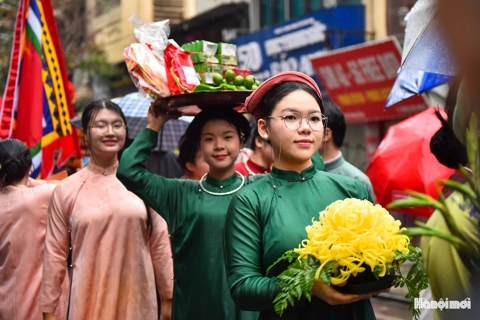
By tradition, Hanoians often come to Quan Thanh Temple during Tet festival to pray for a new year of good luck, health and excellent academic results. They also come on the first and 15th day of the month (in lunar calendar) to worship and devote offerings.
The complex consists of a beautiful gate, bronze statue, bronze bell, altars, banyan trees and much more wonderful artifacts for visitors to explore.
Quan Thanh Temple is situated at the corner where Thanh Nien and Quan Thanh streets meet. Facing the West Lake, the iconic tourist attraction of the capital city is close to the North Gate of Hanoi and the old Imperial Citadel of Thang Long. |
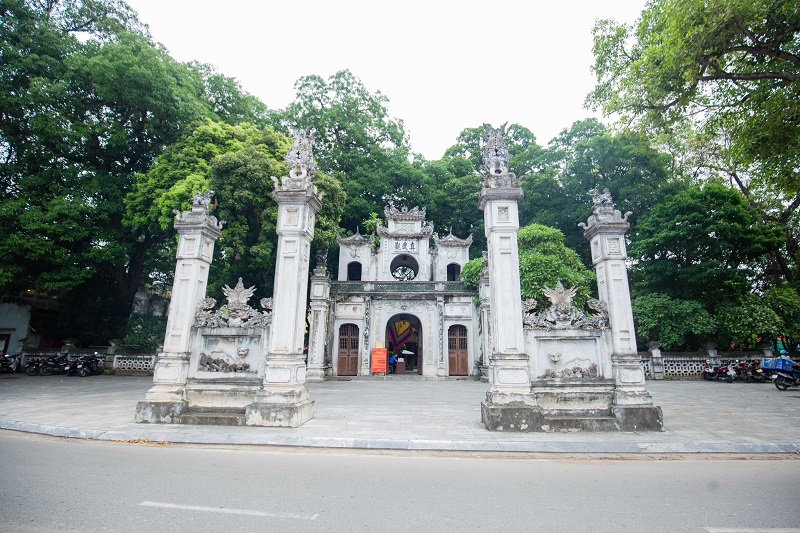
The gate features the prevailing architectural patterns from the imperial era, with an archway with the biggest arch in the middle and two smaller arches on the sides. |
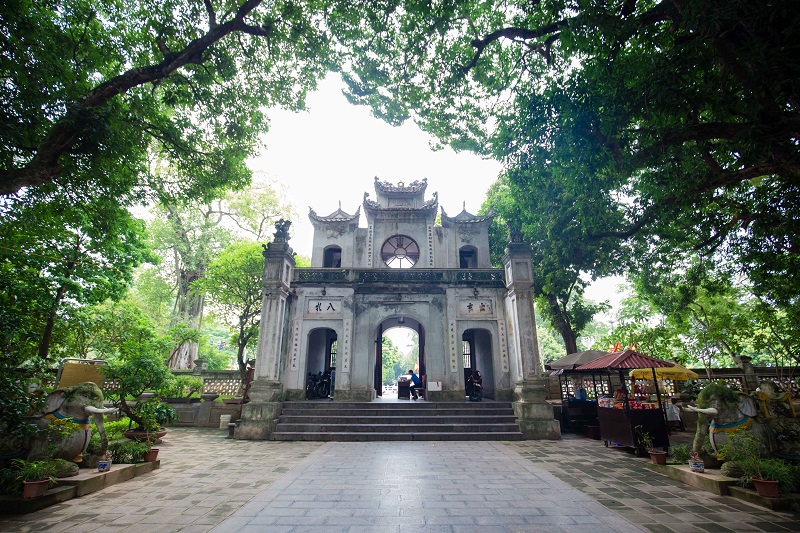
Passing through the gate, visitors will find a spacious yard shaded by a giant banyan tree, a layout typically found in Vietnamese temples and pagodas. The guest house display statues and carvings, as well as an altar. |

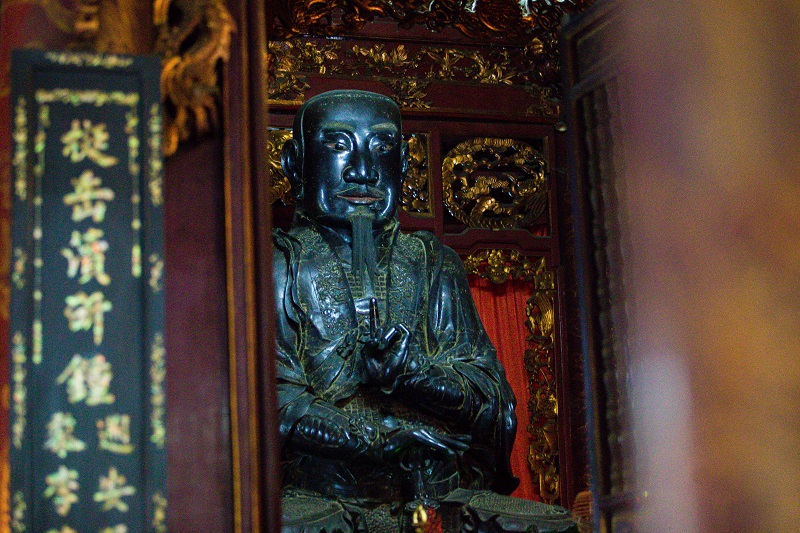
A true masterpiece that visitors will find in Quan Thanh Temple is the four-meter-tall bronze statue of Tran Vu, one of the principal deities in Taoism. |
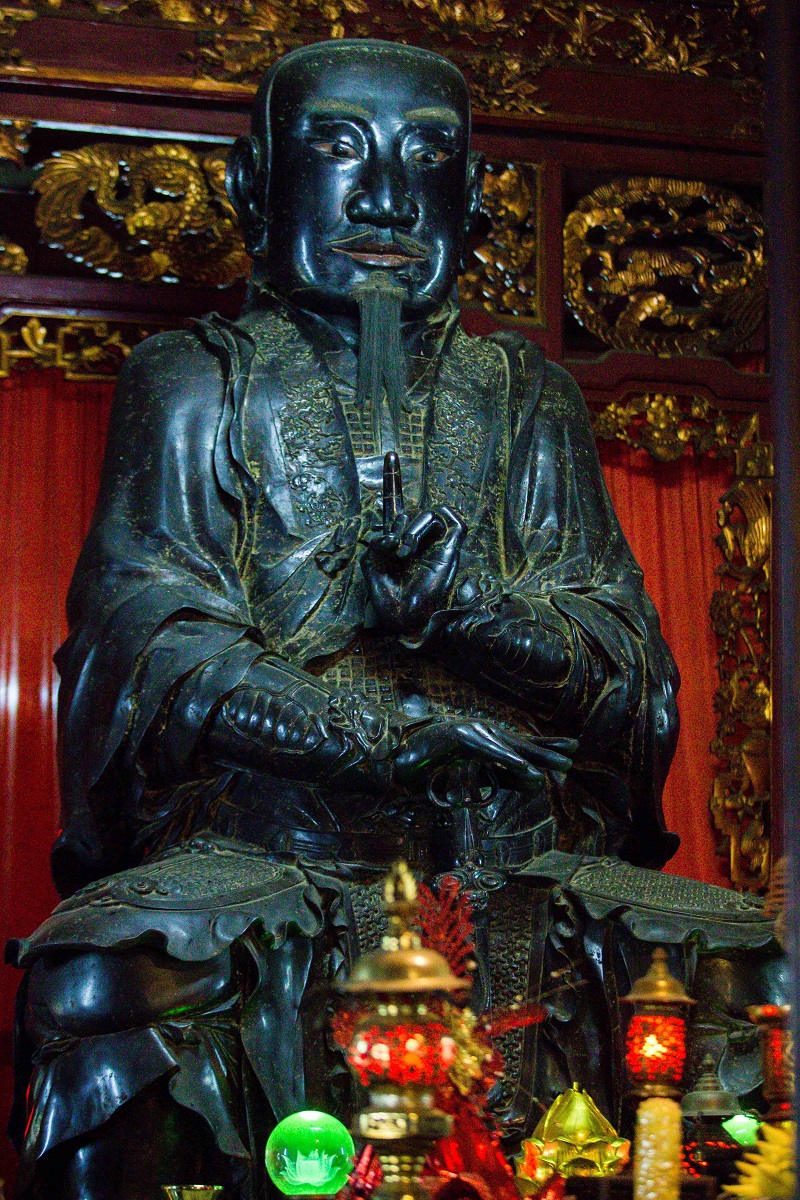
The statue was recognized as a national treasure in December 2016. |
In most Vietnamese temples, there is a great deal of animal symbolism, and Quan Thanh Temple is no exception. The famous animal symbolism in the temple is the crane, which is one of Vietnamese mythological animals together with the turtle, the dragon and the phoenix. |
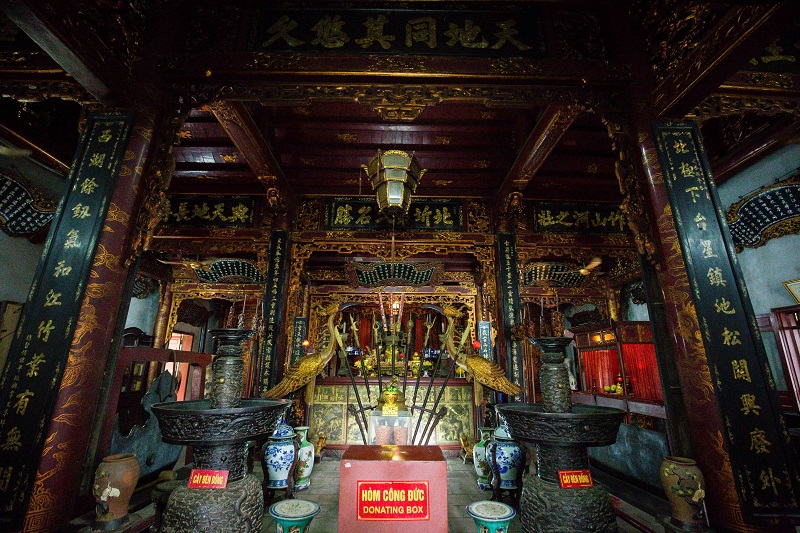
The temple currently has writing in ancient Chinese, due to Chinese rule over Vietnam for around a thousand years. |
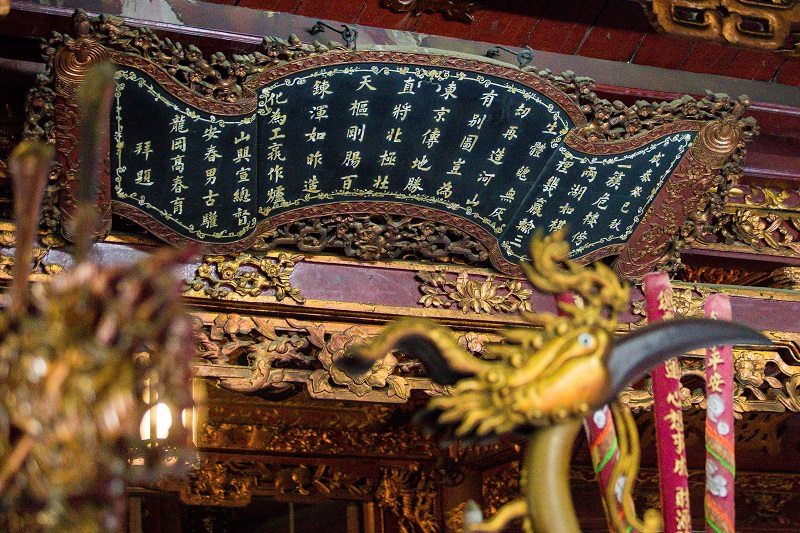
Quan Thanh Temple has become one of great tourist attractions in Hanoi for those who want to delve into history and culture of Vietnam’s capital city. |